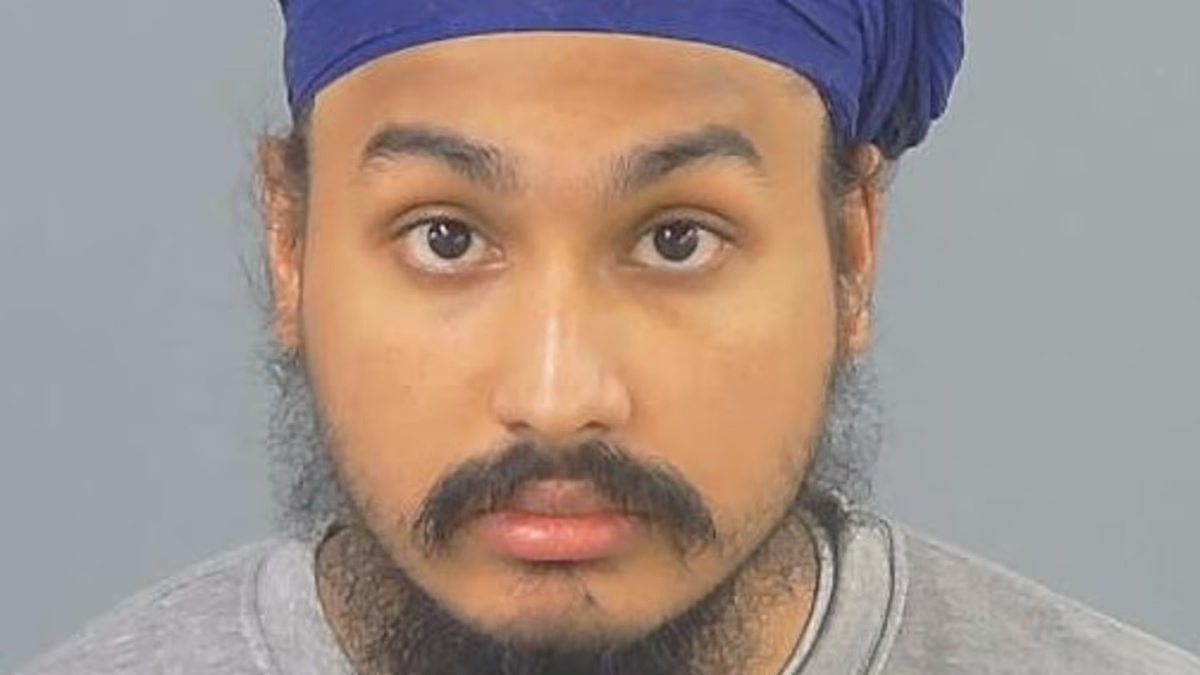

Home Secretary Shabana Mahmood has ordered an independent review into the murder of Henry Nowak, a case that sparked allegations of “two-tier policing”.
Addressing the Commons, Ms Mahmood said former Conservative Lord Chancellor Alex Chalk KC would lead a rapid inquiry conducted in two parts.
“Henry’s case has raised serious and legitimate questions about whether more could have been done to prevent this tragedy, and about the response of public authorities in its aftermath,” she said.
The first phase of the review is expected to report its findings by March next year.
Vickrum Digwa stabbed 18-year-old Mr Nowak to death in Southampton on December 3 last year, using an eight-inch ceremonial dagger.
He was found guilty of murder and sentenced to life in prison in June, with a minimum term of 21 years.
Digwa, who is Sikh, did not know his teenage victim. However, at the scene he told police officers what was described in court as a “wicked lie”, claiming that Mr Nowak had shouted racist abuse, punched him and knocked off his turban.
The allegation triggered international outrage. Technology billionaire Elon Musk offered to fund a private prosecution against the police, while MPs called the case a “shocking example of two-tier policing”.
The case prompted claims that police allow accusations of racism to influence their decisions, resulting in different treatment for people from different racial groups.
After Digwa’s trial, Reform UK leader Nigel Farage pledged to “root out all traces of two-tier policing from our justice system” and end what he called “anti-White racism within our institutions”.
Southampton Crown Court heard that Digwa had played his “trump card” by falsely claiming that his victim had racially abused him.
Police bodycam footage captured Mr Nowak’s final moments. He told officers that he had been stabbed and “can’t breathe”.
One officer responded: “I don’t think you have, mate.”

Henry Nowak, 18, was stabbed to death in Southampton with an eight-inch ceremonial dagger on December 3 last year

Vickrum Digwa was convicted of murder and sentenced to life imprisonment with a minimum term of 21 years in June

The case prompted allegations of “two-tier policing” and a protest by several hundred people outside a Southampton police station in June, which led to violence and a number of arrests
In a ministerial statement to MPs, Ms Mahmood said: “Today I can announce an independent review led by former Lord Chancellor Alex Chalk KC.
“It will investigate what was known about the perpetrator, including whether there were missed opportunities to intervene.
“It will examine the Nowak family’s experience of the criminal justice system and whether they received the support they should have been given.
“Once the Independent Office for Police Conduct has completed its investigation into the police response, the review will also consider the actions of the IOPC and, if necessary, the police.”
‘We must get to the truth of what happened before, during, and after that awful night, and we must do everything in our power to ensure that no family suffers the same fate.
‘We owe that to Henry and to all who loved him.
‘They deserve answers, and this review will provide them.’
CHECK THIS OUT: Tuiasosopo NFL Family’s HS Football Player Killed by Alleged Drunk Driver
She described the crime as an ‘horrific and senseless act of violence’ and paid trbute to the ‘extraordinary courage and dignity’ shown by Mr Nowak’s family.
The bungling officers who responded to the incident detained the fatally injured student, who then died on the street ‘alone, humiliated and handcuffed’, prosecutor Nicholas Lobbenberg KC told Southamton Crown Court in June.
When police arrived Digwa used his ‘trump card’, accusing Mr Nowak of racism – a ‘wicked lie about a dying man’, said Mr Lobbenberg.
On the day Digwa was sentenced Mr Nowak’s father, Mark, accused the police of being ‘inhumane and degrading’ for handcuffing his dying son – but not his killer.
In an excoriating statement on the steps of the court, he condemned the police for not believing his son when he warned them he was fatally injured.
‘Henry was then pulled across the gravel, his hands forced behind his back, and he was placed in handcuffs,’ Mr Nowak Snr said.
‘Instead of being treated as a dying victim, police formally arrested Henry for assault and read him his rights.
‘That was the last thing he heard.
‘Henry did not die with dignity. He did not die with the care he deserved.
‘He lost consciousness before anyone believed him.
‘The way he was treated was inhumane and degrading.
‘His murderer, however, was afforded decency, he was believed.
‘He was not handcuffed when arrested, he was not handcuffed when transported to the police station. As far as we understand it, he was never handcuffed at all.’
The grieving father called for a ‘full, fearless and transparent’ investigation into the police’s catastrophic mishandling of his son’s final moments, adding: ‘Our family should not have to fight for the truth.’
Digwa will appeal against the length of the minimum term at the High Court next week, while Attorney General Ellie Reeves will separately seek to have the sentence increased as ‘unduly lenient’.
Earlier this month it emerged that the mother of Mr Nowak’s killer, who was jailed for removing the murder weapon from the scene, is to be freed after serving just one-third of her sentence thanks to Labour’s early release scheme.
Kiran Kaur, 53, is due to be let out of jail early in December under a controversial programme that plans to free up to 50,000 offenders a year.
She was jailed for three years on July 17 after being convicted of assisting an offender.

Digwa’s mother Kiran Kaur, 53, who was jailed for removing the murder weapon from the scene, is to be freed after serving just a third of her sentence thanks to Labour’s early release scheme
Kaur will be one of the most high-profile criminals to benefit from Labour’s soft justice programme so far.
It is thought she had spent about seven months in prison on remand before her sentencing, meaning she will be eligible for release in December after completing one-third of her punishment.
Separately, Kaur is also due to appeal against her sentence at the High Court next week.


