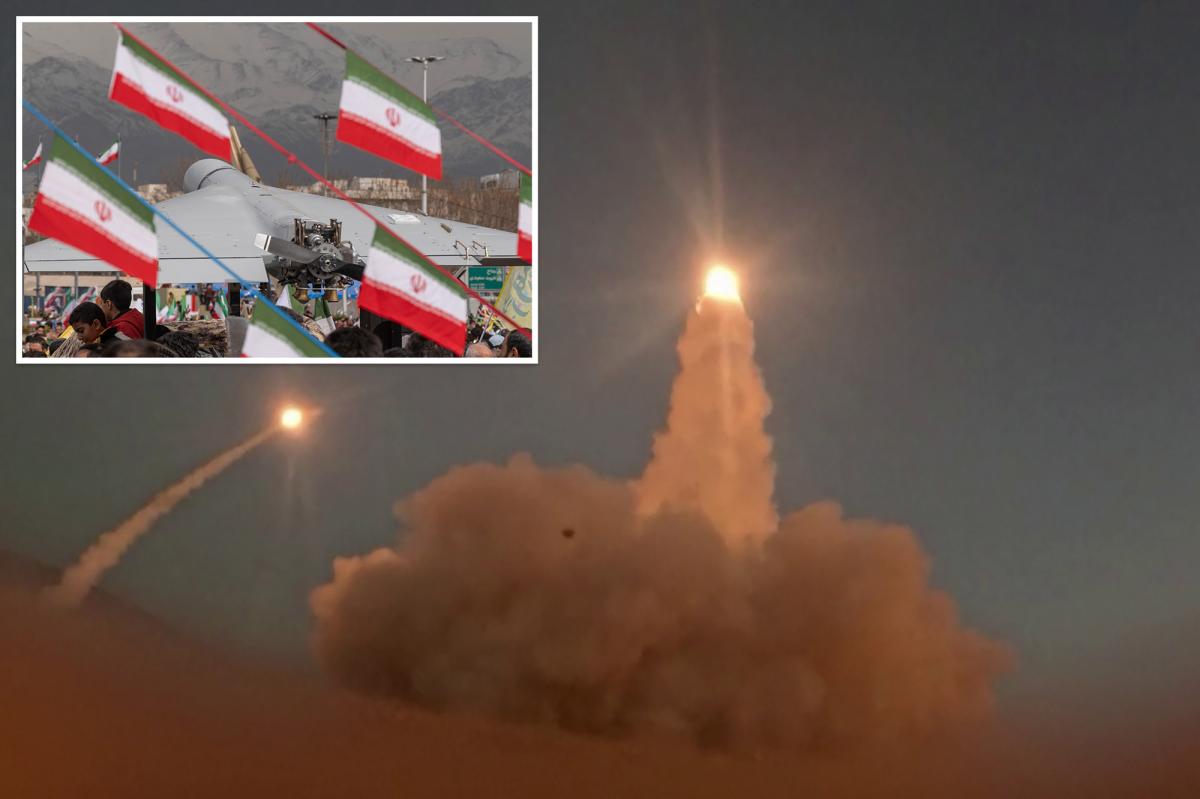
WASHINGTON — A series of increasingly accurate Iranian missile and drone strikes, including attacks that bypassed US air defenses and killed American service members last week, has intensified concern at the Pentagon that Tehran may be receiving assistance from US rivals, including Russia and China.
Secretary of War Pete Hegseth acknowledged Tuesday that both Moscow and Beijing are offering some degree of support to Iran, while stressing that the full scope of that assistance remains classified.
“The depth and extent of it ought to remain classified,” Hegseth said. “But there are ways in which both of those countries are, at different levels, enabling some of the things Iran is doing, yes.”
Those worries grew on Wednesday after another reported Iranian strike allegedly penetrated US defensive systems and hit a weapons storage site near the same Jordanian air base where three American troops were killed just days earlier, a source familiar with the incident exclusively told The Post.
The strike set off a blast that sent a massive “mushroom cloud” into the sky, the source said.
The same person claimed foreign intelligence had issued a warning about a potential attack around 10:30 a.m., but alleged that US air defenses were unable to intercept the incoming threat.
A US defense official declined to address the account, pointing to “operational security” concerns.
Iranian state media also said Wednesday that Tehran had continued targeting US forces in Jordan, though its reports did not mention a mushroom cloud.
‘Altered tactics’
It comes as American intelligence officials are investigating whether Russia has helped Iran improve its ability to strike other sensitive US targets — including CIA facilities in the Gulf — through advanced drone technology and targeting assistance, Reuters reported Wednesday.
US intelligence analysts have not reached firm conclusions on whether Moscow directly aided the attacks, but four people familiar with the intelligence told the outlet that the strikes’ effectiveness, precision and Russia’s broader technical support for Iran have fueled the investigation.
A Western intelligence assessment reviewed by Reuters concluded Russia likely played a role in targeting regional CIA facilities, while Gulf officials briefed on intelligence reports said analysts believed the Saudi strike involved two Russian-enhanced versions of Iran’s Shahed drones.
Russia is likely doing most of the heavy lifting to improve Iran’s targeting capabilities, President Trump’s former US envoy to Ukraine and Russia, retired Lt. Gen. Keith Kellogg, told The Post on Thursday.
“I think it is Russians primarily helping with targeting,” he said. “China needs to realize they are dependent on Middle Eastern oil — not us. We can really help them or hurt them.”
A regional source also told The Post that China would like to see the war ended rather than expanded, but has had little success in pushing Tehran toward the negotiating table.
The battlefield improvements also suggest Iran is adapting after studying previous conflicts, including its missile exchanges with Israel, Atlantic Council senior fellow and former Pentagon official Alex Plitsas told The Post on Thursday.
“Iran appears to have altered its tactics and has learned from missile defense capabilities during previous rounds of conflict just as it did when striking Israel,” said Plitsas, who leads the organization’s Middle East counterterrorism project.
“Combine that with intelligence support from near-peer competitors, and it can lead to deadly outcomes for US forces and assets in the region,” he added.
Deadly consequences
Plitsas’ warning rang true on July 17, when an Iranian ballistic missile strike killed three US troops at Muwaffaq Salti Air Base in Jordan.
The missile hit prefabricated housing units where American service members lived and slept, a source familiar with the attack told The Post.
That strike was one of three Iranian missile attacks against the base within 24 hours, with three Iranian ballistic missiles penetrating US air defenses in one of the most serious tests of America’s ability to protect troops in the region, The Wall Street Journal reported Wednesday.
The strikes highlight the challenge of protecting roughly 50,000 American troops deployed across the region from Tehran’s expanding arsenal.
The Pentagon identified the fallen troops as 1st Lt. Tyler J. Feehan of Hawaii, Pvt. Isabella Gonzales of Texas and Army Sgt. Angel S. Rampersad of New York.
The attack exposed the difficulty of defending US forces from Iran’s ballistic missiles and drones, which experts say have evolved to better penetrate American defenses with faster speeds and improved maneuverability.
“A missile got through. We shot down almost all the missiles. One leaked through, hit the wrong place, and tragically, and it’s heartbreaking,” Secretary of State Marco Rubio said after the attack.
Nearly 100 service members have suffered injuries since July 7, but 96% have returned to duty, with most suffering minor concussions, Pentagon spokesman Sean Parnell said this week.
President Trump has vowed retaliation for every American death.
“Every time Iran kills an American Soldier they will pay for that killing many times over!” Trump wrote on social media Monday, saying the directive had been passed to Hegseth, Joint Chiefs Chairman Gen. Dan Caine and military commanders.
The US has continued daily strikes since July 11 aimed at degrading Iran’s ability to threaten commercial shipping in the Strait of Hormuz, US Central Command has said.
US Central Command has declined to comment on battle damage from the Iranian attacks, while Tehran has circulated satellite imagery it claims shows destruction at the Jordan base.