
A recent ballistic missile attack by Iran on a Kuwaiti air base has left several Americans injured, disclosed Secretary of War Pete Hegseth, who mentioned that troops are ready to “resume operations if needed.”
According to insiders speaking to Bloomberg, five individuals, including both contractors and active-duty military personnel, sustained minor injuries during the incident.
The missile was intercepted by Kuwaiti air defenses, yet debris still impacted the Ali Al Salem air base, as reported by someone familiar with the situation.
The attack involved a Fateh-110 missile, which was countered by two MQ-9 Reaper drones. While one drone was destroyed, the other sustained significant damage, with each drone valued at $30 million, according to Bloomberg.
The Fateh-110 is recognized as a short-range ballistic missile capable of reaching distances up to 124 miles. Since the conflict began, Tehran has launched over 1,850 ballistic missiles, based on data from the Center for Strategic and International Studies.
The Daily Mail has contacted the White House, the United States Central Command, and the Pentagon for their responses regarding the Bloomberg report.
The Ali Al Salem Air Base has been dubbed ‘The Rock’ because it is elevated above the surrounding desert. The base is about 39 miles away from Iraq.
The US military accused Iran of violating a ceasefire deal from April after Kuwait reported strikes on Thursday.
Five Americans have reportedly been injured at the Ali Al Salem air base in Kuwait
The Kuwaiti Foreign Ministry accused Iran of ‘blatant aggression’ after reported strikes earlier this week. Pictured above is a military transport aircraft on the tarmac of the Ali al-Salem airbase in 2013
A temporary ceasefire deal between Iran and Washington was reached in April. Trump said on Friday that he was reviewing a proposal for a deal, but Iran has consistently said it will not agree to giving up nuclear weapons
US Central Command called it an ‘egregious ceasefire violation,’ while the Kuwaiti Foreign Ministry accused Iran of ‘blatant aggression.’
Since the war began in February, thousands of lives have been lost, and the closure of the Strait of Hormuz has caused economic turmoil due to rising energy prices.
A temporary ceasefire deal was reached in April, but both Washington and Tehran have accused each other of violations since then.
Ongoing negotiations have since stalled, but President Trump wrote on Truth Social on Friday that he would make a ‘final determination’ about a proposed deal during a meeting with advisers in the Situation Room.
The president called for Iran to agree never to possess a nuclear weapon and immediately open the Strait in both directions, without tolls or restrictions.
The world has waited in anticipation for an update on the deal. Several officials briefed on the proposal told the New York Times that it would end the US-Israeli military campaign in exchange for Iran lifting its blockade of the Strait.
Iran closed the vital energy waterway and closed entry to US vessels in retaliation for repeated US strikes.
The closure has prevented oil and gas shipping, causing gas prices to skyrocket in the US and abroad.
Kuwaiti air defenses intercepted the missile with two MQ-9 Reaper strike drones. One of the drones was destroyed and another was severely damaged (file photo)

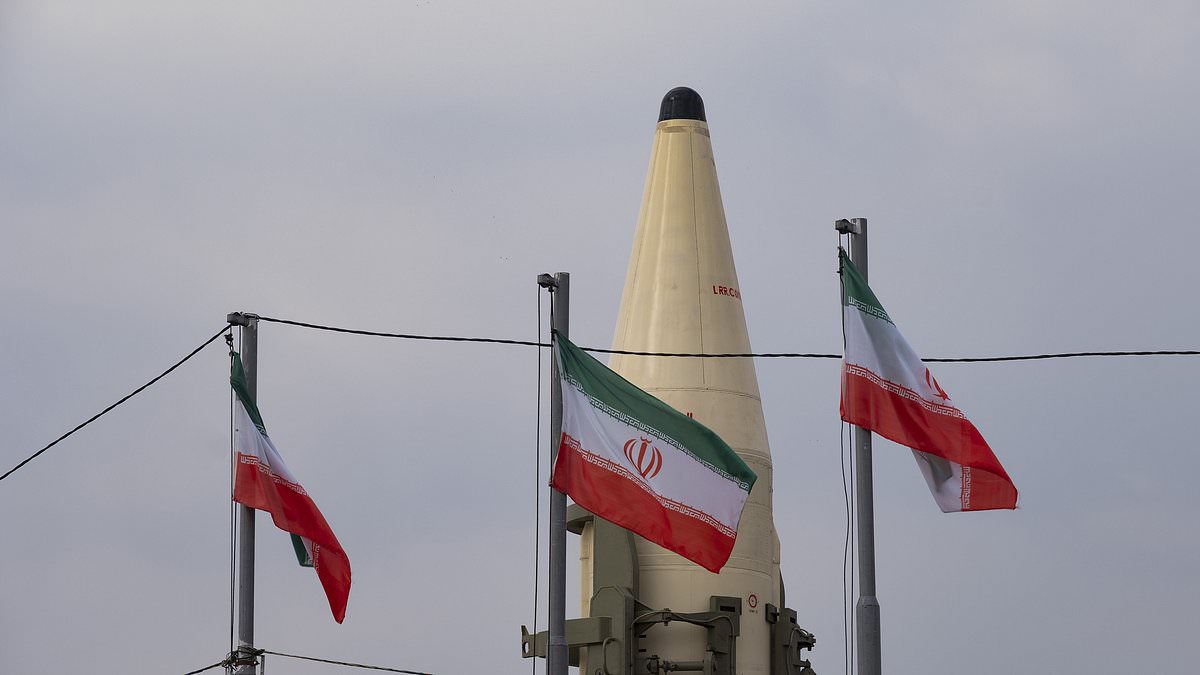
A new report has stated that the Iranians used a Fateh-110 missile in the recent strike (file photo)
Hegseth issued a thinly veiled threat while speaking about the negotiations at the Shangri-La Dialogue forum for defense leaders in Singapore on Saturday.
‘Our ability to recommence if necessary…we are more than capable,’ Hegseth said, adding, ‘Our stockpiles are more than suited for that, both there and around the globe, so we’re in a very good place.’
He added that Trump was ‘patient’ and wanted to make a ‘great deal’ with Iran that ensures the country will not have access to a nuclear weapon.
The defense secretary said that Iran knows ‘very, very clearly’ what the US expects and called the negotiations ‘productive,’ adding that he was ‘quite confident’ that Trump could secure a deal.
Hegseth said that the closure of the Strait was a topic of conversation during his meetings at the conference.
‘The blockade is very much still in place, and the Strait of Hormuz came up relatively often, and usually once we talked through it, countries were reassured that the American perspective accounted for [their concerns], which it did from the beginning,’ he said.
‘The president has talked about … how the future in energy is actually an American future, and that’s good for energy security around the world,’ he continued.
‘It will be an open strait, a toll-free strait, that the entire world can use then, which is the way that it should be.’