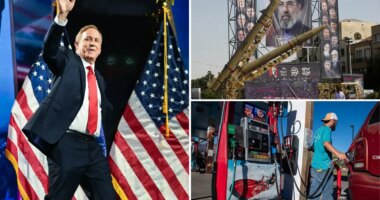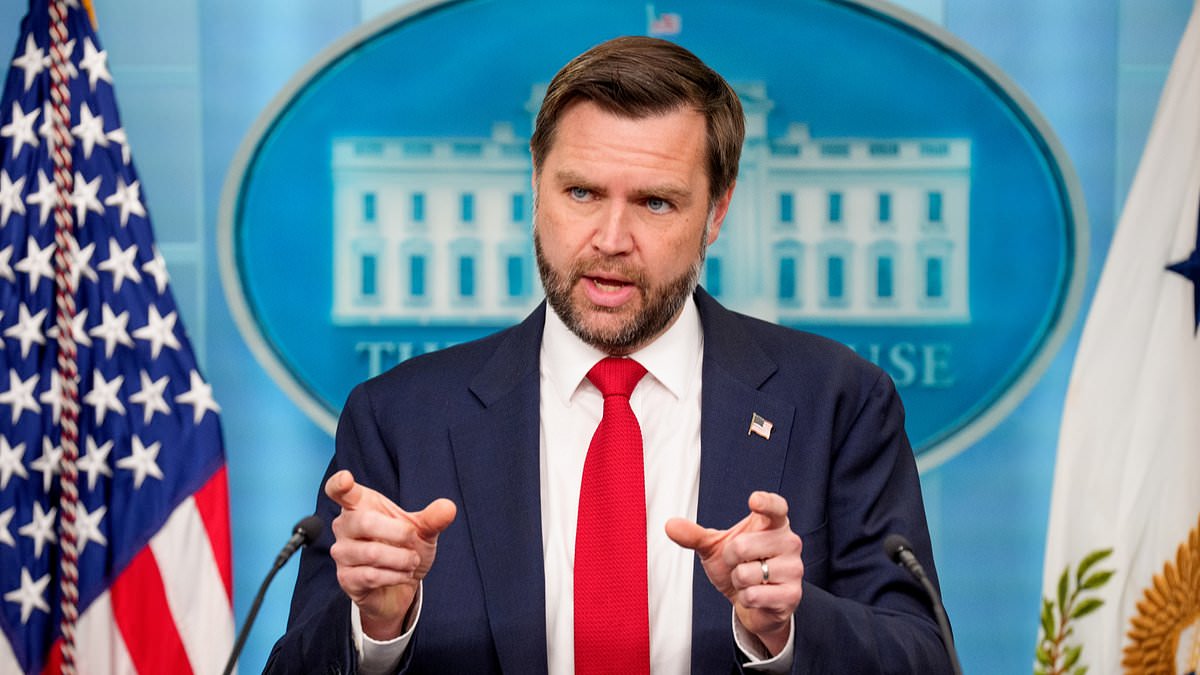

Vice President JD Vance has called off a planned trip to Switzerland, where he had been expected to lead a new round of talks with Iran over its nuclear program.
In a statement, the White House said arrangements for the technical discussions have not yet been finalized, adding that the U.S. team remains ready to leave as soon as plans are confirmed.
“As the Vice President said at his press conference, the plans for the upcoming technical talks have not been finalized, and the U.S. delegation has been prepared to depart at the first available opportunity,” the statement said.
The White House added: “But the logistics of these negotiations have never been simple or predictable. As of now the Vice President is not departing tonight. We will let you know as soon as we have a concrete update about next steps.”
The announcement came after Al-Mayadeen, a pan-Arab satellite network aligned politically with the Iranian-backed Lebanese militant group Hezbollah, reported that Iran was postponing the departure of its delegation to Switzerland because of Israel’s continuing military campaign in Lebanon.
The development comes as former President Donald Trump has been promoting what he describes as a deal to end the Iran war, claiming on Thursday that it had pushed Tehran into an “unconditional surrender.”
The postponement came after the U.S. said it had lifted its blockade, allowing oil tankers to begin freely moving through the Strait of Hormuz after months of being unable to use the critical channel.
But the initial agreement has drawn sharp criticism from some in the US – including a few congressional Republicans – who worry Washington ceded too much to Iran with relief from sanctions and a potential $300billion fund to help with rebuilding.

JD Vance has canceled his trip to Switzerland which were meant to lead a new round of talks with Iran about its nuclear program
Earlier Thursday, Vance took the relatively unusual step of appearing at the White House to defend the deal, arguing that while it offers concessions, Iran first has to comply with US demands.
‘As they dial up their good behavior, we can dial up the economic relief,’ Vance said. ‘If they dial down their good behavior, we can turn it off.’
The vice president had said during those remarks that he was not sure of the timing of the planned trip to Switzerland, and the postponement makes that even less clear.
Vance was set to spend Friday through Sunday at the luxurious Burgenstock Resort in the Swiss Alps with Middle East envoy Steve Witkoff and Presidential son-in-law Jared Kushner for the talks.
They were supposed to be set intensive negotiations with Iranian delegates and mediators from Pakistan and Qatar.
The Iranian delegation was slated to include the Speaker of the Parliament Mohammad Bagher Ghalibaf and Foreign Minister Abbas Araghchi, both key figures in the move toward a broader settlement.
The administration has positioned Vance as the primary lead of these negotiations since April, when he led the US team during preliminary talks in Islamabad.
Yet, as the delegation prepares for the technical phase of the agreement, the rhetoric has reached a fever pitch.
At the last day of the G7 summit in Evian-les-Bains, France, President Trump offered a blunt, characteristic assessment of his Vice President’s role in the peace process.
‘If it works out, I’m going to take the credit. If it doesn’t work out, I’m blaming JD,’ Trump joked to reporters. ‘You better be careful, JD. He’s going to turn his plane around and get the hell out of here.’
While the initial plan had earmarked Friday for a formal, in-person signing ceremony, the timeline was abruptly accelerated.
Trump signed the memorandum of understanding during a candlelit dinner outside Paris late Wednesday, while Iranian President Masoud Pezeshkian finalized the document remotely.
With the President’s lighthearted threat hanging in the air, the Vice President is expected to deliver results – or face the consequences of the administration’s most intense diplomatic gamble.
This is a developing story.