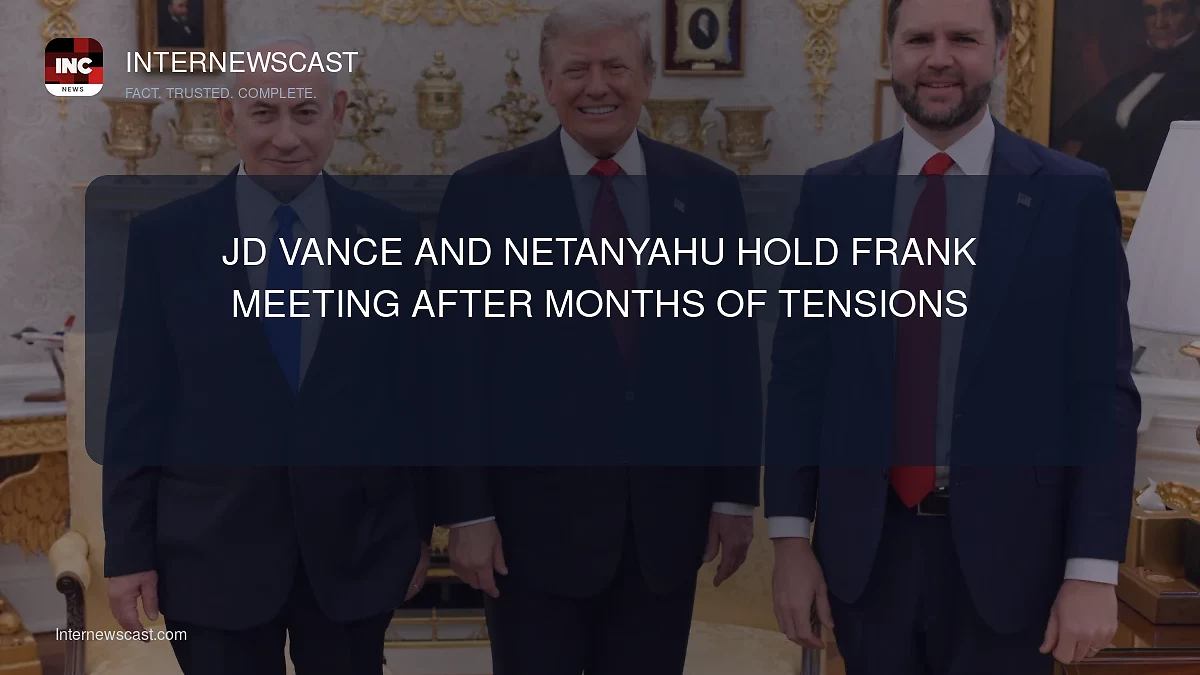

WASHINGTON — Vice President JD Vance and Israeli Prime Minister Benjamin Netanyahu held a blunt one-on-one meeting Tuesday at Blair House, following months of quiet friction over differing views on the Iran war, sources familiar with the discussion told The Post on Thursday.
A US official described the exchange as “direct, but no bullshit,” while stressing that the conversation “wasn’t contentious at all.”
By the end of the meeting, the two leaders had a clearer understanding of “where everybody stands” and “how to move forward,” the official said.
The account follows an Axios report Thursday that said Netanyahu “confronted” Vance over the vice president’s “recent criticism of the Israeli government and Israel’s standing among Republicans” during their private Blair House meeting, which took place Tuesday evening after Sen. Lindsey Graham’s funeral.
US officials and others familiar with the meeting pushed back on that description in interviews with The Post, portraying the discussion as a frank policy exchange between close allies rather than a heated clash.
“The meeting was not confrontational at all,” a second US official told The Post. “The leaders have a productive working relationship.”
That official said Vance and Netanyahu instead had “a cordial and productive conversation about Middle East issues that are important to both countries,” though the official declined to provide additional details.
“They agreed to continue pursuing opportunities for Israel and the United States to cooperate in areas of mutual interest and shared goals,” the official added.
A source familiar with the discussion described it as “spirited” — adding that neither leader raised his voice. An Israeli official similarly described the exchange as “honest.”
It comes after the vice president in a recent podcast appearance accused the Israeli prime minister of stoking opposition to the since-failed US-Iran Memorandum of Understanding.
He has also privately asserted Israel overstated the possibility that the Iranian people would rise up against the regime in Tehran and underestimated the war’s timeline to end after a maximum of six weeks, according to prior Axios reports about a tense phone call between the leaders in March.
Those latter issues were addressed Wednesday by a senior Israeli official during a briefing with reporters.
Asked whether Israeli intelligence had been wrong to suggest military action could create conditions for the Iranian regime to face a popular uprising, the official rejected the idea that Netanyahu had guaranteed such an outcome, saying he “didn’t promise that that would happen,” the official said.
The official said Israel’s assessment instead was that military action could create an opportunity for Iranians to determine the future of their own country.
“[He] said that if we are able to do certain things, we have a chance of creating conditions where the Iranian people could take their fate in their own hands,” the official said.
The official acknowledged that those conditions ultimately “did not materialize“, suggesting the outcome was influenced by decisions outside of Israel’s control.
“In other words, not for lack of insight, but for either operational failure or decisions that were made,” the senior Israeli official said.
The Israeli senior official also defended Israel’s previous assessment that the conflict’s most intense phase would last roughly four to six weeks, saying the prediction referred to the main fighting phase rather than the broader aftermath.
While disagreements over strategy and expectations remain part of any close alliance, US and Israeli officials claimed that the relationship between Washington and Jerusalem remains strong — with private debates considered part of managing a complicated Middle East conflict.


