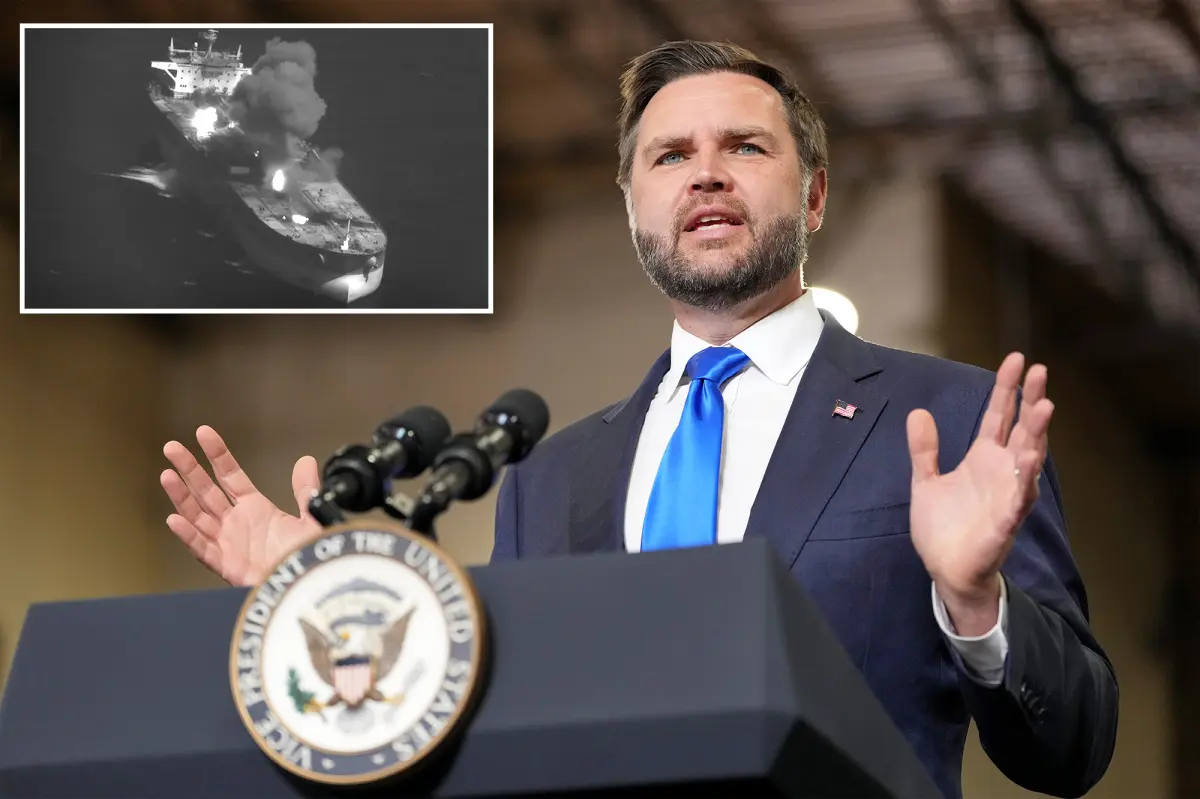

The US confrontation with Iran is expected to enter a “much different phase in a couple of months,” Vice President JD Vance told the Post in an exclusive interview. He agreed with President Trump’s prediction that the conflict, after months of retaliatory strikes between Washington and Tehran, could end “right after” the midterm elections.
Speaking Monday aboard Air Force Two, Vance said Iran’s grip on the Strait of Hormuz would continue to weaken before the election. He said traffic through the crucial global energy chokepoint had recovered to “well over 50% of normal” levels.
“We can’t predict the future, but I think the president is right to say that this thing will enter a much different phase in a couple of months,” Vance said. “He’s also the commander in chief, so he’s the person who determines … when conflicts start and when they stop.”
“I certainly understand there’s some impatience from the American people, but fundamentally what’s happening right now is that the United States is not engaged in aggressive operations. We’re just not,” he added.
Instead, Vance said, Iranian forces have continued to fire intermittently at commercial shipping, though the attacks have generally failed to hit their targets.
US Navy SEALs have cleared mines from large sections of the strait over the past four months, but commercial crossings remain well below prewar levels.
Shipping trackers recorded just 11 commercial vessels passing through the waterway in the previous 24 hours. Before the war, an average of 130 ships crossed daily between Oman and Iran.
Still, public tracking figures do not capture the full volume of traffic. For months, the United States has quietly escorted commercial oil tankers whose transponders were switched off to help protect them from Iranian attacks. Those missions, known as “dark” operations, are difficult to monitor.
About one-fifth of the world’s seaborne oil supply moves through the Strait of Hormuz.
US strikes have significantly weakened Iran’s missile and drone arsenal, but Tehran continues to launch sporadic attacks on commercial ships in the strait and against American military installations across the Middle East.
Iran has also targeted US allies in the Gulf. Last weekend, Trump suggested that Iranian drones were responsible for damage to Saudi Arabia’s East-West oil pipeline.
American forces have struck Iranian oil tankers as well, while the US Treasury Department has imposed sanctions on banks and other organizations accused of helping finance Tehran’s war effort.
“There are really two phases to this thing, and the first phase is done,” Vance said. “The first phase was destroy the nuclear program, destroy their conventional military, destroy their ability to project power in a way that they were able to even a couple of years ago.”
The next phase, he said, will focus on preventing Iran from rebuilding its military capabilities while preserving as much regional and global stability as possible.
Vance helped craft a memorandum of understanding between the United States and Iran in mid-June. The agreement established a cease-fire intended to open negotiations over Tehran’s nuclear program and bring the conflict to a close.
It’s unclear whether Trump will ramp up attacks after the midterm elections to finish the job, or find that Iran is more agreeable to make a deal.
Trump told reporters last Wednesday before heading to the Republican midterm convention in Dallas that “right after the election, oil prices are going to be tumbling downward.”
“I think the war will end immediately after the election because they can’t hold out any longer,” he added.


