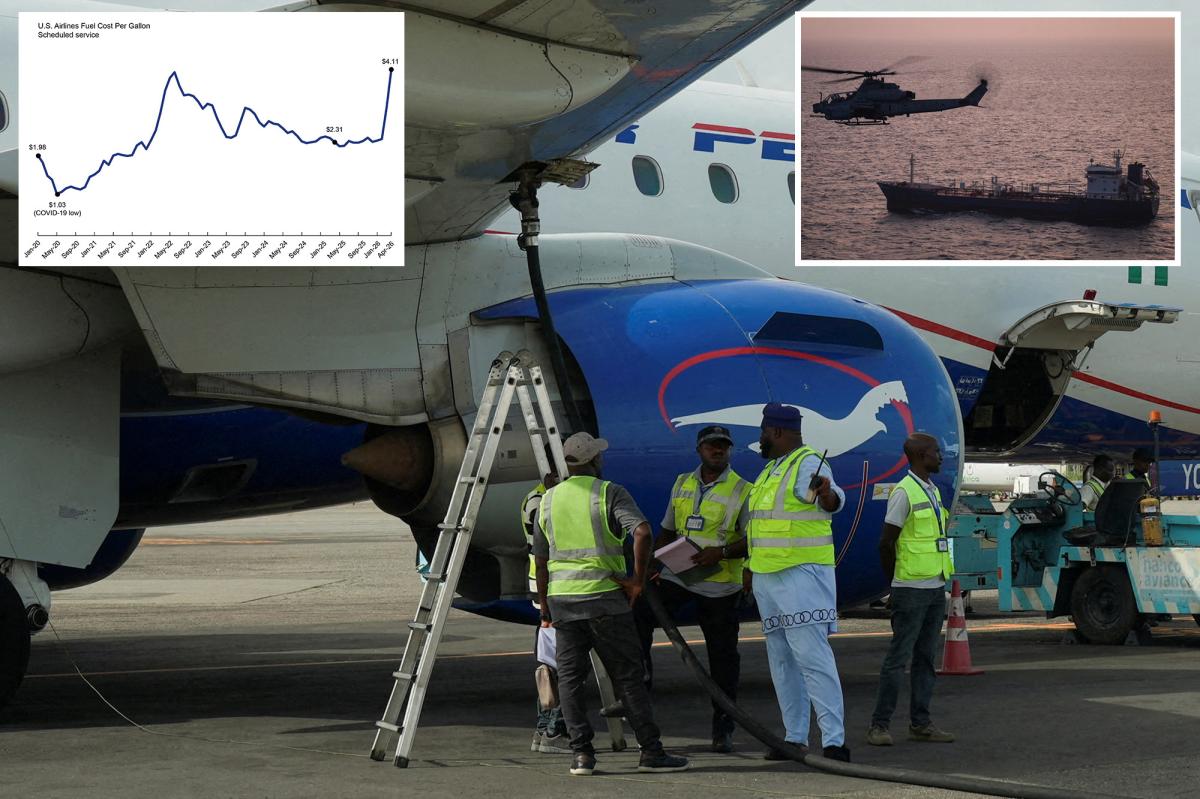

The price tag for fuel consumed by U.S. airlines soared to an eye-popping $6.5 billion in April, as reported by the Bureau of Transportation Statistics, primarily due to the ongoing closure of the Strait of Hormuz.
This staggering amount reflects a 78% rise compared to the previous year and a 26% jump since March, according to the data.
In terms of jet fuel prices, there was an increase of 94 cents per gallon from March, with April prices reaching $4.11. Expectations are that May’s figures will climb even higher amid the ongoing conflict in Iran.
The Strait of Hormuz was shut down by the Islamic Republic in March as a response to the war, effectively blocking a critical passage that previously facilitated around 20% of global oil shipments, resulting in skyrocketing fuel costs worldwide.
Airlines are bearing the brunt of this disruption, with the International Air Transport Association (IATA) forecasting that the industry’s net profit will only reach $23 billion this year, a significant drop of $18 billion from earlier projections.
Representing over 370 airlines globally, the IATA also anticipates that by 2026, the industry’s net profit per passenger will be just $4.50, a decrease from the $9.10 projected for 2025.
“Some of the additional cost is being recuperated by adjusting prices and improving efficiency, but it will not be sufficient to maintain profitability at the previous year’s level,” IATA director general Willie Walsh said in a statement.

“Smaller carriers that started the year with weak balance sheets are certainly struggling,” he added.
American Airlines also expects surging fuel costs to tack a staggering $4 to $5 billion onto expenses this year alone, reported Reuters.
The costs have reportedly led the company to suspend six domestic routes later this year, with service expected to be suspended between August and October.
The costs have also led European airlines to cancel some of their routes, with the European Union’s transport chief Apostolos Tzitzikostas warning that the situation will only get worse if the Strait of Hormuz remains shut.
“It’s critical that the war stops and that the Strait of Hormuz opens and this needs to happen as soon as possible,” Tzitzikostas told Reuters.
With Post wires


