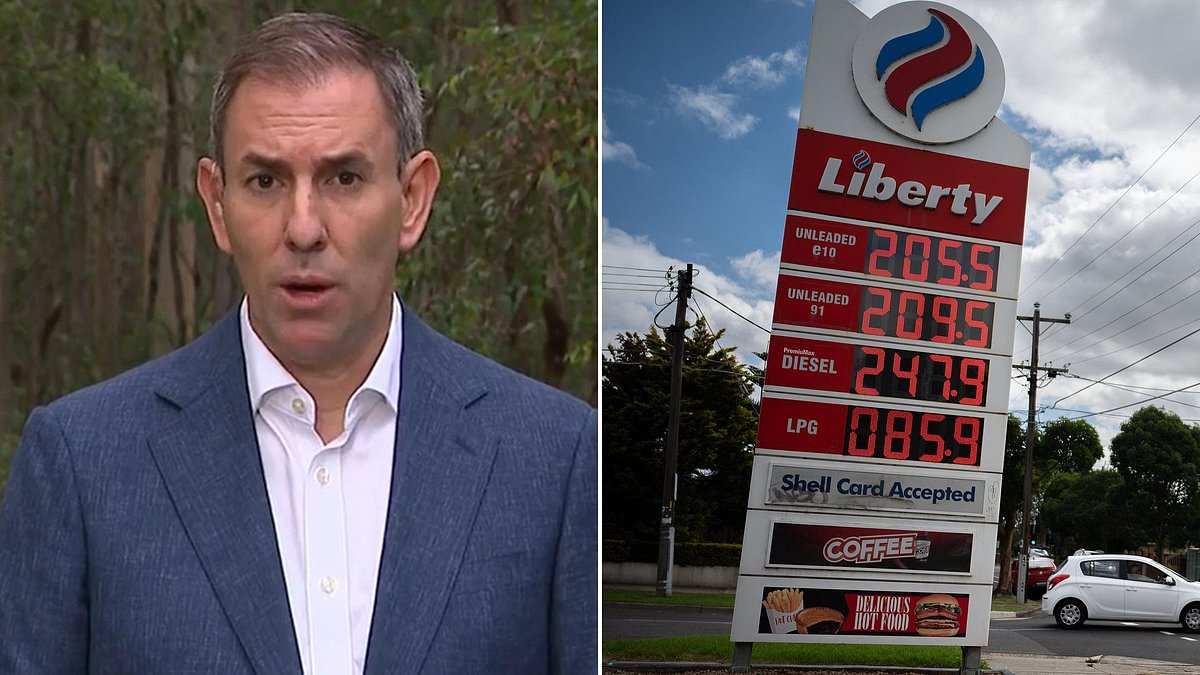

Australia’s Treasurer, Jim Chalmers, has issued a warning that inflation rates could soar to nearly five percent due to escalating tensions in the Middle East. This unrest is expected to drive global oil prices higher, posing a threat to Australia’s economic stability.
In an interview with Sky News on Sunday, Chalmers disclosed that the Treasury is urgently assessing the potential economic repercussions of the crisis, focusing particularly on the effects of a prolonged increase in oil prices.
The Treasurer indicated that inflation might climb into the “mid to high fours,” a significant rise from the current rate of 3.8 percent, which already exceeds the Reserve Bank’s target range of two to three percent.
“The outcome depends not only on the intensity of the price shock emanating from the Middle East but also its duration,” Chalmers explained.
He also mentioned that the Treasury is evaluating various scenarios in preparation for the federal budget scheduled for May 12, aligning with efforts undertaken by major financial institutions.
“We are conducting a series of scenario analyses similar to those done by private banks. We have a couple of months to finalize the Treasury’s forecast for the upcoming May budget,” he stated.
‘So obviously we are working through scenarios and contingencies like this pretty much every day as we try and land these forecasts for the budget.’
Early modelling, he said, shows inflation could push close to five per cent if oil prices stay elevated.

Jim Chalmers (pictured) said that inflation could reach ‘mid to high fours’ later this year
On Sunday, oil prices remained just below USD$100, where they have been hovering for the past few days, well above the USD$60 seen in February.
Last week, prices pushed as high as USD$120, triggering major inflation concerns.
‘If we were putting pencils down on those forecasts today, we’d have inflation peaking somewhere between the mid to high fours.’ Chalmers said.
‘But there’s a little ways to run yet. And the biggest variable … is really how long this drags out for.’
Despite the growing inflation threat, Chalmers said Treasury’s modelling does not point to a recession.
‘They (Treasury) expect there to be a hit to growth, but not a hit to growth that would deliver a shrinking economy in the quarters to come,’ he said.
He said the scenarios reveal higher inflation and slower growth, but not the ‘dramatic contraction’ that would signal a recession.
However, Chalmers warned the escalating Middle East conflict, and the financial pressure it is placing on households, means the Albanese government must consider serious reforms in the upcoming budget.
‘I see developments around the world and pressures on Australians here at home, not as a reason to go slower, but a reason to go further,’ he said.

A surge in global oil prices fuelled by the escalating Middle East is set to drive inflation higher
Chalmers said the government has no plans to change the fuel excise, stressing that ministers are working closely with the ACCC to ensure service stations and businesses aren’t engaging in price gouging.
‘This is not something we have been considering… we do understand and share the concern that motorists around Australia have,’ he said.
He also pointed out the government has relaxed fuel standards, a move expected to inject an extra 100 million litres of fuel a month into the market.
The Reserve Bank is set to meet next week – with the marketing placing a 66 per cent chance that rates will be lifted on Tuesday, up to 4.10 per cent, with concerns they go even higher later this year.
The Opposition, meanwhile, argues the Albanese government failed to prepare Australia for the inflation shock now hitting households.
Nationals Leader Matt Canavan said the government’s inability to bring inflation down before the crisis left families dangerously exposed.
‘If we were back in the range, in the RBA range of two to three per cent… then this shock from the Iran crisis could be better withstood by Australian families,’ he told Sky News.