
Europe is on high alert as two aid workers, recently returned from Uganda, have brought possible cases of Ebola to the continent. This development has triggered a health alert in Italy’s northern Lombardy region, raising concerns about the virus spreading beyond Africa.
The two individuals, a man and a woman, had spent three months in Uganda before returning to Italy. Their arrival coincides with a concerning outbreak of a deadly Ebola strain sweeping through central Africa. With no vaccine available to combat this particular strain, fears of a global health crisis are mounting.
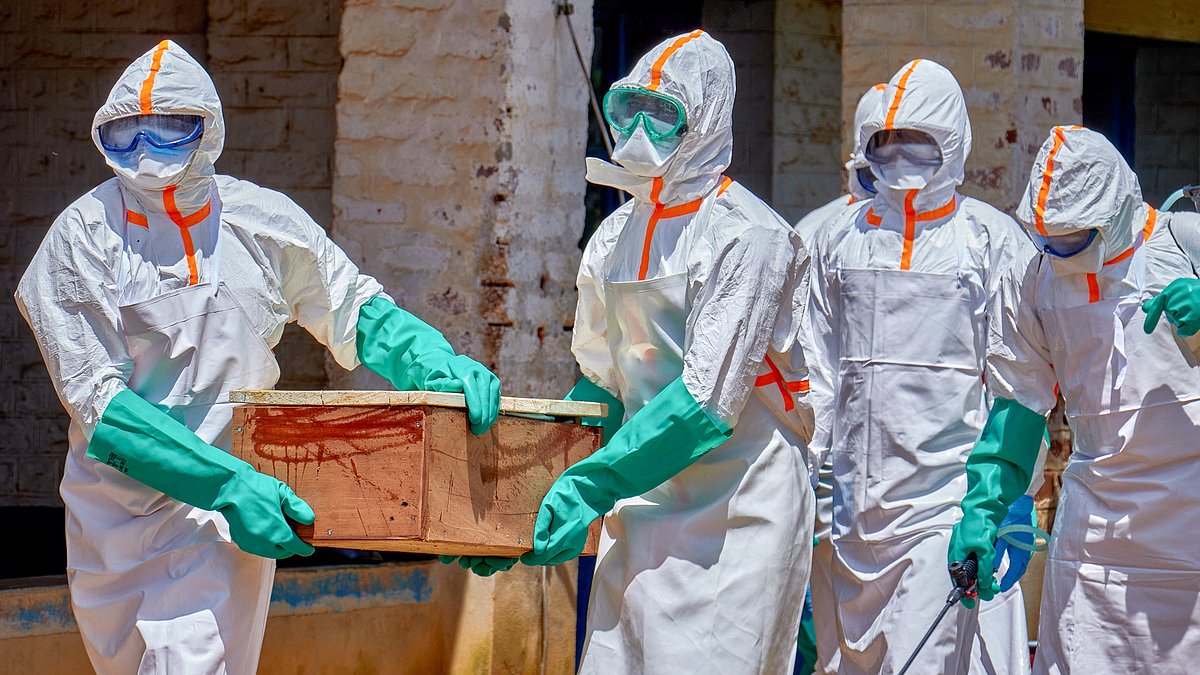
The Democratic Republic of Congo (DRC) is currently at the epicenter of this outbreak, with over 900 suspected cases reported and 234 deaths, including three Red Cross volunteers who are believed to have contracted the virus during their humanitarian work.
In Italy, the two aid workers have exhibited symptoms consistent with Ebola, such as high fever, nausea, vomiting, and intestinal issues. They have been admitted to Milan’s Sacco Hospital, which is equipped to handle high-risk infectious diseases, as the Italian health authorities remain vigilant in their response to this potential threat.
Both Italian humanitarian aid workers have developed symptoms consistent with the virus, including high fever, nausea, vomiting and intestinal problems.
They have been transferred to Milan’s Sacco Hospital, a specialist facility for the management of high-risk infectious diseases.
Lombardy’s regional welfare minister, Guido Bertolaso, said there was ‘still no certainty that this is Ebola’.
Speaking at a press conference, he added: ‘We are hopeful they will be negative.’

World Health Organisation says the outbreak poses ‘very high’ risk for Congo, but risk of disease spreading globally remains low
Doctors have also considered a form of malaria may be the more likely diagnosis – possibly cerebral malaria in the case of the 30-year-old woman, who may need to be admitted into intensive care.
The woman, from Lurate Caccivio, is reported to have developed severe symptoms, including a very high fever and mild neurological issues.
The man, from Bulgarograsso, is displaying milder symptoms of a temperature of around 38C and gastrointestinal problems.
In an official statement the Health Ministry said the risk of Ebola in Italy ‘remains very low’.
A meeting of the European Commission’s Health Security Committee was held on Sunday to discuss the Ebola emergency in Africa.
All flights to and from Bunia – the eastern DRC city where most cases and deaths have occurred – have been grounded but experts believe the virus may have already spread to other nearby nations, such as South Sudan.
In previous Ebola outbreaks, the virus has killed more than half of those infected – many of whom died due to internal bleeding and organ failure.
Now, experts are warning that there is no vaccine that can protect against the Ebola variant driving the outbreak – which means the virus will almost certainly continue to spread and kill.
A life-saving jab already exists to protect against the most common form of Ebola – the Zaire variant.
However, the current outbreak has been caused by a different strain, called Bundibugyo.
Scientists at Oxford University are racing to develop a Bundibugyo vaccine, but warn that it will take two to three months before the jab can be tested on humans, meaning it is unlikely patients in Africa will get the drug within the next six months.
A successful vaccine would likely protect patients from severe illness and death as well as limit the spread of the virus.
However, there is also no guarantee that the experimental jab will be effective.
Symptoms remain the same across all Ebola variants, starting with a flu-like fever, headache, muscle pain, vomiting and diarrhoea before progressing to internal bleeding, organ failure and death.
However, patients can carry the virus for up to 21 days before symptoms begin, which is when experts believe they become infectious.
While the WHO escalated its risk assessment for the DRC, it claims risk at the global level remains low.
The UK has announced up to £20million to help contain the outbreak of Ebola in the eastern region of the DRC.
UK health officials have also activated a Returning Workers Scheme – where healthcare workers returning from Ebola outbreak regions are monitored for signs of the disease once back in the UK.
However, experts have warned that the UK is unprepared for the Ebola outbreak, and argue that the population may be at-risk.
Dr Derek Sloan, an expert in infectious diseases at St Andrew’s University, said the recent outbreak shows we must remain ‘vigilant’ and ‘preserve funding’.
‘This outbreak, along with the recent Hantavirus cases on a cruise ship and meningitis infections in the UK shows how important it is that we stay vigilant and use effective public health tools to protect our populations,’ Dr Sloan, also a spokesman for UK-Med and Healthy World, Secure Britain, said.
‘Infectious disease outbreaks such as these in our interconnected world cannot be dismissed as someone else’s problem.
‘These examples show how important it is to maintain this expertise and underline the need to preserve funding for global health and international aid.’