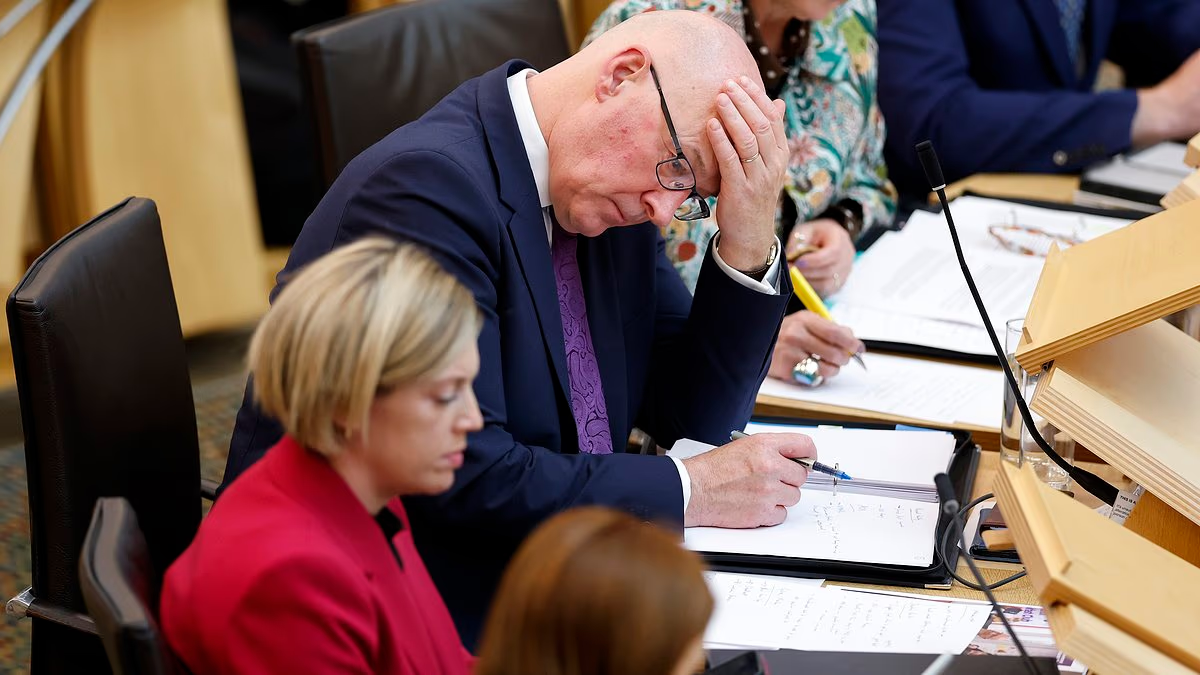

John Swinney’s pledge to reshape Scotland’s public sector was under fresh scrutiny on Wednesday after he ruled out forced redundancies and declined to say where jobs might be cut.
The First Minister acknowledged that public sector staffing levels would have to come down, but insisted he was not prepared to attach a specific figure to the reduction.
Despite promising a far-reaching reform programme, he made clear there was “no question” of ending the SNP government’s long-running policy against compulsory redundancies.
The Scottish Conservatives claimed the position showed Mr Swinney was unwilling to take on trade unions if his plans triggered strike action.
Finance secretary Jenny Gilruth also said she would “respect” any warnings of industrial action, while declining to set out the level of savings or the number of posts likely to be affected.
Murdo Fraser, the Scottish Tory spokesman on public service reform, said the First Minister’s agenda was already showing signs of falling apart before it had properly begun.

John Swinney declined to give firm figures for potential public sector job reductions
He argued that by guaranteeing no compulsory redundancies and offering no clear detail on where cuts could be made, Mr Swinney had given voters little reason to believe the SNP would deliver the scale of public sector reform Scotland needs.
‘They have spent their two decades in power bowing to every demand from those in the public sector and there is nothing to suggest they have the stomach for the fight that will inevitably occur with them.
‘If they don’t start getting serious about matching their rhetoric with delivery, then Scotland’s public services will continue to decline, and taxpayers will never get value for money.’
The reforms come as the SNP faces a £4.7billion budget black hole by 2031 amid soaring welfare spending and inflation-busting public sector pay rises.
To help save £1billion a year, Mr Swinney used his Programme for Government on Tuesday to announce plans to cut the number of regional NHS boards from 14 to just two.
He vowed to ‘declutter’ the public sector by culling quangos and said he wanted Scotland’s 32 councils to be merged into fewer ‘stronger, more strategic’ bodies.
It would be the ‘most radical reshaping of public services’ in Holyrood’s history, he said.
Union bosses, who fear 20,000 public sector posts will be lost, immediately warned ‘all options’ were being considered.
Asked by the BBC about job losses, Mr Swinney said: ‘There will be a need for public sector employment to fall.’
But pressed on the scale, he went on: ‘I’m not going to, at the start of this process, put particular numbers on this.
‘We’ve got to work collaboratively with the trade union movement. I’ll maintain the no compulsory redundancy commitment.
‘That’s an essential part of how you undertake reform, because you provide assurance to members of staff. There’s no question about that in my mind.’

Murdo Fraser called into question Swinney’s commitment to public sector reform
Scottish Labour acting leader Dame Jackie Baillie added: ‘It took less than 24 hours after the Programme for Government was set out for it to become apparent that SNP ministers have put no planning into their proposals.
‘John Swinney and Jenny Gilruth have both completely failed to explain key parts of their plans for public sector reform.
‘They have not identified how much in savings they expect to make and how many jobs could be cut.
‘This is something we have seen time and time again from the SNP – make a big statement and then fail to provide the details.’
A Reform UK spokesman said: ‘It’s no surprise that the government is dancing around the issue when they know that job losses will be a consequential casualty of their Programme for Government.
‘Reform has been clear that job creation should be at the centre of any plan for economic regeneration in Scotland.
‘A jobs boost is pivotal to reducing the benefits bill by helping people back into work.’
Scottish Liberal Democrat leader Alex Cole-Hamilton added: ‘John Swinney has not explained how these plans are any different to the SNP’s previous centralisation projects.
‘It is not at all clear how exactly these plans would save money or help front line services.’
Giving evidence to MSPs on Holyrood’s health committee yesterday, Unison Scottish Secretary Lilian Macer threatened industrial action over the cuts.

Labour ministers called into question Swinney and Scottish finance secretary Jenny Gilruth’s lack of concrete plans
She said: ‘There will be 20,000 jobs removed from public services in Scotland. There needs to be meaningful negotiation and consultation.
‘We are not taking off the table any action that we need to do for our members – and that includes strike action.’
Quizzed on potential savings from the reforms, Ms Gilruth told LBC: ‘We don’t have attributed figures at the current time.
‘We’ve not attributed a figure in relation to jobs because we recognise we have to engage with the trade unions.
‘The trade unions are entitled to threaten strike action. I’ve experienced that in different roles in government.
‘I would far rather we worked collaboratively with our trade union partners in relation to what reform looks like.’
Scottish Green MSP Kayleigh Kinross-O’Neill said: ‘This announcement has already created enormous anxiety among NHS staff, patients and service users.
‘People are worried about their jobs, but they are also worried about what such sweeping centralisation will mean for the local services and relationships they depend on. The Scottish Government must urgently publish the details behind these plans.’