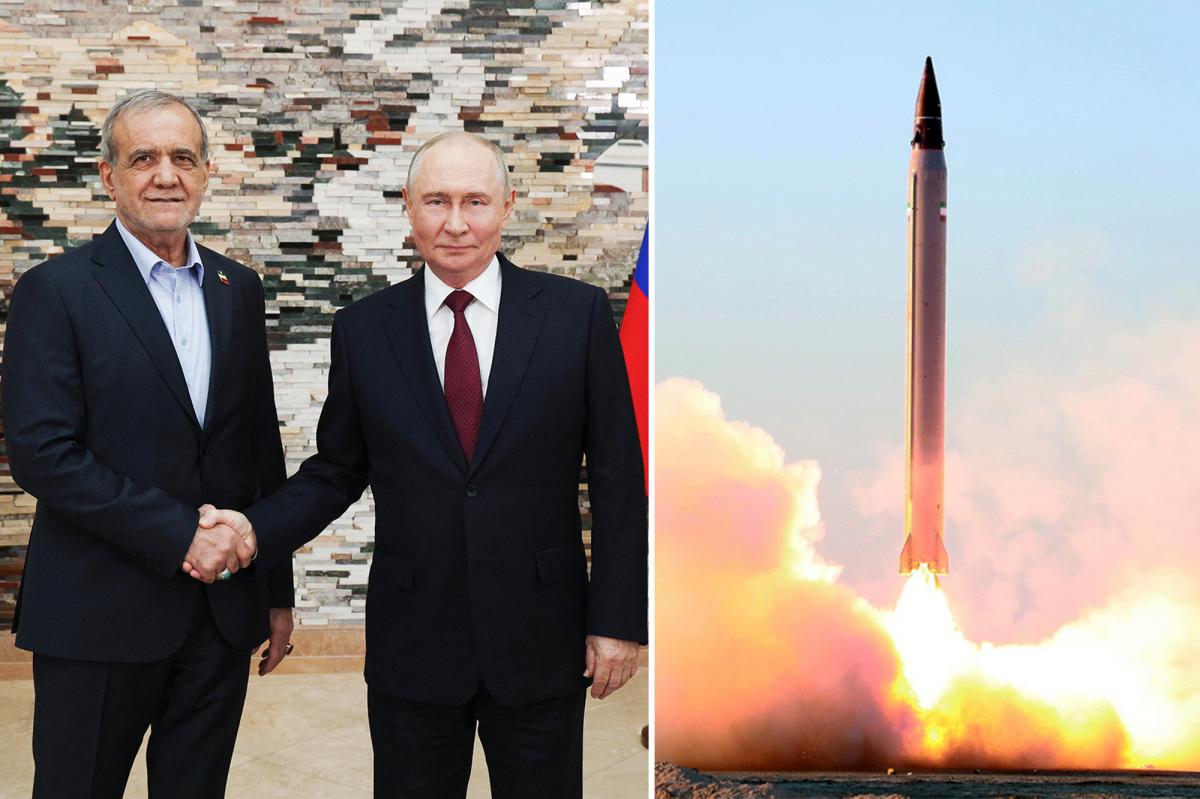

Russia has covertly supported Iran’s effort to build supersonic missiles capable of striking US warships, a new report has claimed.
The initiative, known as Project C430L, has involved senior Russian missile specialists helping Tehran develop a new generation of high-speed weapons designed to threaten US aircraft carriers and naval vessels stationed in the Middle East, the Financial Times reported.
According to the report, the program began in 2023 and centers on assisting Iran with its own ramjet propulsion technology. Such a system could enable cruise missiles to travel at multiple times the speed of sound, sharply reducing the window for interception.
“For the Iranians, this would give them a qualitatively new strategic weapon system that could threaten US Navy vessels,” Jim Lamson, a former CIA military analyst focused on Iran, told the FT.
Neither Russian nor Iranian officials have publicly acknowledged the alleged program or issued statements addressing the reported cooperation.
The ramjet collaboration reportedly took shape as Iran was supplying Russia with Shahed suicide drones, relatively low-cost but effective weapons that have played a major role in Moscow’s war in Ukraine.
The reported missile work comes as Russia and Iran deepen their military ties and pledge closer economic cooperation in defiance of the West, including resistance to US sanctions.
Leaked communications between the two countries indicate that Rosoboronexport, Russia’s state-run arms export agency, coordinated the supersonic missile assistance effort, the FT reported.
Russian arms export officials and rocket experts reportedly made repeated trips to Iran before the C430L contract was formally signed in November 2023, with the two nations exchanging notes on the rocket system development through the years.
There were even plans made in April 2025 to send a delegation of two dozen Russian specialists to Iran to act as consultants on the supersonic jets, according to the correspondence.
The talks continued into 2026, with the latest correspondence dated in June to discuss the next phase of planning for the program, the FT reported.
While Iran has built and flight-tested its own ramjet propulsion system, it still has yet to deploy any Russian-assisted supersonic cruise missile, leaving the current status of its development a mystery.
The report comes just a day after Russian President Vladimir Putin vowed to support Iran during the Shanghai Cooperation Organization summit in Kyrgyzstan, an event billed as a counterweight to America’s global influence.
Russia has been previously accused of aiding Iran throughout the war with the US, including by providing satellite target assistance for the retaliatory attacks Tehran has repeatedly fired at military bases in the Middle East.
Moscow has also reportedly shipped components for drones, missiles and explosives to Iran during the war.


