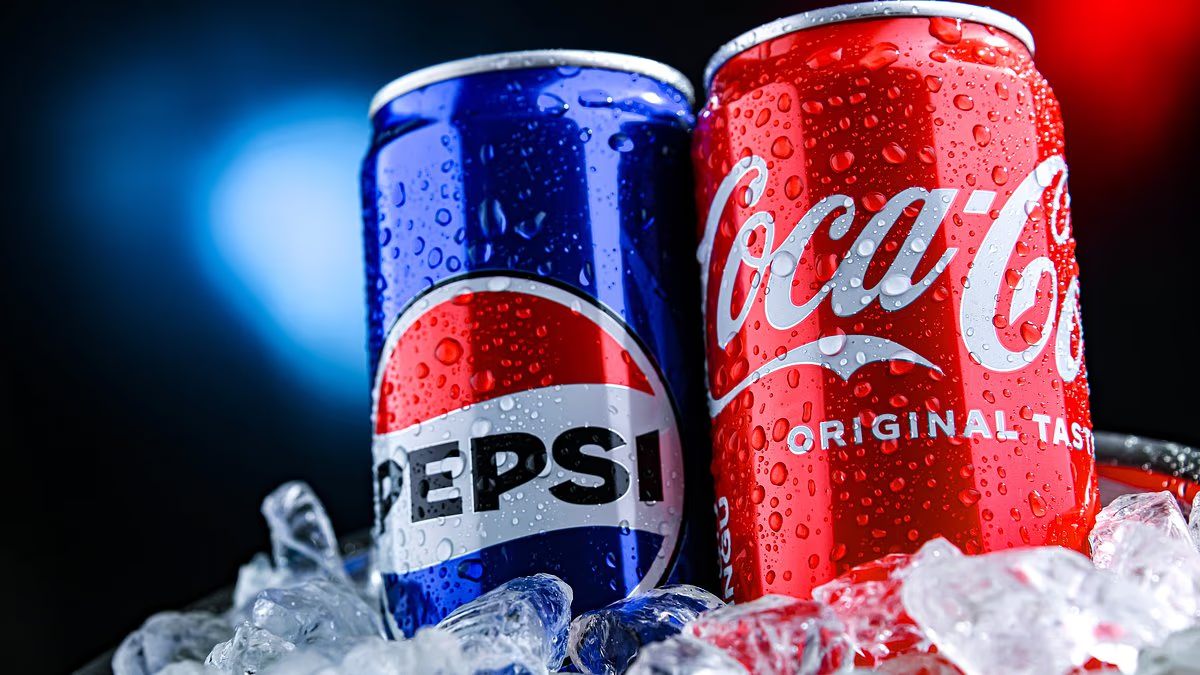

Pepsi’s long-standing foothold in American fast food is weakening after KFC chose Coca-Cola as its new beverage partner, ending one of PepsiCo’s oldest restaurant alliances.
Beginning in January 2027, KFC will start removing PepsiCo products from its 3,718 US locations. The move will close out a partnership that has endured for almost four decades.
The setback comes with a crucial offset, however. Taco Bell has agreed to remain with PepsiCo for another 10 years, giving the drinks company an important win in the fiercely contested cola market.
That agreement carries considerable weight: Taco Bell recorded approximately $17 billion in US systemwide sales last year, more than three times KFC’s roughly $5 billion.
The development creates an unusual corporate split because both chains are owned by Yum! Brands—turning the beverage switch into an awkward family dispute of sorts.
PepsiCo acquired KFC in 1986 and later separated its restaurant division in 1997. Even after the businesses went their separate ways, they continued their drinks partnership for decades.
Once the transition is complete, KFC customers in the US are expected to see Coca-Cola, Sprite and Fanta replace Pepsi, Mountain Dew and Starry. The rollout is scheduled to reach restaurants nationwide by spring 2027.
Neither company has revealed the financial terms of the agreement. The change applies only to KFC’s US operations, leaving its international restaurants unaffected.

Pepsi is losing ground in the fast-food industry after longtime partner KFC selected rival Coca-Cola for its US restaurants

PepsiCo CEO Ramon Laguarta
The timing is particularly difficult for PepsiCo, whose North American beverage division is already working to regain momentum.
PepsiCo said beverage volumes fell 2 percent in its latest quarter. Chief Executive Ramon Laguarta acknowledged that the company was “not competing well in soft drinks.”
Laguarta has pledged to place greater emphasis on the beverage portfolio, including Pepsi, Mountain Dew and prebiotic soda brand Poppi, which the company hopes can help reignite growth.
The market-share figures underline the scale of Pepsi’s challenge. Pepsi accounted for 8.1 percent of US carbonated soft-drink volume last year, well behind Coca-Cola’s 18.5 percent share.
Pepsi also fell behind Dr Pepper into third place in 2024—an extraordinary reversal for a brand once synonymous with America’s high-profile cola rivalry.
At the height of the cola wars, Pepsi’s star-studded campaigns, including ads featuring Michael Jackson and supermodel Cindy Crawford, transformed the competition into a defining piece of pop culture.
Today, Coca-Cola has extended its lead as PepsiCo’s broad food-and-beverage empire confronts challenges across several businesses.
DISCOVER MORE: New York Gov. Kathy Hochul Ranked Worst in U.S. Governor Study
The company’s snack division, home to brands such as Fritos and Doritos, is also under pressure. Inflation-conscious consumers have pushed back against higher prices, prompting PepsiCo to reduce prices on selected products this spring.

KFC plans to begin replacing PepsiCo beverages at its 3,718 US restaurants in January 2027, ending a partnership of nearly 40 years

As KFC deals Pepsi another blow in the soda battle, Taco Bell has provided a major boost by renewing its relationship with PepsiCo for another decade
That leaves the drinks division under even greater pressure to deliver growth as consumers increasingly gravitate toward energy drinks and beverages marketed for their functional benefits.
Taco Bell, meanwhile, is betting that drinks can become a major attraction in their own right, targeting $5 billion in beverage revenue by 2030.
The chain has already introduced its Refrescas range and plans to develop more drinks with PepsiCo, including new twists on its cult-favorite Baja Blast.
The tropical-colored Mountain Dew spin-off has become a $1 billion brand, giving the partnership a lucrative signature drink that rivals cannot easily replicate.
Taco Bell and PepsiCo plan to collaborate on new food and beverage offerings through 2036, including future flavors linked to the Doritos Locos Tacos range.
Their plans also include energy and functional drinks aimed at younger customers, as well as beverages designed to encourage visits outside traditional lunch and dinner hours.
Elizabeth Lafontaine, director of research at location analytics firm Placer.ai, previously told CNN that Taco Bell’s Baja Blast lineup had often been a key differentiator for the chain.
She added that exclusive products could help fast-food brands attract customers as competition intensifies and diners search for better value.
Online, the KFC switch has sparked debate among soda fans, with some questioning whether Coca-Cola will actually improve the drinks selection.
One Reddit user complained: ‘The problem isn’t with it being Pepsi, it’s with it being diet only.’
Another declared, ‘Pepsi max is the king of drinks,’ while a less enthusiastic fan griped about its ‘horrible aftertaste.’
Others were relieved that the change would not affect Britain, with one commenter celebrating: ‘Thank god. Pepsi over coke is one of the reasons I actually go to KFC.’
PepsiCo may have held on to Taco Bell’s lucrative business, but with Coke stealing the spotlight at KFC, the pressure is on to prove it can still bring the fizz.


