The Bangladesh Nationalist Party (BNP) has secured an overwhelming two-thirds majority in the recent general elections, marking a significant shift towards stability after the nation experienced months of upheaval following the removal of former Prime Minister Sheikh Hasina in a youth-driven revolt.
According to domestic television reports on Friday, the BNP and its coalition partners clinched at least 212 out of the 299 parliamentary seats available, in what is being hailed as Bangladesh’s most competitive election in several years.
Meanwhile, the opposition alliance, led by Jamaat-e-Islami, captured 70 seats in the legislature.
Returning to power after a two-decade hiatus, the BNP expressed gratitude to the nation’s citizens shortly after securing a majority in the overnight vote count. In a gesture of unity and reflection, the party also called for special prayers on Friday for the country’s peace and prosperity.
“Though we have achieved victory by a significant margin, we will not hold any celebratory processions or rallies,” the party announced in a statement.
The National Citizen Party (NCP), which emerged from the youth movement that played a pivotal role in ousting Hasina and was part of the Jamaat-led coalition, managed to win only five out of the 30 seats it contested.
A clear outcome had been seen as key for stability in the nation of 175 million after months of deadly anti-Hasina unrest disrupted everyday life and industries such as garments, in the export of which Bangladesh is No.2 globally.
“A strong majority gives BNP the parliamentary strength to pass reforms efficiently and avoid legislative paralysis. That alone can create short-term political stability,” Selim Raihan, an economics professor at the University of Dhaka, told Reuters news agency.
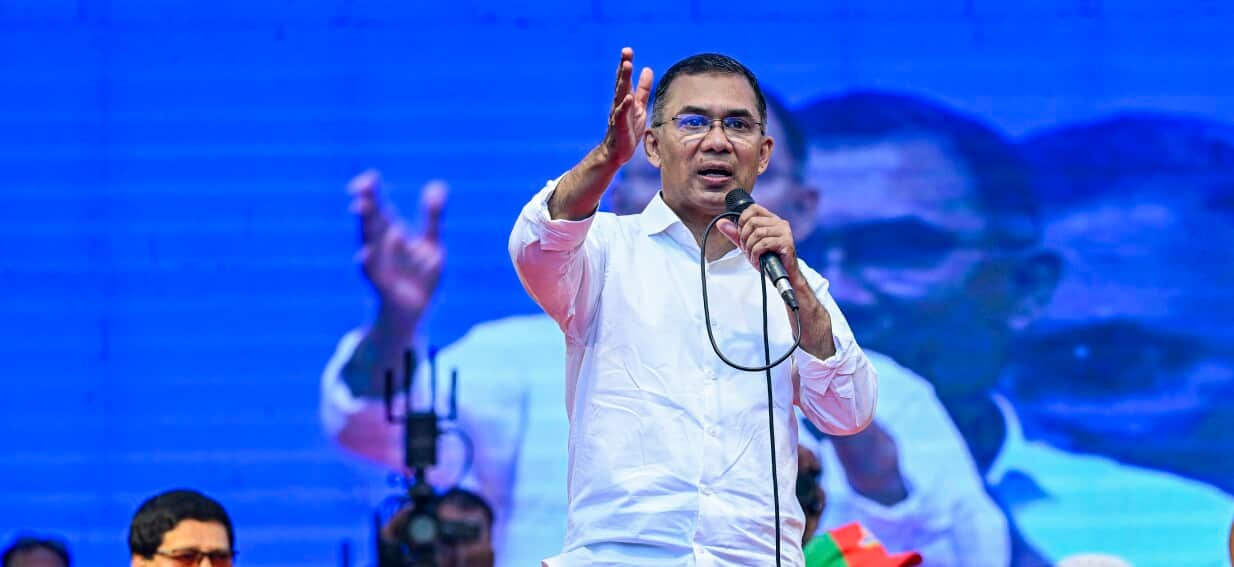
BNP leader Tarique Rahman is widely expected to be sworn in as prime minister. The son of the party’s founder, former president Ziaur Rahman, returned in December to the capital, Dhaka, from 18 years abroad.
In its manifesto, the BNP promised to prioritise job creation, protect low-income and marginal households and ensure fair prices to farmers.
“If the factories run regularly and we get our wages on time, that’s what matters to us. I just want the BNP government to bring back stability so more orders come to Bangladesh and we can survive,” Josna Begum, 28, a garment worker and mother of two, told Reuters after the results.
India’s Prime Minister Narendra Modi, Pakistan Prime Minister Shehbaz Sharif and the US ambassador to Bangladesh, Brent T. Christensen, were among the first to congratulate Rahman on his party’s victory.
BNP supporters celebrate
The Islamist Jamaat-e-Islami conceded defeat late on Thursday night once trends became clear, but said in a statement on Friday that it was “not satisfied” with the process and asked its followers to stay patient.
Now in exile in New Delhi, Hasina long dominated Bangladesh politics along with Rahman’s mother, Khaleda Zia, while his father was a leading independence figure who ruled from 1977 to 1981 before he was assassinated.
The BNP win with more than 200 seats is one of its biggest, surpassing its 2001 victory with 193, although Hasina’s Awami League, which ruled for 15 years and was barred from contesting this time, secured a bigger tally of 230 in 2008.
But elections of other years were boycotted by one of the main parties or were contentious.
Overnight, throngs of supporters cheered and shouted slogans at the BNP headquarters in Dhaka as the scale of the party’s landslide became clear.
Turnout exceeded the 42 per cent of the last election in 2024, with nearly 60 per cent of registered voters participating in the election on Thursday, according to local media.
More than 2,000 candidates, many independents among them, were on the ballot, which featured a record number of at least 50 parties. Voting in one constituency was postponed after a candidate died.
Broadcaster Jamuna TV said more than 2 million voters chose “Yes”, while more than 850,000 said “No” in a referendum on constitutional reforms held alongside the election, but there was no official word on the outcome.
The changes include two-term limits for prime ministers and stronger judicial independence and women’s representation while providing for neutral interim governments during election periods, and setting up a second house of the 300-seat parliament.
Peaceful polls
Party workers spent the whole night in front of the BNP offices.
“We will join the nation-building effort led by Tarique Rahman,” Md Fazlur Rahman, 45, told Agence France-Presse.
“Over the last 17 years, we have suffered a lot.”
Heavy deployments of security forces are posted countrywide, and UN experts warned ahead of the voting of “growing intolerance, threats and attacks”, and a “tsunami of disinformation”.
Political clashes killed five people and injured more than 600 during campaigning, police records show.
But polling day was largely peaceful, according to the Election Commission, which reported only “a few minor disruptions”.
‘Ended the nightmare’
Interim leader Muhammad Yunus, who will step down once the new government takes power, has urged all to stay calm.
“We may have differences of opinion, but we must remain united in the greater national interest,” he said.
The 85-year-old Nobel Peace Prize winner has led Bangladesh since Hasina’s rule ended with her ouster in August 2024.
His administration barred her Awami League party from contesting the polls.
Yunus said the election had “ended the nightmare and begun a new dream”.
Hasina, 78, sentenced to death in absentia for crimes against humanity, issued a statement decrying an “illegal and unconstitutional election”.
Yunus has championed a sweeping democratic reform charter to overhaul what he called a “completely broken” system of government and to prevent a return to one-party rule.
Voters also took part in a referendum on the proposals for prime ministerial term limits, a new upper house of parliament, stronger presidential powers and greater judicial independence.
Television projections suggested 65 percent of votes had endorsed the charter.
For the latest from SBS News, download our app and subscribe to our newsletter.