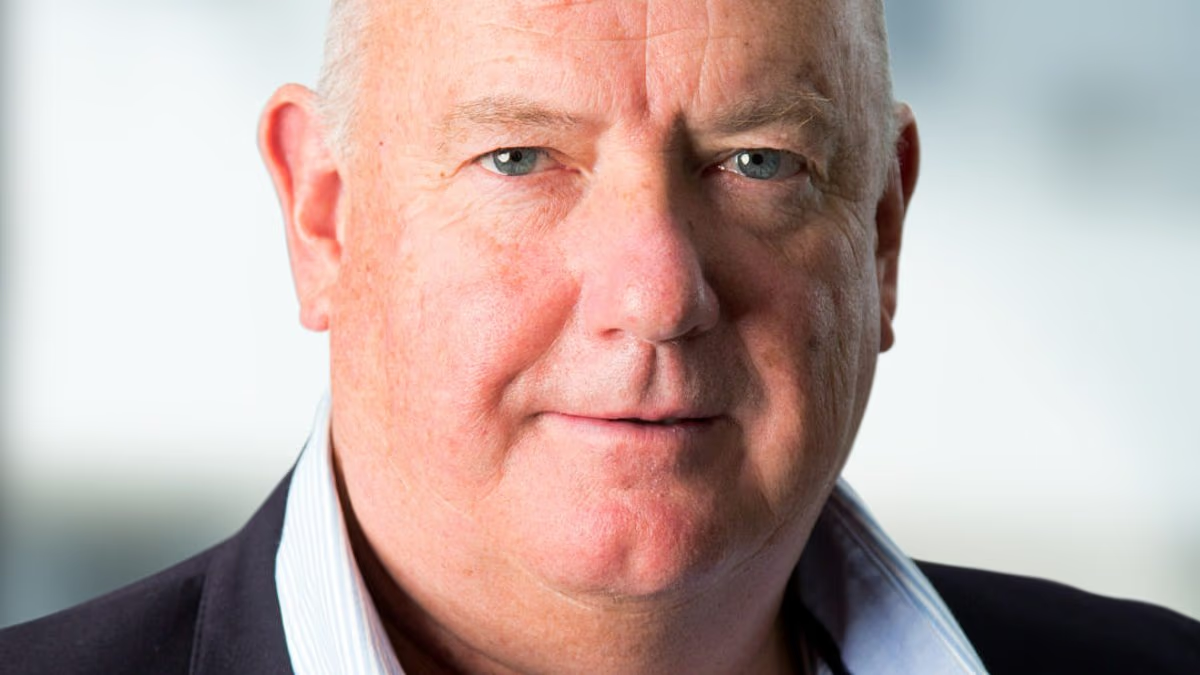
The manager of a Mozambique hotel besieged by Islamic State-linked militants has defended his decision to escape by helicopter with two dogs, shortly before British contractor Philip Mawer was killed.
Timothy Roberts told an inquest that the owners of the Amarula Hotel instructed him to board the aircraft, which had been chartered at a cost of £11,200.
The helicopter pilot said the dogs travelled in the aircraft’s hold and did not occupy seats that could otherwise have been given to people trying to escape.
Mr Roberts has faced accusations that he “abandoned” the hotel. His departure came shortly before Mr Mawer, 58, was killed while attempting to flee in a road convoy struck by a rocket-propelled grenade.
The inquest at Winchester Coroner’s Court heard that Mr Mawer had spent 18 months working in Mozambique when the coastal town of Palma was attacked by fighters from the Islamic State-backed Al-Shabaab group in March 2021.
He had been offered a place on another helicopter but declined, saying that women and children should be evacuated first. He later joined a convoy of vehicles attempting to reach safety.
Originally from Somerset, Mr Mawer was a project manager for RA International, the company contracted to build accommodation for workers involved in TotalEnergies’ major gas development, described as the largest gas operation in Africa.

Philip Mawer, 58, was working on a project to develop a new gas field in Mozambique when Islamic State-linked militants attacked his hotel on March 24, 2021

The Somerset contractor was offered a helicopter seat the day after the siege began but refused, saying women and children should be evacuated before him
Giving evidence at the inquest into Mr Mawer’s death, Mr Roberts said he had repeatedly urged his colleague to leave sooner, but Mr Mawer had chosen not to go.
In a written statement, Mr Roberts said the two men had become well acquainted during the Covid lockdown in 2020 and that he had been deeply worried about Mr Mawer’s safety.
He said he began trying to organise an evacuation on March 24 after hearing people nearby shouting “Allahu Akbar”.
“I contacted everyone I could and told them we had been compromised and had no weapons,” he said. “I called the police and explained that we needed to get out, but nothing happened.”
“They were evacuating governors and members of staff. When I asked whether they could take other people too, I was told that was not possible.
“I called Phil because I was worried about him and told him to board, but he refused. He said women and children should go first.
“After the fourth flight, we were told the helicopter had run out of fuel. As daylight faded, it was no longer able to fly.
“The guests became extremely sombre. They had believed they were about to be rescued, but that had not happened. Meanwhile, the fighting grew more intense.”
Two days later, Mr Roberts said he was informed that another helicopter would be sent to collect them.
“I believed that staying would mean we were killed. We were simply sitting ducks,” he told the inquest.
“I gathered everyone together and told them we had to leave as quickly as possible.”
‘I was then instructed by the hotel owners that a helicopter was coming and I should get on it.
‘At 15.15 hours [the] convoy left. A helicopter came in and I was evacuated. At the same time I was told the convoy had been targeted.’
Simon Everett, chief executive of Everett Aviation – which rescued the hotel manager and the two dogs – said ‘his company had no responsibility to evacuate people’.
He said: ‘I’ve known the manager of the hotel for a long time and Tim Roberts, known as Robbie. We were good friends
‘The only reason we were there is he telephoned my general manager and asked to be rescued because insurgents were advancing on the hotel.
‘I authorised them to rescue him, three staff members and his two dogs.
‘It was a four-seat vehicle and I was told the two dogs did not take any seats.
‘In hindsight I should never have made the decision to authorise the rescue. It was too dangerous. The pilot could have been killed as well as the passengers.’
Reinaldo, an IT specialist working for the hotel whose surname was not given, was in the passenger seat of the pick-up truck Mr Mawer was driving at more than 60mph. He survived when it was struck by the rocket-propelled grenade.
He told the inquest their vehicle came under gunfire before the rocket hit, adding: ‘Around 15.15 we set off in a convoy. Phil’s pick-up was the 16th in the convoy. We were travelling at very high speed, maybe 100kmh.
‘We became attacked by al-Shabaab and gunfire started hitting us. The vehicle behind us began reversing. I became aware that we ourselves were hit by an RPG.
‘Our vehicle began skidding and was still under fire. We got out and ran.’
TotalEnergies has been accused of hampering rescue attempts and failing to provide enough fuel for helicopters trying to bring people to safety.
TEPMA1, a TotalEnergies Mozambican subsidiary, denied having any responsibility for Mr Mawer and said it could not release fuel to DAG, the private military group working on behalf of the Mozambique government fighting insurgents and rescuing hostages.
It said it did not know Mr Mawer was still in Palma and claimed human rights abuse allegations against DAG meant it could not provide it with fuel.
The inquest continues.


