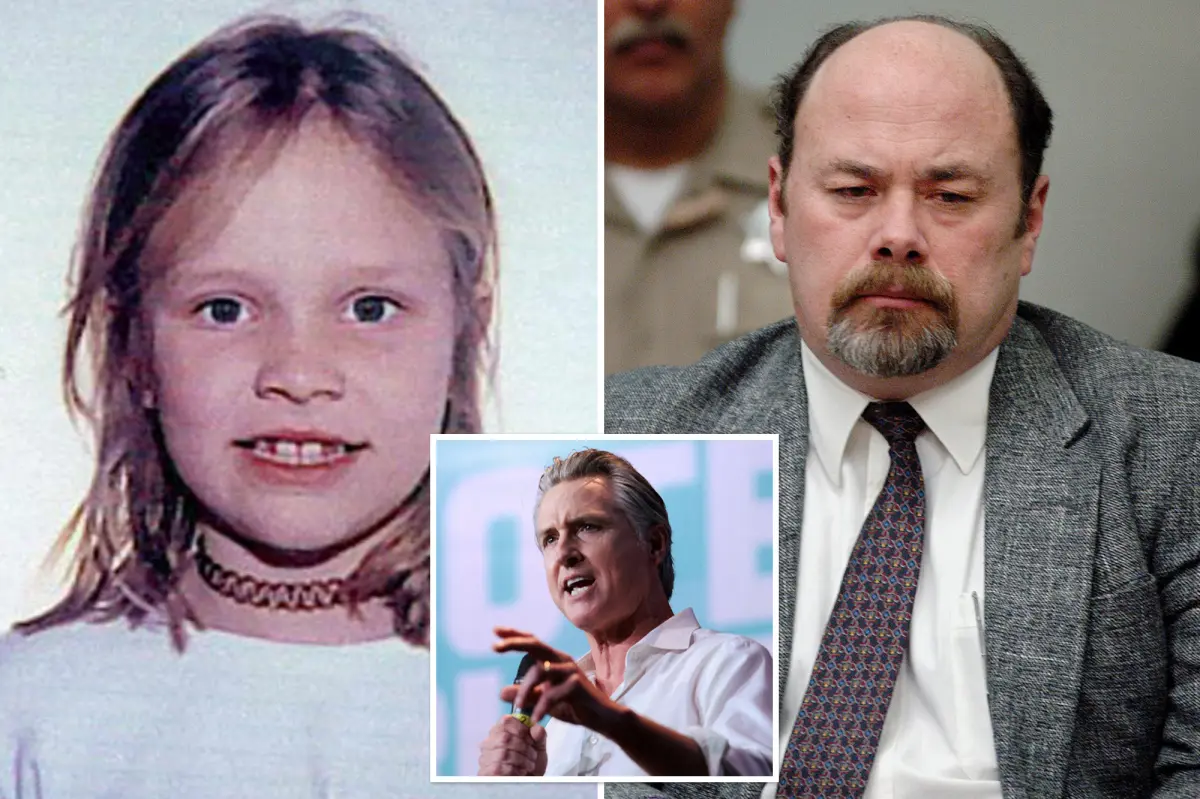

California Gov. Gavin Newsom’s decision to commute the death sentences of all 548 inmates on the state’s death row has reopened painful memories and sparked outrage among people connected to one of San Diego County’s most infamous crimes.
The California Supreme Court must still approve commutations for prisoners with multiple felony convictions. Among those who could ultimately benefit is David Westerfield, who was sentenced to death for the 2002 kidnapping and murder of 7-year-old Danielle van Dam.
Prosecutors said Westerfield broke into a neighbor’s home during the night, abducted van Dam, sexually assaulted and killed her, and left her body along a roadside.
Danielle had been missing for 24 days when her decomposed remains were discovered. Westerfield was also accused of possessing child sexual abuse material found on his computer.
Christina Buttons, who lived near both Westerfield and the van Dam family, recalled the fear she experienced as a 13-year-old when the crime unfolded. She said the case contributed to years of insomnia.
“Danielle’s murder devastated our whole neighborhood, and me personally. I was a sensitive kid, and it played a major role in the decline of my mental health during adolescence,” said Buttons, who is now an investigative reporter for City Journal.
Buttons said she had spent 24 years waiting for Westerfield’s execution and criticized Newsom for eliminating that possibility.
“It’s especially insulting to hear Newsom talk about morality as though he is morally superior to those of us whose lives were forever changed by these heinous crimes and who want to see the perpetrators held accountable,” Buttons said.
EXPLORE MORE: National Lottery’s Flying Reindeer Joins Christmas Ad Battle
California voters rejected efforts to abolish the death penalty in 2012 and 2016. They also approved a measure intended to speed up executions, she noted.
Newsom’s 2019 decision to halt executions already defied the will expressed by voters, Buttons said. The blanket commutations, she argued, go even further.
She urged the California Supreme Court to reject the governor’s commutations.
“For all these years, I held on to the hope that someone would eventually take office who respected the will of California voters and would allow these sentences to be carried out,” she said.
In a lengthy letter explaining his decision, Newsom described the action as difficult but morally justified.
At the same time, the governor acknowledged that the move would cause pain and anger among many Californians.
“I also acknowledge that this clemency action will anger and hurt some Californians. This will always weigh heavily on me. As governor, I alone bear responsibility for this decision and its impact, just as I alone would bear responsibility for each execution,” Newsom wrote.


