
The only real surprise is that the cracks took so long to appear.
When Reform UK Scotland surged in the polls earlier this year and won 17 seats at the Holyrood election—putting it joint second with Labour behind the SNP—there was talk of a revolutionary new force in Scottish politics.
Led by former Conservative peer Malcolm Offord, Reform’s MSPs were expected to shake up a complacent political establishment and, crucially, deliver results.
History, however, suggests that insurgent parties can be inherently unstable. A sudden surge in support can propel a political movement to the frontline long before it is ready for the pressures that come with success.
And when parties emerge from nowhere, unity is often the first thing to disappear.
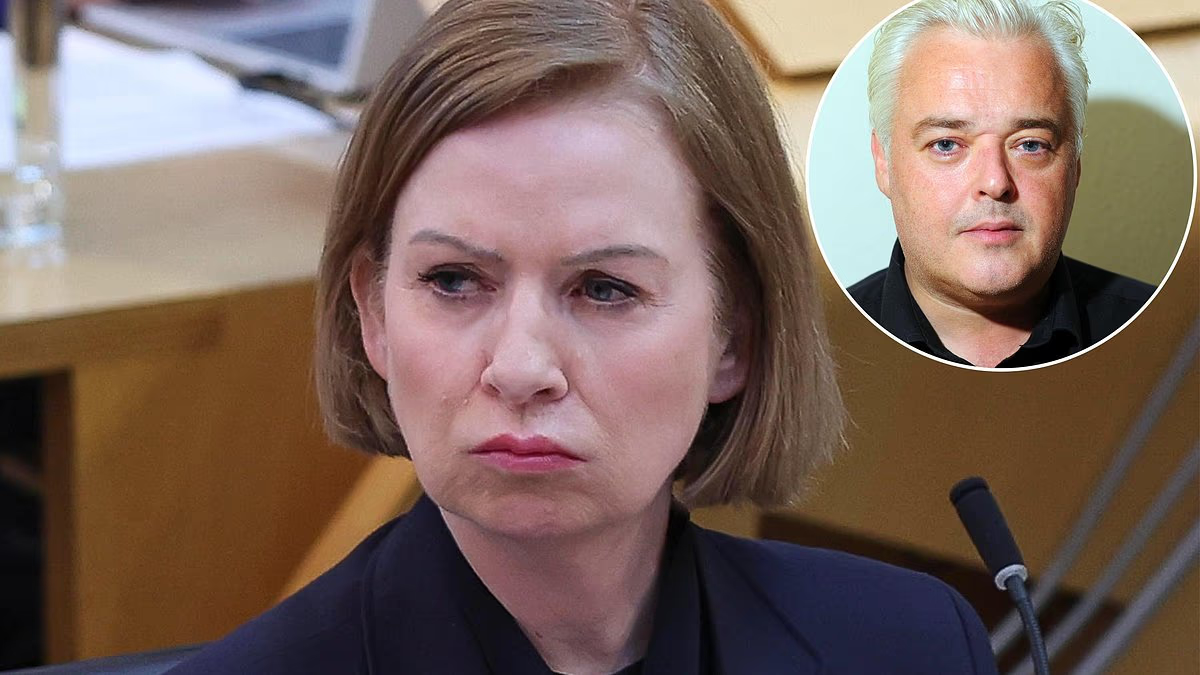
On Monday, the first serious fracture in Reform’s Scottish operation became public when MSP Amanda Bland resigned from the party and announced that she would continue as an independent at Holyrood.
The precise reasons for Ms Bland’s departure remain unclear.
Reform UK sources reportedly described her as “very difficult to work with”. The MSP, who represents the Central Scotland and Lothians West region, had been summoned to a meeting last Wednesday to discuss the high turnover of staff in her office.

Amanda Bland will sit as an independent after quitting Reform
Ms Bland later told the BBC that her resignation was unrelated to that meeting. That would suggest the staffing concerns were not the only source of tension within Reform’s Holyrood group.
In a statement that offered little clarification, Ms Bland said her “principles and priorities” had not changed. She added that she entered politics to “champion fairness and common sense, protect women and children, improve public services, support businesses to thrive, and work towards a fairer and more effective criminal justice system”.
Those sentiments could have come from almost any politician in any party, and they shed little light on what is actually happening inside Reform UK’s Scottish operation.
Responding to the party’s first defection since May’s election, a Reform spokesperson said Ms Bland should “reflect on her reasons for choosing to isolate herself from that team of capable individuals”.
Oh, Amanda. They’re not angry with you; they’re just disappointed…
Reform has also demanded, pointlessly, that Ms Bland surrender her seat. Under the rules of the Scottish Parliament, doing so would mean she was replaced by the next candidate on the party’s regional list from the last election.
Of course, Ms Bland is unlikely to resign. Why would she give up such a comfortable position? Even if she were prepared to walk away from almost £80,000 for doing as little as she chose, would she really want to benefit the party she has just left?
For now, Reform and the Greens represent two opposing—or perhaps co-dependent, depending on one’s patience with their attacks on each other—forces promising to transform the way Scotland is governed.
Both offer voters the prospect of a fresh start in a nation increasingly attuned to the values they claim to represent.
This kind of primary-colours politics can be remarkably successful when paired with the right frontperson. The late Alex Salmond did not become the most influential Scottish politician of his generation by dwelling on detail. Instead, he offered an increasingly disillusioned electorate the promise that voting SNP meant voting for something new and more honest—and delivered that message with enough conviction to bring a substantial number of voters with him.
The contemporary politician who most closely resembled Mr Salmond was Reform UK leader Nigel Farage.
YOU MAY ALSO READ: 5 Students, 4 Teachers Were in Oregon Classroom During School Shooting
While Mr Salmond was building support for the SNP, Mr Farage was doing the same for Ukip and both men promised constitutional change would liberate and enrich us all.
The success of both men saw membership of their respective parties explode. Suddenly, parties which had operated on the fringes were close to power.
In Mr Salmond’s case, he achieved it.
But the swift rise in support for single issue parties whether it’s pro-independence SNP, the Eurosceptic Ukip, Brexit, and Reform parties which Nigel Farage has led, or the Green Party of England and Wales, currently buoyed by support for leader Zack Polanski – brings with it particular problems.
And among those drawn to join these insurgent parties are a lot of ambitious (and not always clever or decent) people.
If we look at the post independence-referendum intake of SNP parliamentarians, we can identify scores whose ambition far outstrips their talent.
The Green benches at Holyrood are filled with some of the most outspoken yet incompetent politicians of our times, each of them carried there on a rising tide rather than by their own talents. Reform UK was, until little more than a year ago, considered unlikely ever to make the same breakthrough in Scotland that it has elsewhere in the United Kingdom.
Conventional wisdom had it that Nigel Farage would never be accepted by Scottish voters.
That analysis – which came, of course, from the complacent ‘progressive’ left – turned out to be hopelessly wrong.
Reform UK’s haul of 17 seats in May was a huge and, for many, unexpected achievement.
But who are these new Reform MSPs? And who, for that matter, are the cranks and obscurities who now fill the Green seats at Holyrood?

Reform UK won 17 seats at Holyrood in May – a huge achievement
Both Reform and the Greens tell stories about making breakthroughs. Each asks us to believe that they will soon be making life-changing decisions.
But, as the mysterious case of Amanda Bland reminds us, when it comes down to it, these parties are fragile. Egos are large and experience limited which makes for a most unpalatable cocktail.
It took just five months for infighting to end Reform UK’s status as joint largest opposition party at the Scottish parliament.
Malcolm Offord is no longer leader of an unstoppable force. He’s leader of the third largest party at Holyrood and he’ll have to wait his turn, after Scottish Labour’s new leader Michael Marra, at First Minister’s Questions.
In one of the clearest cases of nominative determinism I’ve ever seen, Ms Bland did nothing of interest for the first five months of her political career.
Well, she’s over that now.
Amanda Bland is free and ready to make a name for herself.
How ironic it is that her legacy will be the damage she inflicts on the party without which she’d never have been elected.