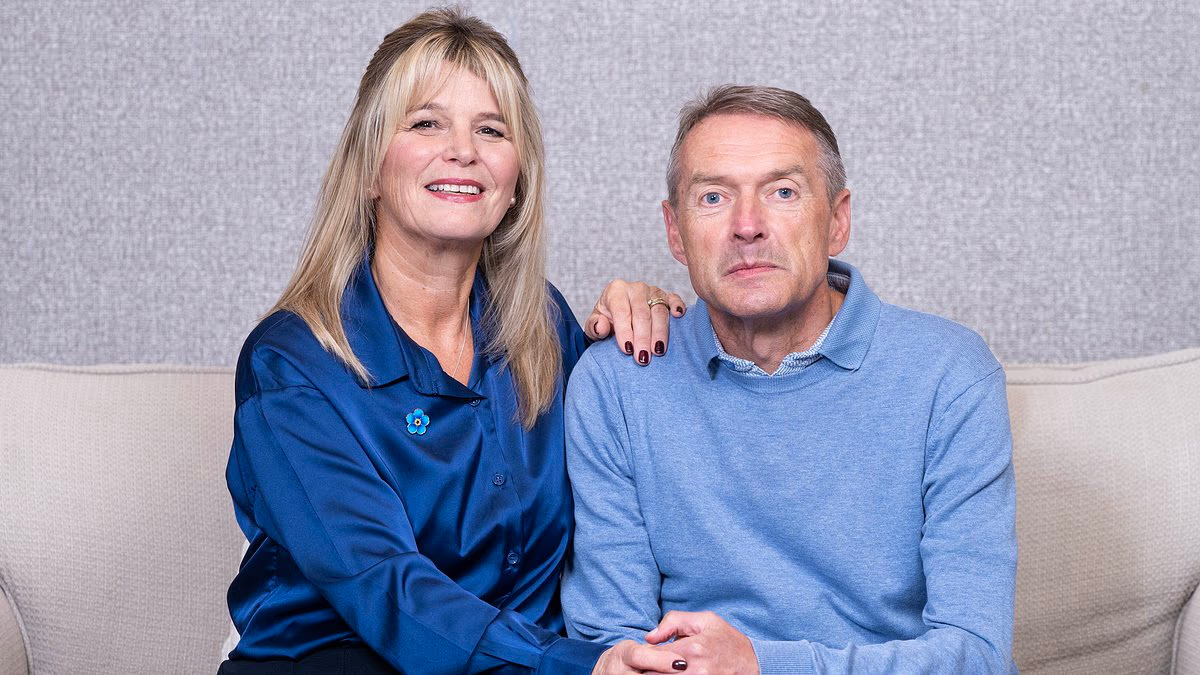

In the Ruscoe household, 9pm is bedtime. But 58-year-old Emma is not putting her children to bed. She is settling her husband, Simon, 62, who was diagnosed with early-onset Alzheimer’s disease six years ago. She is now his full-time carer.
Emma first realised Simon’s memory was failing during a family holiday in Greece in 2016. One bright, sunny day, the couple were out exploring when they discussed what their teenage sons, Alex and Ollie, might eat for lunch at the villa.
“Less than ten seconds after we had finished talking about it, Simon turned to me and asked, ‘What do you think the boys will have for lunch?’” she recalls.
“We ended up having a massive argument. I kept telling him, ‘We literally just discussed this,’ but he insisted we hadn’t.”
There were other troubling signs during the trip. Simon and the boys were fiercely competitive when it came to the board and card games that featured so prominently in their family holidays.
“Simon would normally win every game,” Emma says. “But on that holiday, he couldn’t even play. We simply couldn’t understand what was happening.”
At first, Emma attributed the changes to the pressure of Simon’s job in IT. After they returned to their home in Solihull, in the West Midlands, she watched him carefully over the following months. Although she worked in adult social care, dementia was not her first thought. Simon was only 51 and, surely, that was far too young?
But his memory problems continued. After a frightening car journey in which Simon was driving yet repeatedly forgot the route, Emma decided to seek medical advice.

Emma Ruscoe first noticed Simon’s memory problems during a 2016 family holiday in Greece
That marked the beginning of a long struggle to have Simon’s symptoms taken seriously. His age proved to be a significant obstacle, with medical professionals reluctant to investigate dementia in such a young man.
By 2018, as his condition worsened, Simon was finally referred to an NHS Memory Clinic. Emma says the couple were simply “fobbed off”.
“There were no tests,” she recalls. “We spoke to a psychologist, who told us Simon was stressed. Then we received a letter categorically stating that my husband did not have dementia.”
Doctors, and even some people close to Emma, suggested she might be imagining the changes in Simon. Some wondered whether menopause symptoms, including brain fog, were causing her confusion.
Emma began keeping a diary to record Simon’s unusual behaviour. On one occasion, she sent him to Tesco with a shopping list, only for him to return with a collection of bizarre items he had not been asked to buy. He remained adamant that he had purchased everything on the list.
It was not until May 2019, when Emma took Simon back to the doctor yet again, that someone finally recognised the signs of cognitive decline. Eight months later, in early 2020, Simon was diagnosed with early-onset Alzheimer’s. He was 55.
The diagnosis devastated Emma, but it also brought a sense of relief. At last, she could access help for Simon and support for the wider family.

Alex, right, and Ollie, left, loved playing football with their father in the garden when they were younger
Their marriage now exists in a deeply altered form. Day after day, Emma watches as her husband’s abilities and memories fade. As his Alzheimer’s progressed, Simon had to give up work in 2021.
He still recognises his family and appears comforted by their familiar presence and care. However, his cognitive abilities have declined considerably. He talks to Emma, but his words are often impossible to understand.
“Simon isn’t aggressive; he’s not like that,” she says. “But he does become frustrated.”
When Emma and Simon met through a mutual friend in 1992, they could never have imagined spending their later years this way. She remembers his “stunning blue eyes” and “wicked sense of humour”. They married two years later, and Simon delivered a hilarious wedding speech that had their guests in stitches.
They went on to have two sons, who adored the father they loved playing football with.
Those memories remain precious, but being confronted with the past can also be painful for Emma.
CONTINUE READING: Police: 24-Year-Old Krakow Gunman Dies in Hospital After Killing Six
“I can’t look at photographs very often because I find it difficult,” she says. She admits that thinking about the future they had imagined together can leave her feeling low.
Almost seven years after Simon’s diagnosis, the family has established a routine. Simon attends a day centre four days a week. On the remaining days, Emma and their sons, Alex, now 29, and Ollie, 25, care for him at home. Alex, who is recently engaged, lives only a seven-minute drive away, while Ollie remains at home.
“There’s nothing I do that they don’t do,” Emma says. “They provide personal care and help with toileting. They have to, because otherwise I would never get a break.”

The family celebrated Simon’s 60th birthday five years after his Alzheimer’s diagnosis
Emma still meets friends occasionally, enjoying theatre trips and short breaks away. But each outing requires weeks of planning to ensure Simon has someone with him at all times.
That respite is essential. The relentless demands of caring for someone with dementia can leave her struggling to stay calm. “There are times when I get angry and lose my temper with him. But I’m not angry at Simon; I’m angry at Alzheimer’s.”
It is often the smallest things that make Emma miss the life they once shared. Simon was the family’s technology expert and would set up all their devices. When Emma recently bought a new laptop, it was Alex who had to help her.
“Simon and I would have laughed about it. He would have teased me for being so hopeless with computers.”
In the months following Simon’s diagnosis, Emma says, the family learned a great deal and adapted. But a phone call with the Alzheimer’s Society made the biggest difference, providing valuable practical guidance.
“I had the best support worker ever,” she says gratefully. “I was incredibly lucky.”
The support worker helped Emma understand the medical, financial and practical assistance available to her and Simon, including Personal Independence Payment (PIP) and an annual medical assessment.
For Emma, maintaining a routine is crucial to creating some comfort and stability amid the uncertainty of Alzheimer’s.
“At 9pm, I take him upstairs and help him get ready for bed,” she says. “That can be difficult because he has limited ability to understand instructions.”
Emma then gives Simon donepezil, a medication used to slow the symptoms of dementia. “After that, he settles, sometimes quite quickly. I have a video baby monitor so I can keep an eye on him, and then I go downstairs.”

She spends the next hour or so watching television alone or calling a friend to unwind after a demanding day. She and Simon still share a bed.
“It matters to me that I can reach out and touch him during the night,” she says. “We still kiss each other goodnight, and I still kiss him good morning.”
Eating has also become increasingly challenging.
“He can no longer use a knife and fork properly. We eat a lot of pasta and other foods that he can manage with a spoon,” Emma says.
At times, Simon loses concentration halfway through a meal and stops eating. When that happens, Emma or one of the boys has to feed him.
Although Simon’s speech is now strained and confused, occasional flashes of his former humour still emerge. A few months ago, he was watching a news report in which Kemi Badenoch outlined policies she would introduce if she came to power. Simon responded: “Well, just do it then.”
“I was in the room with Oliver’s girlfriend. We looked at each other and burst out laughing,” Emma says. “So he did understand.”
Moments of clarity like that reassure Emma that the man she has been married to for 32 years is still there.
Despite the immense strain of caring for someone with dementia, Emma insists: “It isn’t selfless. He’s my husband and I made a vow. I get something from caring for him because he is a wonderful person and because he’s still in there somewhere. He’s still my Simon.”


