
Melbourne’s post-pandemic population boom has been driven overwhelmingly by overseas migration, with new analysis showing international arrivals now account for nearly nine out of every ten new residents.
Australian Bureau of Statistics figures examined by the conservative Institute of Public Affairs found close to 350,000 net overseas migrants moved to Melbourne between 2023 and 2025, representing 86 per cent of the city’s total population growth.
The same data indicates Melbourne received 27 per cent of Australia’s total net overseas migration intake, cementing its position as the country’s leading destination for new arrivals from abroad.
The findings come as the Albanese government faces mounting scrutiny over migration levels ahead of a significant reshaping of Australia’s immigration system.
Immigration Minister Tony Burke has previously said the government intends to reduce annual net overseas migration from about 300,000 to 245,000 this financial year, before lowering it further to 225,000 next year.
The analysis also shows overseas migration has surpassed both natural population growth and domestic migration as the dominant force behind Melbourne’s expansion.
Between 2023 and 2025, Melbourne’s natural increase — calculated by subtracting deaths from births — added 86,580 people to the city’s population.
During that same period, Melbourne recorded a net loss of 28,886 residents to regional Victoria and other states.

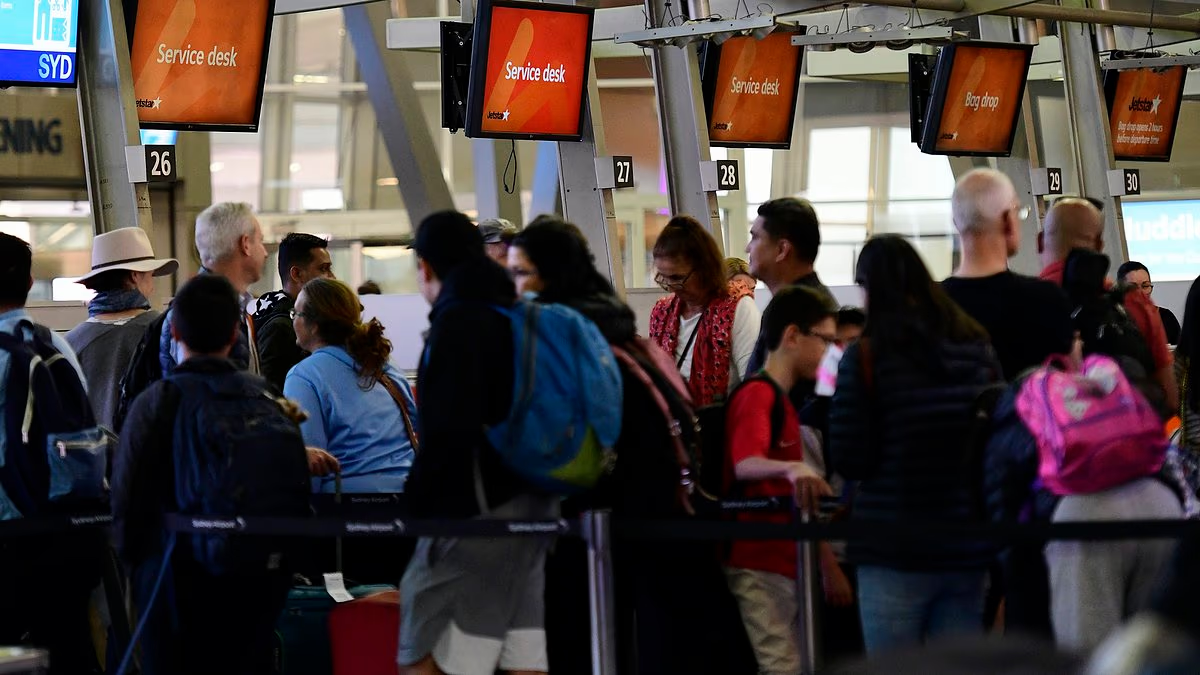
Nearly nine in ten new residents to Melbourne since the pandemic are from overseas as startling research shows international arrivals have outpaced local births (stock image)
This means overseas migration outweighed natural population growth by about four to one, showing how the city’s expansion now relies more on international arrivals than on increasing birth rates.
India contributed the largest migrant cohort, followed by China, the Philippines and Sri Lanka.
New arrivals concentrated in key growth corridors and urban centres, with about a quarter settling in inner Melbourne, 18 per cent in the outer southeast and 15 per cent in the western suburbs.
The influx adds more pressure to areas already facing housing and infrastructure strain.
While migration powered most population growth, Melbourne’s outer suburbs still saw the highest birth rates.
The western suburbs had the strongest natural increase, adding almost 29,000 people through births exceeding deaths.
This reflects the younger makeup of many outer suburban communities, where larger families are more common.
In contrast, the city’s established inner eastern suburbs reported virtually no natural growth, adding just 17 people through natural increase over the two-year period.

Melbourne’s fertility rate has fallen to a record low of just 1.4 children per woman (stock image)
The latest figures also show Melbourne’s fertility rate has fallen to a record low.
Women are now expected to have, on average, 1.4 children, below the replacement rate of 2.1 needed to maintain population without migration.
Both the Coalition and One Nation have called for permanent migration and net overall migration to be lowered, accusing the government of failing to meet its own migration reduction targets.
The Albanese government is preparing to unveil a new package of migration reforms as it faces growing pressure over Australia’s population growth and increased political concern about One Nation’s rising support.
Rather than cutting migration sharply, the government’s strategy centres on bringing arrivals back towards pre-pandemic levels, after net overseas migration stayed above 300,000 a year.
Treasury forecasts show net overseas migration is expected to fall to 245,000 in 2026–27 before dropping further to 225,000 in the following years.
Ministers have argued the reduction can be achieved through tighter visa settings, stronger compliance and stricter oversight of temporary migration programs, while still ensuring businesses can get the workers and skills they need.
The planned reforms are designed to ease pressure on housing, infrastructure and public services without undermining the economic benefits migration delivers to Australia.


