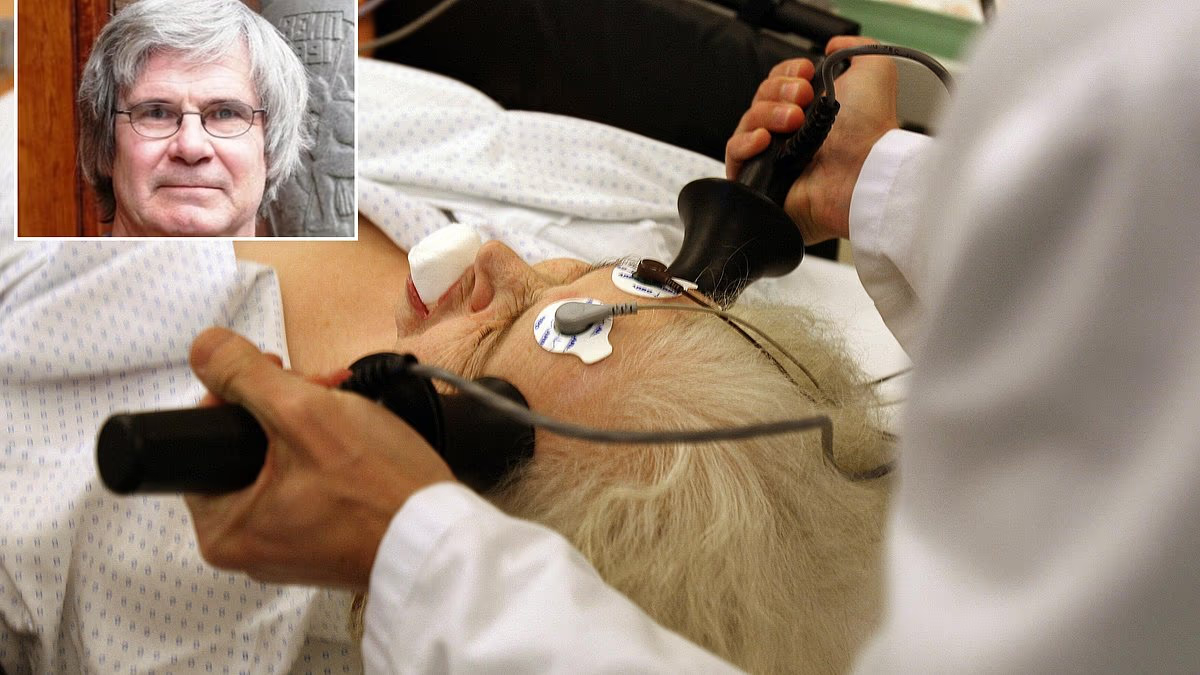
An embattled health board has been accused of clinical negligence after failing to carry out proper checks on patients undergoing electroconvulsive therapy (ECT).
NHS Tayside, which is already involved in a public inquiry into the case of a rogue brain surgeon, has admitted that it did not conduct detailed assessments before or after ECT. The treatment involves sending up to 120 volts of electricity through the brain.
The failures meant doctors could not establish whether patients genuinely needed ECT, determine whether the treatment was effective or identify any harmful side effects they may have developed.
Dr John Read, a clinical psychology professor at the University of East London who has written several studies on ECT, said: ‘These are basic, crucial steps. Failure to carry them out amounts to clinical negligence.’
Electroconvulsive therapy is typically considered a last-resort treatment for severe depression, bipolar disorder and schizophrenia. Its effectiveness remains the subject of intense debate, while the procedure can cause a wide range of side effects.
The most serious complications, including prolonged seizures and heart problems, are uncommon. More frequent side effects include confusion and memory loss.
Scotland introduced new clinical standards in 2023 in an effort to protect patients receiving ECT.
But a new report examining the use of ECT in Scotland found that NHS Tayside failed to follow the guidance, despite carrying out the treatment more often than any other health board last year.
ECT was developed in the 1930s after doctors observed that patients with epilepsy and mental health problems often appeared brighter and happier following an epileptic seizure.

Electroconvulsive therapy is commonly used as a last-resort treatment for severe depression, bipolar disorder and schizophrenia

Dr John Read has criticised the failure to carry out proper checks on ECT patients
Psychiatrists began deliberately inducing seizures in patients with mental illness who did not have epilepsy by passing an electric current through their brains.
In modern ECT, patients receive a short-acting general anaesthetic before being attached to electrodes which deliver a shock typically between 70 and 120 volts.
A new report by the Scottish ECT Audit Network shows that, in 2025, ECT was given to 7.2 people per 100,000 population in NHS Tayside, compared to just 2.8 per 100,000 in neighbouring NHS Highland. According to clinical standards, every patient must be tested to assess the severity of their illness and the functioning of their memory before treatment.
The report states: ‘The importance of objective measures of cognition and autobiographical memory are clear due to ongoing concerns about the cognitive side effects of ECT.’
However, in Tayside, the board admitted ‘poor compliance’ with this requirement, as assessments were not carried out in around a third of cases.
Another standard states that ECT patients must be reviewed ‘at minimum’ after every two treatments to assess whether it is working, ask the patients how they’re feeling and check whether their memory has been affected.
Tayside only met this requirement in around 5 per cent of cases.
Dr Read said: ‘NHS Tayside is using ECT more than anywhere else. But the board isn’t bothering to assess patients’ cognitive function before treatment. Which means that they have no baseline to refer to later, no way of monitoring whether patients have suffered any damage.
‘If patients experience memory loss within the first two or three treatments doctors are supposed to stop giving ECT. But in Tayside, patients aren’t being reviewed after treatment either. This can’t be allowed to continue.’
However, NHS Tayside said it has taken action to address the failings and was now demonstrating ‘improvements in compliance’.
A spokesman added: ‘New documentation to strengthen consistency, enhance clinical oversight and ensure clarity around procedures was introduced in January.’
NHS Tayside is currently under scrutiny as part of an unrelated public inquiry into brain surgeon Sam Eljamel, who is believed to have harmed hundreds of patients.


