Simon Parkin’s long read (‘I remember the feeling of insult’: when Britain imprisoned its wartime refugees, 1 February) very appropriately reminds us of how easy it is for the popular press to stir up hysteria and hatred against immigrants and to influence government policy.
Hitler’s victory in 1933 forced thousands to flee Nazi persecution. It would have been relatively easy to separate the very few imposters from the thousands of Jews, communists and other persecuted minorities who would hardly be working for the Nazis. MI5 itself had files on many of the communists, and most of those of Jewish background could be easily identified. In my book (A Political Family – the Kuczynskis, Fascism, Espionage and the Cold War) about one German-Jewish family that escaped Hitler’s Germany, Jürgen Kuczynski explains how he was interned at Seaton camp in Devon, alongside those who were Nazis, but no distinctions were made. In fact, the Nazis were often given preferential treatment. Other less fortunate internees were shipped to Canada and had to run the gauntlet of Nazi submarines; dozens lost their lives in this way.
That period was not only traumatic for the refugees, as Parkin notes, but it also tarnished Britain’s reputation as a haven for those fleeing persecution. We should learn from that experience.
John Green
London
Simon Parkin’s long read is a timely reminder of what happened to those seeking escape from conflict and death during the second world war. Mr Parkin will know that the difficulties and deprivations suffered by refugees and asylum seekers continued after 1945. Many who had been interned on the Isle of Man and elsewhere were classified postwar as displaced persons (DPs), towards whom the policy of the British and other allied governments was one of “repatriation”, often to the very places of oppression, torture and death people had fled in the first place. For example, the former Belsen concentration camp was used to house 12,500 DPs. Conditions there and elsewhere were miserable and dangerous.
Now we see the horrors of Afghanistan, just to name one of the many humanitarian tragedies (an overused phrase, maybe, but distressingly poignant here) with us around the world, with millions and millions of displaced persons who won’t receive any kind of help or relief. Do we live in a better world than in 1945? For some of us, yes; for many of our fellow beings, certainly not.
Bruce Ross-Smith
Headington, Oxford
My parents were interned too early to benefit from the married couples’ internment camp on the Isle of Man. My mother, a political refugee but not Jewish, was first arrested in September 1939 and spent nearly four months in Holloway prison, some in solitary confinement. She was never charged or tried and was only released because her fiance, my Jewish dad, enlisted the help of Fenner Brockway, an MP who, unlike their local MP, did not reject all Germans without finding out more about them. On her release, in March 1940, my parents married, but in May both were interned in segregated camps on the Isle of Man. They did not meet again for another year. They made the most of their time there and my mother even started a school in Port Erin.
Of course, their gratitude on release and relief at having survived, unlike many friends and family, overtook any feelings of anger that they could not fight the Nazis, and the fear they felt at being perfect targets for any potential invasion. The dangers of propaganda highlighted in Simon Parkin’s article are clear and do long-term damage.
Julia Nelki
Prenton, Merseyside
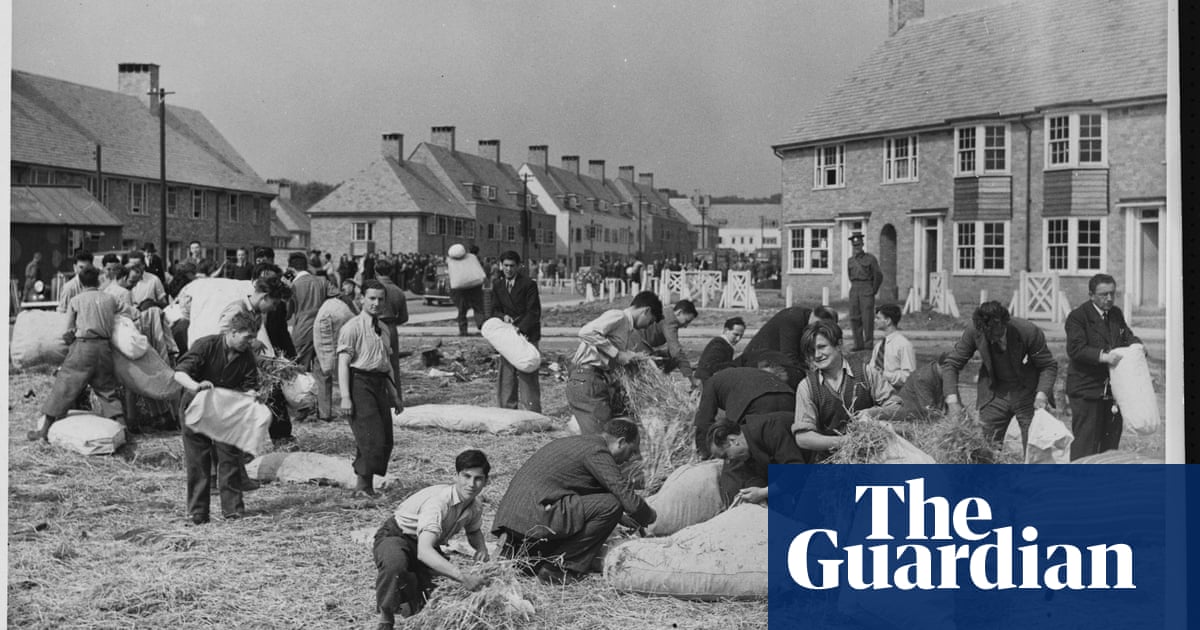
My father, Josef, was one of those Germans who was interned on the Isle of Man in 1940 having come to Britain in the 1930s. By all accounts, though he had lost his liberty, he had a better time than most, working in the fields producing food. My mother, on the other hand, a Bradford lass, was not so lucky. Having married a German, she was regarded as “an enemy alien” and shortly after giving birth to my brother Dennis was marched to the police station with her two other children – Peter, aged four, and Geoffrey, aged two – and made to sign a declaration of “naturalisation”. It did not help when it came to the hatred and vilification from her fellow Bradfordians.
John Duttine
Worthing, West Sussex
Simon Parkin’s excellent piece summarised the terrible treatment of innocent immigrants from Italy and Germany in the early days of the second world war. He might have mentioned, in addition, the tragedy in July 1940 when the SS Arandora Star set sail from Liverpool, taking with it over 1,200 Italian and German internees for deportation to camps in Canada. The ship was torpedoed by a German U-boat off the Irish coast, and sank, with over 800 casualties. This tragedy is commemorated today in memorials in many British and Italian cities.
Mark Flinn
Chester
The use of internment can be said to have started earlier, during the first world war, with the imprisonment during the Easter Rising of 1916 of 18,000 Irishmen in the wilds of north Wales, at Frongoch near Bala. An old whisky distillery site was chosen to house them. Notable among their number was Michael Collins. It has been argued that the IRA was born there under his tutelage and the camp was dubbed “Ollscoil na Réabhlóide” – the “University of Revolution” – by its inmates.
Similar internment camps for American Japanese citizens were set up by the federal government – for their own protection rather than for active combatants – following the Pearl Harbor attack on the US Pacific fleet in Hawaii.
John Bentley
Ledbury, Herefordshire
Source: This post first appeared on The Guardian