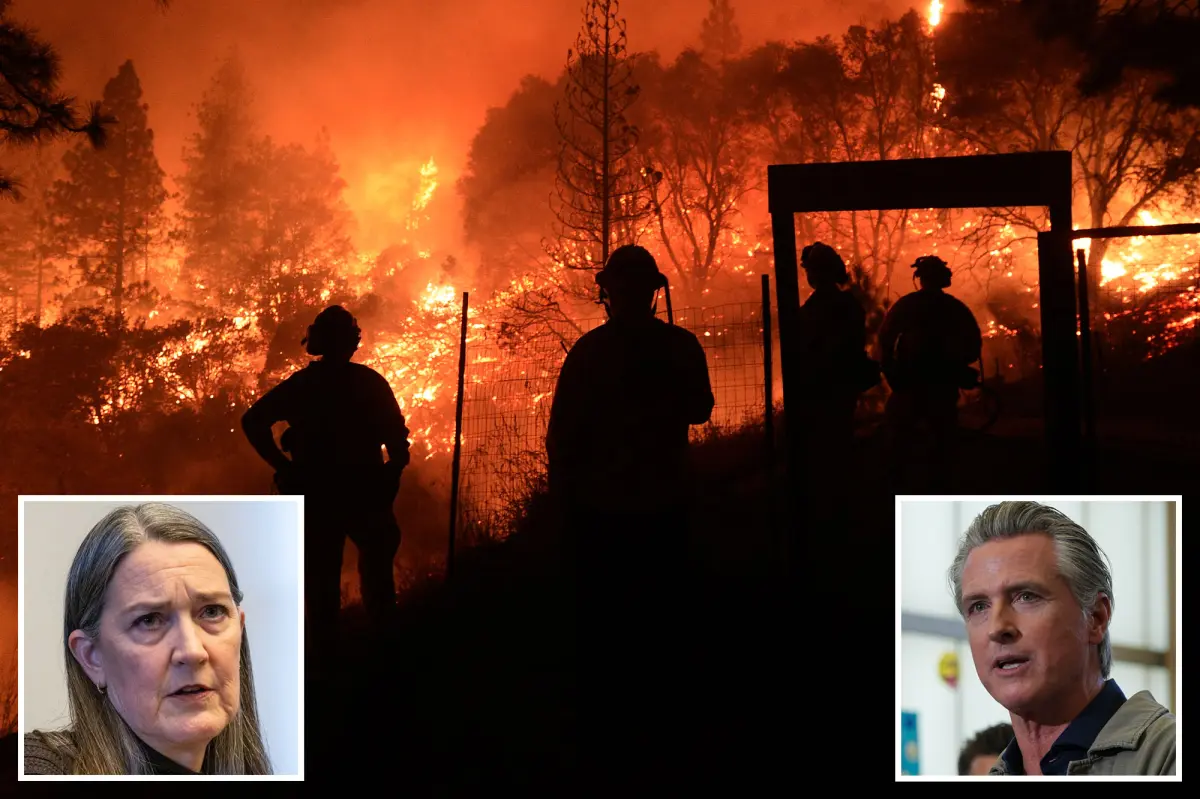

California’s biggest utility is pausing billions of dollars in planned spending, escalating a public clash with Sacramento as its chief executive argues the state’s wildfire liability system is making the company’s current investment strategy financially unsustainable.
PG&E said Wednesday that it intends to delay roughly $2 billion in investments previously planned for 2027, a move aimed at lowering how much the company expects to borrow even as it continues pouring billions into its California electric and gas operations.
Chief Executive Patti Poppe said the utility is under mounting pressure from California’s approach to allocating wildfire costs, which she warned is driving up financing costs and complicating efforts to secure the capital needed to maintain and modernize the power grid.
“We are unable to fund PG&E’s continued transformation at our current pace,” Poppe said. “Financing our work has become increasingly difficult and expensive due to the way California law assigns the cost of wildfire to utility customers and investors.”
The announcement follows a setback last week for Gov. Gavin Newsom, whose broader proposal to reshape utility wildfire liability failed to win approval from lawmakers.
That plan would have restricted insurers’ ability to seek reimbursement from utilities for wildfire-related losses. After intense opposition, Democratic lawmakers instead advanced a narrower agreement centered on payments to survivors and stronger utility accountability measures.
The collapse of the wider liability overhaul rattled Wall Street, sending shares of PG&E and Edison International sharply lower as investors weighed the prospect of ongoing exposure to wildfire claims.
PG&E’s board has also formed a four-member committee to lead a broad strategic review, including possible changes to the company’s structure and financing as it evaluates how to navigate California’s wildfire risk landscape.
The company said it is looking for a structure that would strengthen its finances, improve affordability for customers and allow it to attract cheaper, long-term investment.
At the heart of Poppe’s frustration is California’s wildfire liability system.
The state’s utilities face enormous costs when their equipment is determined to have caused a wildfire — even when the companies complied with required safety and wildfire-prevention measures.
Insurers can also seek reimbursement from utilities after paying claims to customers whose property was destroyed.
Poppe said that system makes banks and investors view California utilities as riskier investments, driving up the cost of borrowing money.
“The people who fund building that equipment, banks and investors, face more risk here,” Poppe said. “Because of the way California law assigns the cost of wildfire to utility customers and investors, risk goes up for both of them.”
The CEO also pushed back against the idea that PG&E’s announcement was designed to pressure lawmakers into acting.
“Our customers need the Legislature to finish the job,” Poppe said. “Our customers will pay the price of their inaction.”
The company said it still expects to invest about $11.4 billion in the state next year.
PG&E stressed that the cuts will not hit critical safety programs or its obligations under its wildfire mitigation and safety plans.
Instead, the company said it is delaying or slowing certain projects that can be pushed back while it confronts its mounting financing challenges.
Download The California Post App, follow us on social, and subscribe to our newsletters