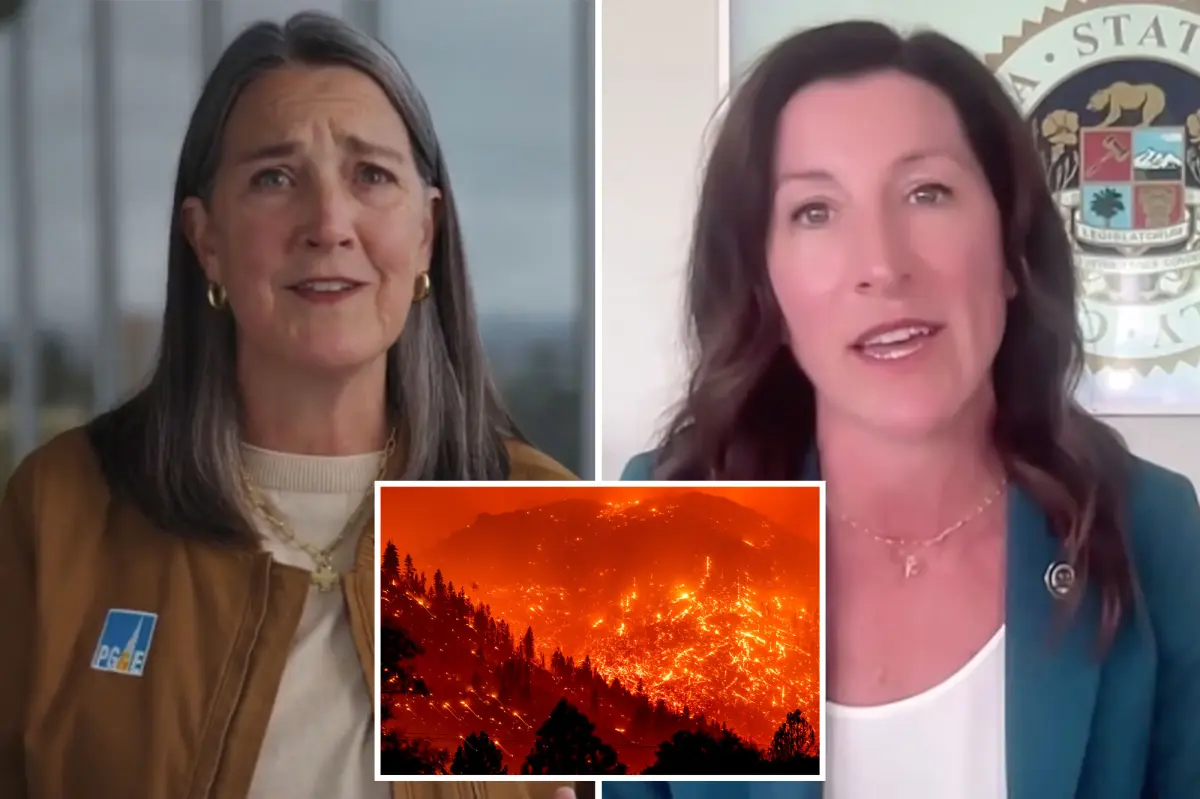

California’s Democratic leadership is again at odds with the state’s largest utility after PG&E said it will scale back billions of dollars in planned investments.
The decision has intensified pressure on lawmakers in Sacramento to settle a long-running dispute over who should bear the cost when utility equipment is blamed for destructive wildfires.
PG&E said it intends to cut roughly $2 billion from its 2027 investment plans, pointing to the mounting financial strain created by California’s wildfire liability system.
The announcement came shortly after legislators wrapped up their session without approving changes to the rules governing how the state’s major investor-owned utilities pay for wildfire damages.
That leaves Democratic lawmakers balancing two politically charged concerns: utilities’ warnings about rising financing costs and public demands that companies remain accountable when their equipment helps ignite catastrophic fires.
Assemblywoman Cottie Petrie-Norris, a Democrat who chairs the Assembly Utilities and Energy Committee, told KCRA 3 that utilities rely heavily on borrowing to fund large infrastructure projects — and that more expensive borrowing can eventually show up in customer bills.
“With utilities, like any company, in order to build stuff, they’ve got to borrow money,” Petrie-Norris said. “Much like you and I, when we’ve got a mortgage, if our credit rating isn’t good, it costs us more money.
“And when it costs PG&E or any of the utilities more money to build and construct utility projects, that’s a bill that gets passed on to all of us, and that’s not OK,” she added.
Petrie-Norris said the reduction in spending could affect projects involving infrastructure such as poles, wires and sensors, as well as housing-related work, according to the outlet.
“That’s also not OK. So that’s why I’m concerned, and that’s why it matters for all of us,” she said.
The confrontation follows a dramatic collapse of a proposed wildfire-liability overhaul in Sacramento. PG&E, Southern California Edison and San Diego Gas & Electric had pushed lawmakers to shift some wildfire-related costs toward insurance companies. But the legislature ultimately abandoned the proposal after negotiations broke down during the final days of the session.
The failed effort came after the utilities suffered a sharp market reaction with their stock tumbling just the day after.
The broader dispute centers on subrogation, under which insurers that pay homeowners after a wildfire can seek reimbursement from utilities they believe are responsible for the blaze. Gov. Gavin Newsom and the utilities had backed restrictions on that practice as part of a broader liability overhaul, while opponents argued the changes could leave wildfire victims and insurers carrying more of the financial burden.
Petrie-Norris said she hopes PG&E’s spending decision was not intended to pressure lawmakers.
“I certainly hope not. But that is definitely a question you would have to ask their CEO, not me,” she told KCRA 3.
The lawmaker also warned that the fight has drawn an array of powerful interests, including utilities, insurers, hedge funds and attorneys.
“When two elephants are fighting, it’s the grass that suffers,” Petrie-Norris said. “We don’t care about your companies. We don’t care about your industry. We care about what you are doing for Californians.”
PG&E has maintained that its spending reduction is driven by the difficulty and expense of financing its operations under California’s current liability structure.
The company is still planning billions of dollars in investment next year and has said its pullback will focus on projects that can be delayed rather than critical wildfire-safety obligations.
The utility’s CEO has also rejected the suggestion that the announcement was intended as a political pressure tactic, arguing that customers ultimately bear the consequences of the state’s financing and liability framework.


