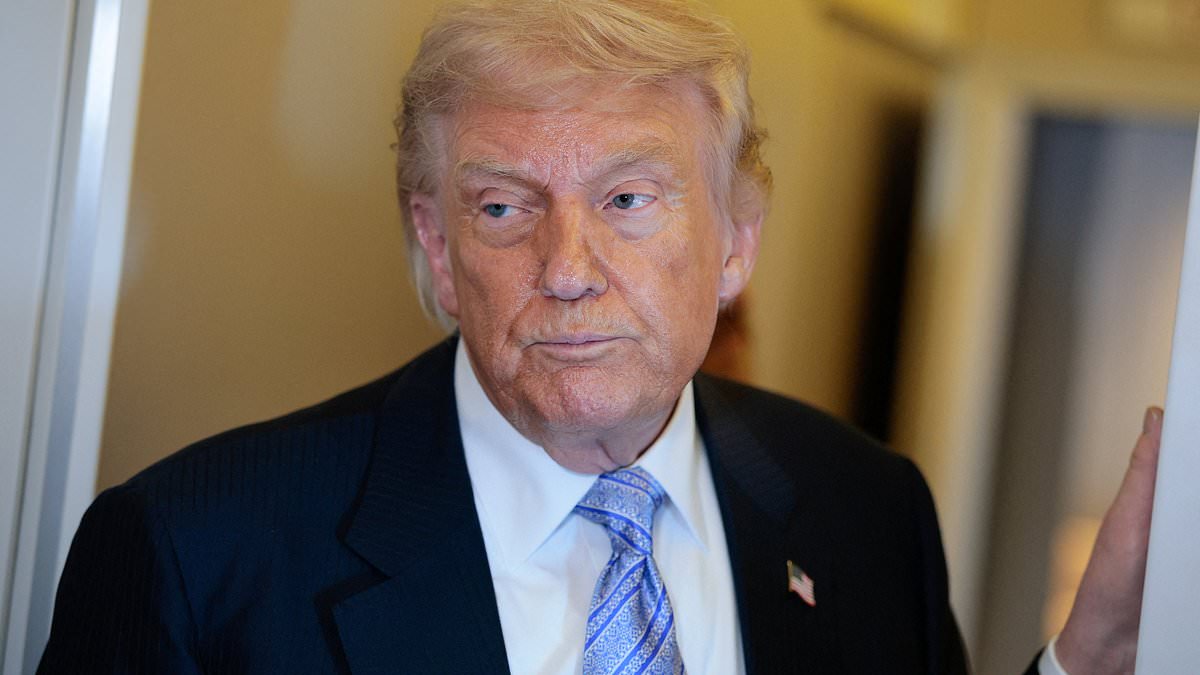

Donald Trump has reached an agreement with the IRS to secure a $1.8 billion settlement designed to allocate taxpayer funds to those impacted by ‘lawfare,’ as part of resolving his legal dispute with the government.
Trump, along with his sons Don Jr. and Eric, and the Trump Organization, initiated legal action against the Treasury and IRS in a federal court located in the Southern District of Florida after their tax returns were leaked.
As part of the settlement, they consented to withdraw their lawsuit, which also included claims for damages related to the Mar-a-Lago raid in 2022 and the investigation into Russian election interference.
Although Trump himself is restricted from personally receiving funds from this settlement, there is no explicit prohibition preventing entities linked to him from submitting further claims.
The agreement has incited significant backlash from Democrats. Ron Wyden, a member of the Senate Finance Committee, criticized the settlement as an unprecedented display of corruption.
“Even by his standards, what he’s attempting now is a breathtaking act of corruption,” Wyden remarked in a public statement.
‘What Trump wants is a $1.7bn slush fund for right-wing political violence and subversion, and if he follows through, it will be the most brazen theft and abuse of taxpayer dollars by any president in American history.’
The $1.776 billion fund will have the power to issue formal apologies and monetary relief owed to claimants, including Trump’s political allies political allies and the 1,600 January 6 defendants. The fund will consist of a commission of five members appointed by the Attorney General, with Trump given power to remove any member.
Donald Trump speaks to members of the media on the South Lawn of the White House after arriving on Marine One in Washington, DC, USA, 15 May
Acting Attorney General Todd Blanche attends the 45th Annual National Peace Officers’ Memorial Service at the U.S. Capitol, Friday, May 15
‘The machinery of government should never be weaponized against any American, and it is this Department’s intention to make right the wrongs that were previously done while ensuring this never happens again,’ said Acting Attorney General Todd Blanche.
‘As part of this settlement, we are setting up a lawful process for victims of lawfare and weaponization to be heard and seek redress.’
The extraordinary arrangement comes despite the misgivings of the judge in the case, Kathleen Williams, who was investigating a potential conflict of interest as Trump sued his own government.
Trump himself conceded last October that ‘it’s awfully strange to make a decision where I’m paying myself.’
The President has previously vowed to donate any proceeds he receives from the lawsuit to charity.
Trump in January sued the IRS over the 2019 leak of his tax returns to the press. The President and his sons argued the tax agency failed to protect their privacy.
At the start of his second term, Trump issued a blanket pardon for all defendants charged in connection with the January 6 riot.
Many of those pardoned have since begun seeking payouts from the federal government, claiming they were wrongfully targeted by the Biden DOJ.

A sign outside the Internal Revenue Service building is photographed May 4, 2021, in Washington
Trump has previously signaled openness to compensating the rioters, stating that ‘a lot of the people that are in government now talk about it.’
Last month, Judge Williams appeared skeptical that Trump and the Treasury Department were ‘sufficiently adverse’ for the case to proceed.
‘Moreover, although President Trump avers that he is bringing this lawsuit in his personal capacity, he is the sitting president and his named adversaries are entities whose decisions are subject to his direction,’ Williams wrote.
‘Indeed, President Trump’s own remarks about this matter acknowledge the unique dynamic of this litigation.’
However, the judge has limited legal authority to halt any settlement deal.