
Australian homeowners are facing another mortgage hit after the Reserve Bank raised interest rates by a quarter of a percentage point, pushing borrowing costs to a new high as it attempts to tame persistent inflation.
The 0.25 percentage-point increase lifts the cash rate from 4.60 per cent to 4.85 per cent, its highest level since the global financial crisis in 2008.
The decision will drive up monthly repayments for borrowers with variable-rate loans, adding further strain to already pressured household budgets.
Canstar data insights director Sally Tindall said Australia may be returning to 2008-era interest rates, but borrowers today are carrying significantly larger mortgages, making the impact considerably more severe.
She said the average new owner-occupier loan had almost tripled, rising from $254,000 in November 2008 to $731,000 today—an increase of 188 per cent. Over the same period, the median property price climbed 129 per cent to $884,855.
‘For someone with a $600,000 mortgage, another rate hike will mean finding an extra $92 a month to meet their new minimum repayments. Across the five hikes this year, the total increase would be a jaw-dropping $456,’ she said.
‘The pressure is really starting to mount, and it is not just on our central bank,’ she said.
‘Borrowers are already under extreme financial pressure after four rate hikes this year. If the RBA raises the cash rate once again, some households will reach their financial ceiling.’

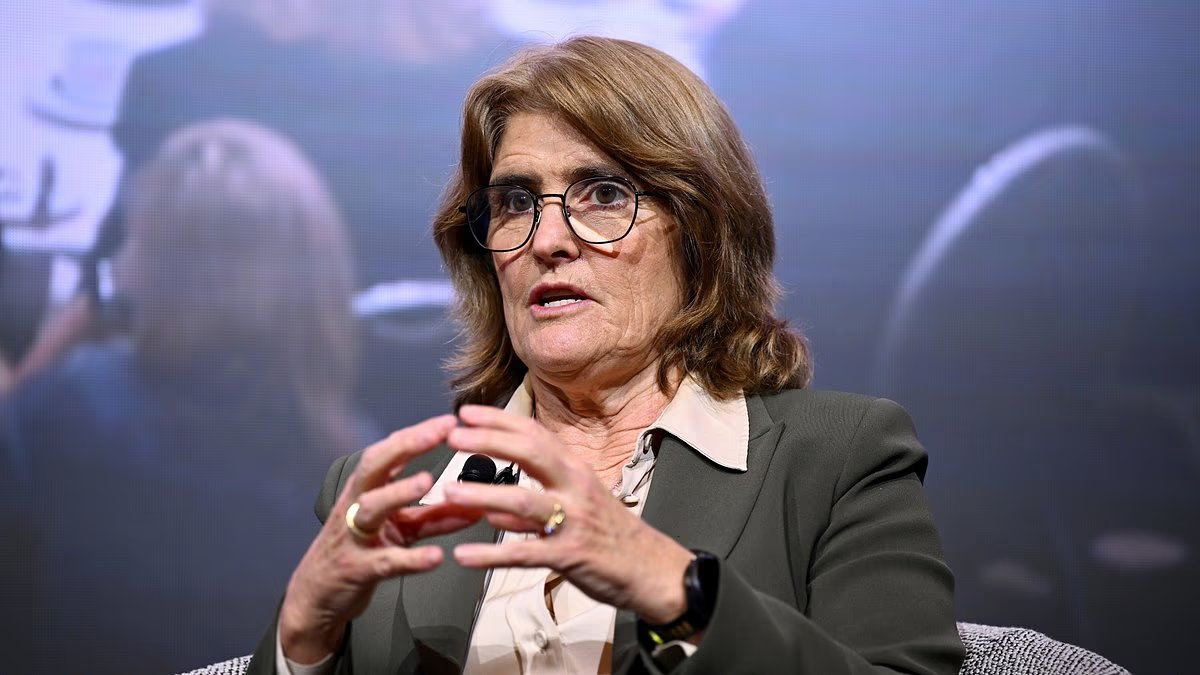
RBA governor Michele Bullock (pictured) and the board have lifted the cash rate to 4.85 per cent, its highest level since the global financial crisis in 2008

Canstar data insights director Sally Tindall (pictured) said today’s borrowers have much larger mortgages than those carrying debt during the 2008 rate cycle
Australian banks begin passing the rate rise on to customers
‘It won’t fix inflation’: RBA rate rise draws fierce criticism
Ms Tindall said she was worried that some borrowers had exhausted the financial buffers they had built up.
‘The key question now is how much additional room households have in their budgets. Some borrowers will be able to absorb another increase, but others may have to draw down their savings.’
Former RBA economist Luke Hartigan said the central bank’s earlier strategy of making smaller, more cautious moves had failed to bring inflation under control.
He said the RBA could have little option but to continue tightening monetary policy despite the potential damage to the economy.
‘This could trigger a recession, a sharp rise in unemployment and further declines in housing prices in early 2027,’ he said.
‘As long as inflation remains outside the target band, there is a risk that inflation expectations will become unanchored, which would be very costly to reverse.’
‘Interest rates are a blunt tool for controlling inflation. State and federal governments can play a more targeted role by reducing short-term demand pressures through higher taxation and lower spending, while working over the longer term to increase the economy’s productive capacity.’
AMP chief economist Shane Oliver expects national home prices to fall by about 15 per cent from peak to trough, warning that the downturn is now moving at its fastest pace since 1980.

AMP chief economist Shane Oliver (pictured) said Sydney, Brisbane, Adelaide and possibly Perth were likely to record the sharpest falls
‘National average prices have fallen 6.7 per cent, while capital city prices are down 8.1 per cent from their peaks earlier this year,’ he said.
‘The speed of the decline, combined with more rate rises than expected, increasing unemployment and structural changes linked to higher investor taxes, suggests the fall from peak to trough will now be about 15 per cent.’
Oliver said Sydney, Brisbane, Adelaide and potentially Perth were likely to suffer the steepest declines, while Melbourne and Hobart were expected to prove more resilient.
He expects prices to reach their lowest point in the September quarter next year before beginning a modest recovery in 2027-28, when the Reserve Bank is expected to begin cutting interest rates.
‘Although we believe the RBA will have done enough with this week’s rate hike to reduce demand and cool inflation, making 4.85 per cent the likely peak for the cash rate, the risk of further increases remains high,’ he said.
‘RBA commentary is likely to remain hawkish for some time, and we do not expect rate cuts until the December quarter next year. Unless there is a crisis, meaningful relief from high rates remains some way off.’
Angus Moore, a senior economist at realestate.com.au, said the rate increase would extend the housing downturn already under way.
‘Home prices have now fallen nationally for seven consecutive months,’ he said.

Higher mortgage rates will further reduce borrowing power for prospective buyers, adding to downward pressure on home prices
‘Additional mortgage rate increases will reduce borrowing capacity for prospective buyers once again, adding to the downward pressure on property prices.’
‘However, while the downturn has been swift, it remains an orderly adjustment driven by higher rates and affordability pressures rather than a distressed housing correction.’
‘Labour market conditions remain resilient by historical standards, mortgage arrears are still low, few borrowers have negative equity and many households retain substantial repayment buffers.’


