A communications outage at the National Security Agency (NSA) reportedly disrupted operations at a facility supporting intelligence and cybersecurity efforts in the Middle East, as tensions surrounding Iran remain elevated.
NSANet, the network employees use for highly classified internal communications, went offline Tuesday morning after what the NSA described as a “temporary degradation during scheduled routine maintenance.”
During the outage, officials at a separate critical facility in Georgia focused on the Middle East were unable to use the classified network to communicate with U.S. personnel deployed across the region, CNN reports.
A former senior NSA official said the disruption could have prevented a U.S. official at a Middle Eastern embassy from accessing a classified intelligence report sent through the system.
However, the official could have obtained the information through a workaround or backup network, the unidentified source said.
Several officials stressed that the NSA’s most sensitive and vital intelligence-gathering systems remained operational, even as many employees at the agency’s Maryland headquarters were instructed to work from home.
An operational update sent to staff said that “in order to ensure continued progress of securing restoration, on Wednesday, 18 November, Maryland non-essential day shift personnel should not report for duty unless directed by their supervisor.”
A senior administration official later told CNN that the agency’s efforts to patch the system and restore NSANet access were progressing “slower than expected.”

NSANet, the network used for highly classified internal communications, went offline Tuesday morning

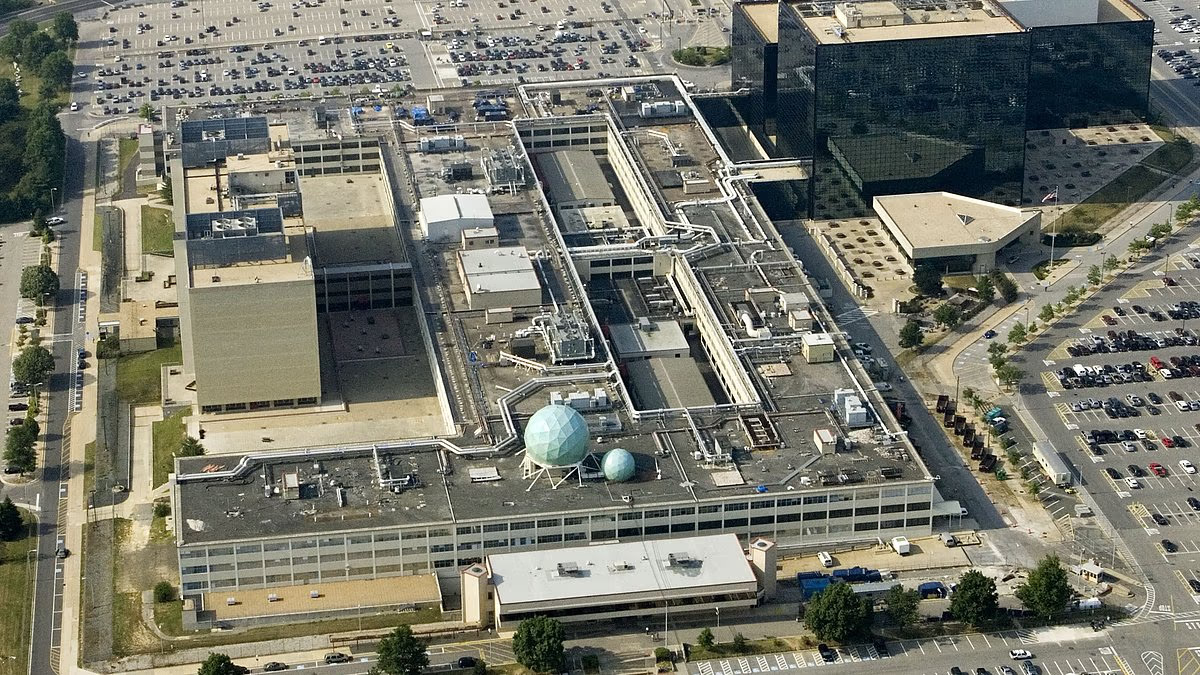
The outage affected the NSA’s Maryland headquarters, pictured, as well as a separate Georgia facility focused on Middle East issues
Authorities now believe the outage was linked to the NSA’s efforts to install software updates addressing vulnerabilities in PHP, a programming language used by roughly 70 percent of the world’s websites.
Private researchers disclosed the vulnerabilities last month after AI tools helped identify them. The NSA subsequently urged businesses to install the necessary patches.
A senior official told CNN that this was not the first time NSANet had gone down during a system upgrade.
“It wasn’t designed, it evolved,” the former official said of the network, which relies on costly and complex hardware and software that can be difficult to manage.
The agency remains dependent on NSANet, described by the source as a vast classified email system, because replacing it would be expensive and require substantial labor.
The NSANet outage came only hours after hackers targeted 178 major companies worldwide in a large-scale cyberattack on Monday.
By Wednesday, senior administration officials were working to make clear that neither the NSA nor the private companies that experienced outages during the past week had been hit by a cyberattack.
Director of National Intelligence Jay Clayton told members of the House Homeland Security Committee that he had a “very high level of confidence” that none of the outages resulted from cyberattacks. He said the systems had separate causes and did not display the digital indicators typically associated with an attack.
“We have… looked inside the government, inside the private sector… What are the techniques, tactics and procedures that have been used in the past for that type of [hacking] activity? Do we see any of them here?” he asked rhetorically.
“We do not see them.”

Director of National Intelligence Jay Clayton told the House Homeland Security Committee he had a “very high level of confidence” that none of the outages resulted from cyberattacks
Instead, officials believe the widespread use of AI is helping companies and government agencies uncover a new wave of vulnerabilities in their systems.
“AI is making it possible to identify vulnerabilities across enormous numbers of systems at unprecedented speed, creating enormous pressure on companies and government agencies to patch those vulnerabilities immediately, often all at once, putting tremendous strain on systems that weren’t built to handle that pace of change,” Senator Mark Warner, the Democratic vice chairman of the Senate Intelligence Committee, said on social media Tuesday.
Bryson Byrd, a cybersecurity adviser at digital security firm Huntress, told The New York Times that although the outage was not believed to have been caused by a malicious actor, it underscored concerns about aging digital infrastructure.
“It’s easy to put on a tinfoil hat and speculate about why all these outages are happening,” he said. “But you don’t need a cyberattack to bring operations to a halt.”
President Donald Trump, however, dismissed the concerns after arriving in the Philippines on Tuesday.
“It’s life. When you’re big and powerful and have all the money, things like that happen,” the president told reporters before the Association of Southeast Asian Nations summit. “It’s fine.”


