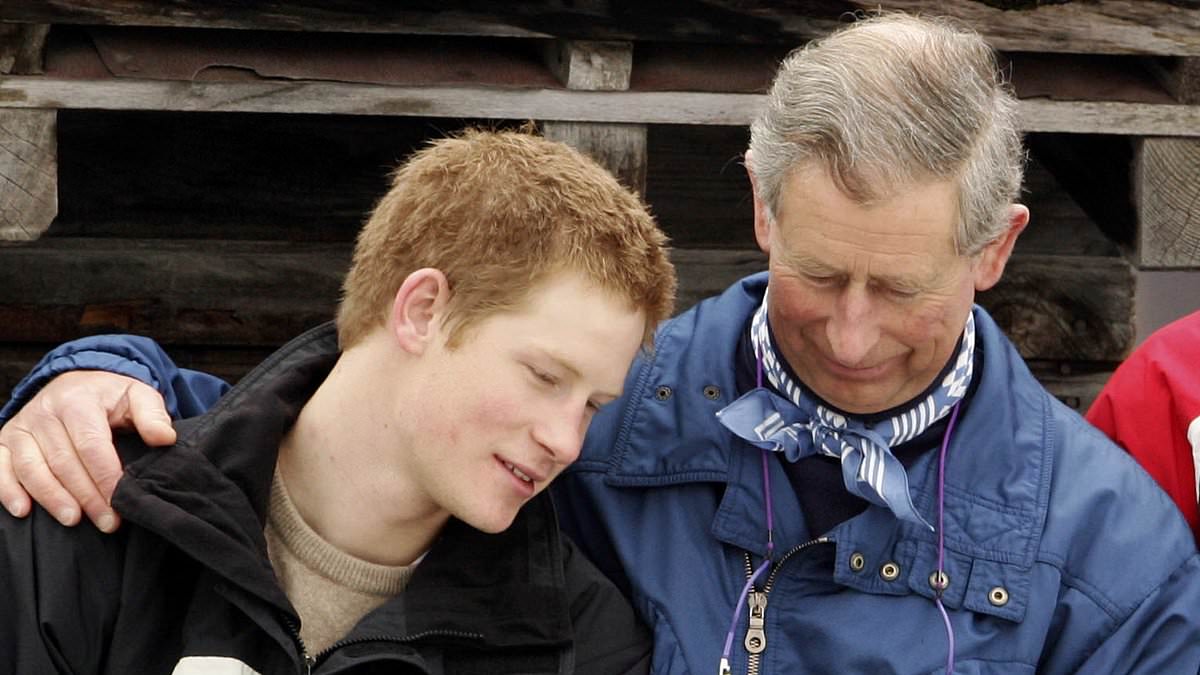

When Prince Harry recently emphasized the importance of parents evolving beyond the behaviors of past generations, it seemed like he might be subtly critiquing King Charles. However, one might question if he’s truly aware of the extent of his father’s efforts during his upbringing.
Following my mother’s passing last month, my siblings and I have been sorting through her belongings. It’s a daunting task, sifting through nearly a century’s worth of memories, but it has also prompted us to reevaluate our perceptions of our parents and their roles in our lives.
As we sifted through old belongings, we recalled long-forgotten moments and realized just how engaged they were in our childhood, even when it seemed they were consumed by their demanding careers.
Among our discoveries were photographs of our father playing with us on the grass and weekends spent playing catch. We also found numerous letters they had penned to schools, whether applying for admission or persuading a weary headmaster to give us another chance.
A list penned by my mother detailed my daily routine for a new nanny, including specific food preferences. There was even a surprisingly detailed letter to a party planner for my second birthday, requesting everything from food and cake to chairs and flowers for a gathering of twenty-five guests.
We always understood that they cared for us, but this bittersweet task of sorting through our childhood home has highlighted how much they supported us from the sidelines. It’s given us a newfound appreciation for the kind of parents we had, which we didn’t always recognize.

Prince Harry pictured with his father, then-Prince Charles, and Prince William during the Royal Family’s skiing holiday in March 2005
Some tragedies can’t be prevented
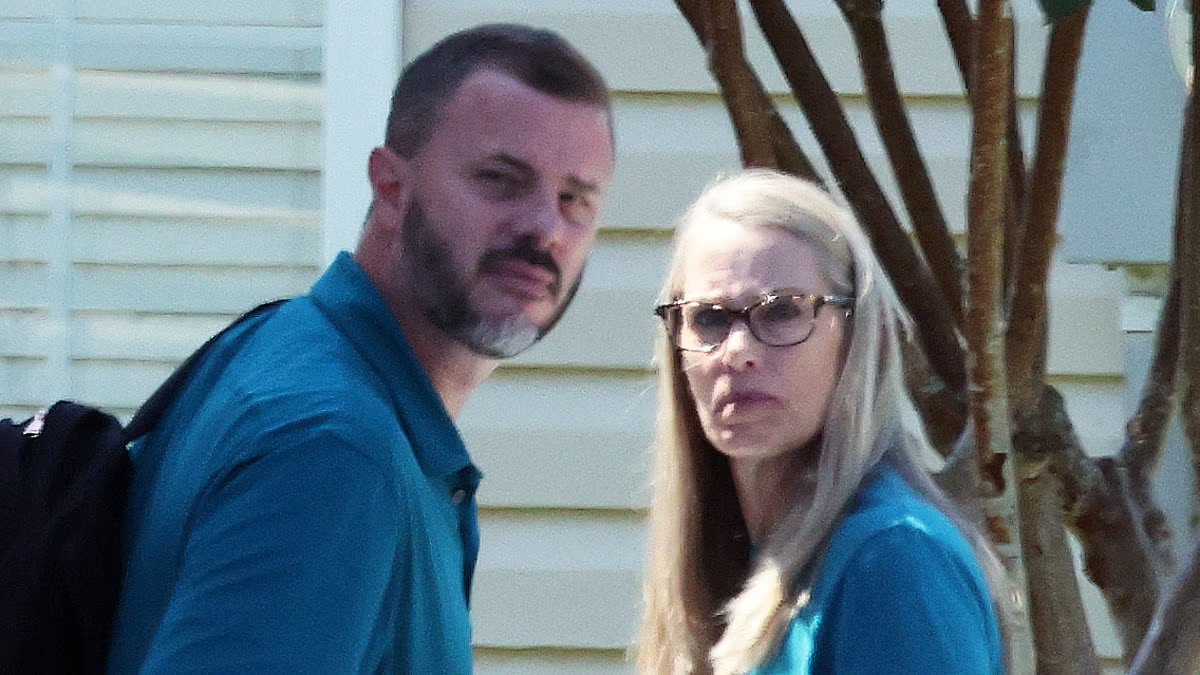
Nobody should have to experience what parents Rachelle and Matthew Brettler went through, as described in the magnificent new book London Falling by Patrick Radden Keefe.
In 2019 their 19-year-old son Zac is seen jumping from a riverside block of flats and found dead in the Thames. Why?
Zac, who begins life as a bright middle-class boy, becomes fixated by money and takes on the identity of the son of a wealthy Russian oligarch. He hoodwinks many criminal characters from the seamy side of central London that bubbles just under the capital’s glamorous surface.
After his death, his parents attempt to discover the circumstances behind their son’s fall. Rachelle, in particular, replays how things might have turned out differently if they hadn’t made certain decisions. What if they’d sent him to a different school? What could they have done that they hadn’t?
Ultimately the Brettlers may have to accept that, as parents, we can do all the right things (as they did), but there’s never any guarantee our children won’t fall foul of something in the world beyond our control.

Zac Brettler fell from a riverside block of flats and was found dead in the River Thames in 2019
Scanner staff who left me scared stiff
The other day I had a scan at London’s Hammersmith Hospital to check a small cyst on my back, and found the experience needlessly frightening.
I have nothing but praise for much of my NHS treatment, but both in the state and private arenas, the bedside manner of so many healthcare practitioners is terrible. Patients arrive with a high degree of apprehension, which they rarely make any attempt to assuage. I recognise they can’t say that nothing dire will be found, but they could attempt not to make it more worrying than it already is.
As I lay on the ultrasound table, hearing the familiar click, click of the probe – the noise that had once diagnosed my breast cancer – my concern at what the silent radiographer might find intensified.
When she asked another doctor to look, I immediately harked back to the similar moment my colon cancer was found.
‘Oh no,’ I thought, terrified. ‘Not again.’ I asked what she could see, but she didn’t answer. All I needed was for her to explain they often get a second opinion. So many checks could be made more bearable with a touch of empathy and communication at the outset.

A doctor holds an ultrasound probe to a person’s stomach as they lie horizontally
Chinos… just what the doctor ordered
On which note, all young consultants seem to wear slim-fit chinos and brown lace-up shoes these days. Why would this be? It’s something I ponder every time I’m in the waiting room.
John Lewis needs to go back to basics
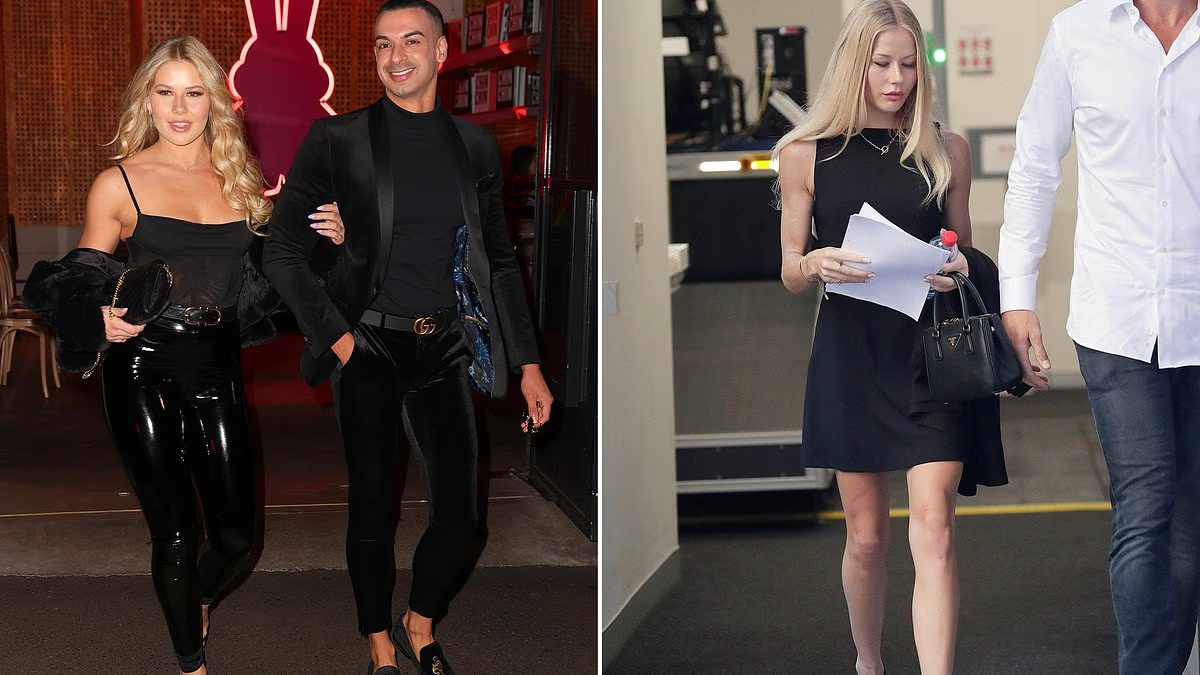
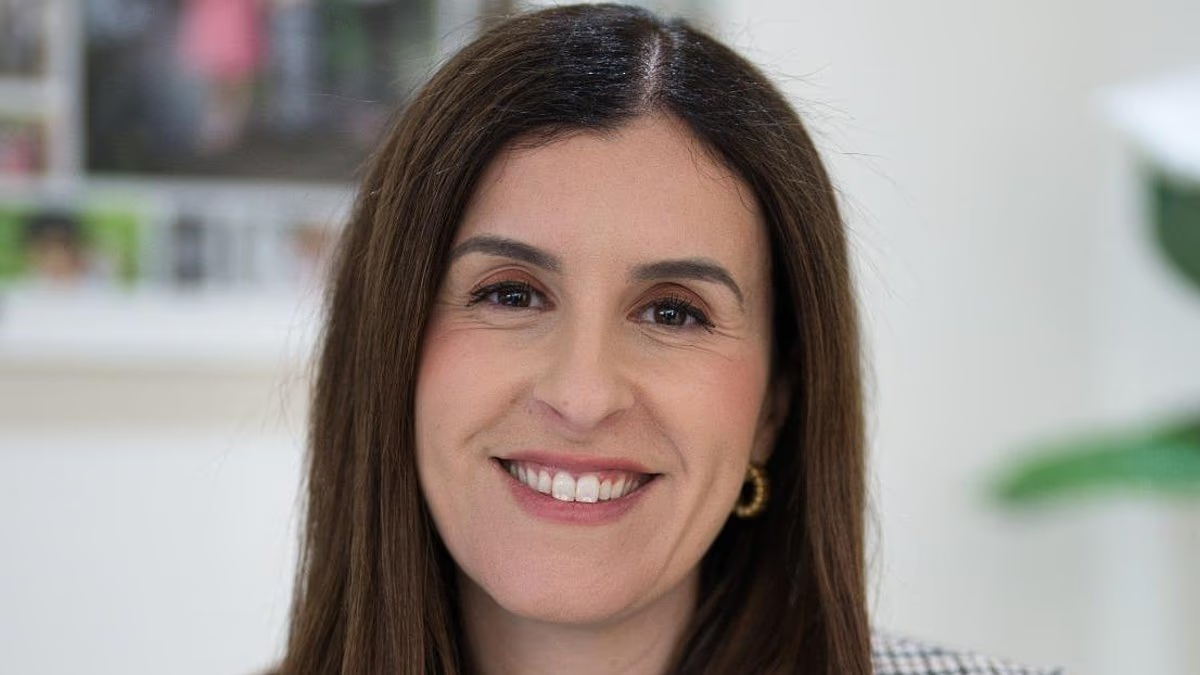
Musical chairs at John Lewis, which has hired Jacqui Markham, formerly at Whistles and Topshop, as its new creative director of fashion. The previous woman in the job, Queralt Ferrer, always looked wonderful, dressing in a fashionably minimalist manner. Unfortunately, her understated chic never quite transferred to the John Lewis collections.
All too often with its in-house fashion, John Lewis is lured into producing clothes which are too tricksy and on-trend. What the store’s devotees want are perfect, updated classics, not something that’s going to shriek April 2026.
John Lewis should be the go-to place for that narrow-cut navy blazer with plain but expensive-looking gold buttons; for a black cashmere sweater with a neckline that hits the collar bone just right; for off-white jeans without fancy stitching on ugly back pockets.
I suspect most would pay a bit extra if they felt they were getting more of an investment.
It’s what M&S sometimes does well and what Uniqlo is providing with its keenly priced utilitarian designs by Clare Waight Keller.
John Lewis, though, frequently seems to miss the boat.

Jacqui Markham (pictured) has been hired as John Lewis’s new creative director of fashion
Beat the queues – with a booze cruise
Canny travellers are planning ways to beat the long queues at EU airports due to the new fingerprint entry system. I’d hop on a car ferry now, get the process done on arrival in Calais before the summer rush, spend the day buying wine and cheese, and then head home. Job done.