
Russian authorities are facing accusations of withholding information about an alleged plague outbreak in Siberia after travel advisories for the area reportedly vanished from official channels only hours after being posted.
On October 3, officials in Baikalsk, in the Irkutsk region, advised residents to avoid travel to nearby Shelekhov. The warning followed reports that a scientist had died there over the weekend from pneumonic plague.
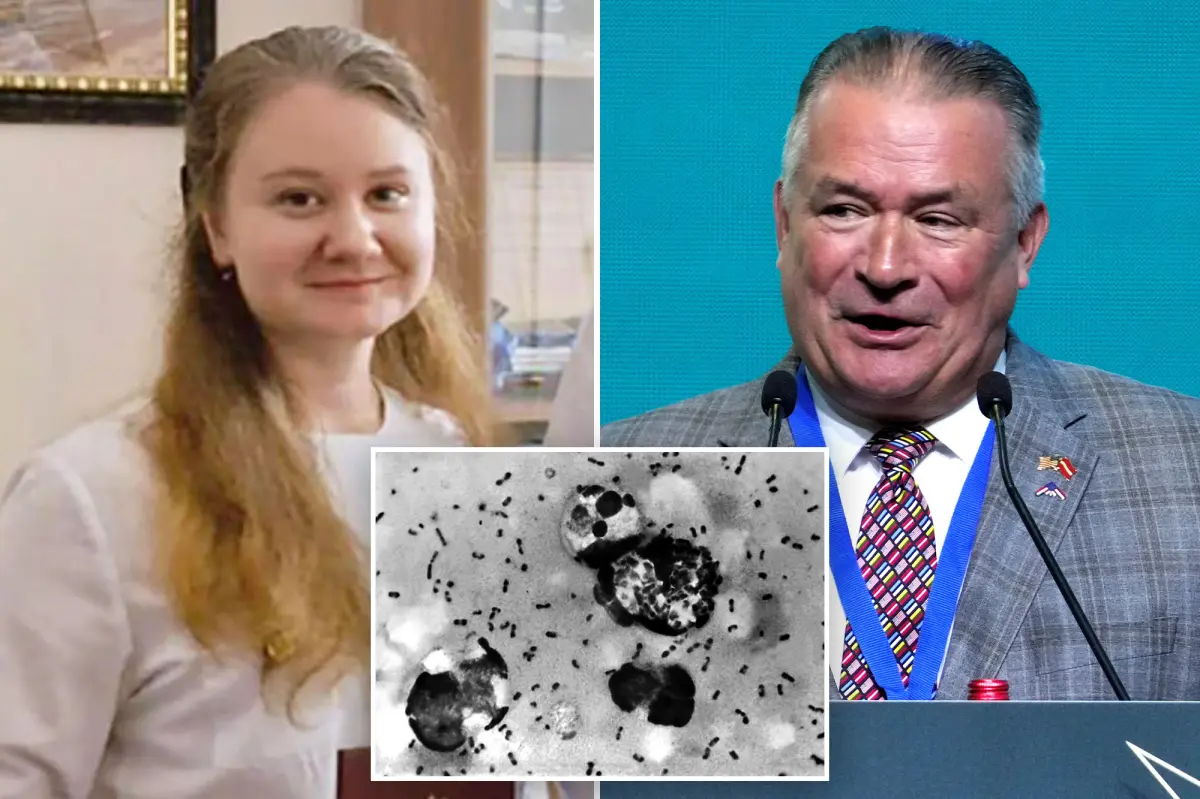
The scientist was identified as 28-year-old laboratory technician Daria Shipilova, who worked at the Irkutsk Anti-Plague Research Institute of Siberia and the Far East. Reports said she became ill after accidentally dropping a test tube containing the potentially fatal pathogen.
However, the travel advisory was removed roughly two hours after it appeared, according to the independent outlet People of Baikal.
REN TV, a pro-Kremlin television network, also reportedly deleted five social media posts referring to plague-related lockdown measures.
Earlier reports suggested Shipilova could have become infected after returning from Buryatia, a region bordering Mongolia.
Alexei Tsydenov, a regional official, initially said Shipilova had died from plague, while also stating that she had not traveled to Buryatia.
He later revised the wording, saying she had “possibly died of plague.”
Russia’s public health watchdog, Rospotrebnadzor, said Tuesday that none of the 187 employees who had been in contact with Shipilova during the previous 10 days had tested positive for plague.
The agency said officials had traced the broadest possible group of contacts and placed them under hospital observation, where they were receiving daily laboratory testing.
The World Health Organization said Tuesday that Russia had reported no plague cases in Irkutsk. However, it remained unclear whether that statement meant authorities were disputing that Shipilova’s death was connected to plague.
“Laboratory testing identified two cases of Covid-19 and two cases of rhinovirus [common cold] infection,” the WHO statement said.
“No other infectious disease pathogens were detected among the contacts,” it added, without specifically referring to plague.
Igor Kobsev, the governor of Irkutsk, said Monday that testing had found no “microorganisms linked to the employee’s professional activities” in Shipilova’s body.
Regional health officials also dismissed reports of a quarantine in the area as “fake” news on Tuesday.
“No such decisions have been made at this time,” authorities said in a statement.
Local officials have also rejected President Trump’s offer to provide assistance to Russia.
Trump told reporters Monday that the United States would offer whatever help it could, while the White House said it was closely monitoring developments.
Secretary of State Marco Rubio adopted a more cautious tone, warning that although travel between the United States and Russia is “very limited,” an infection “could quickly spread” if it escaped the region.
The uncertainty comes as several Central Asian countries bordering Russia have increased quarantine precautions following reports of the suspected outbreak.
The website for the Anti-Plague Institute says it was founded in 1934 “as a scientific and operational body for combating plague,” with its scope of responsibility expanding over the years to include “other highly dangerous diseases” including anthrax and cholera.
With Post wires.