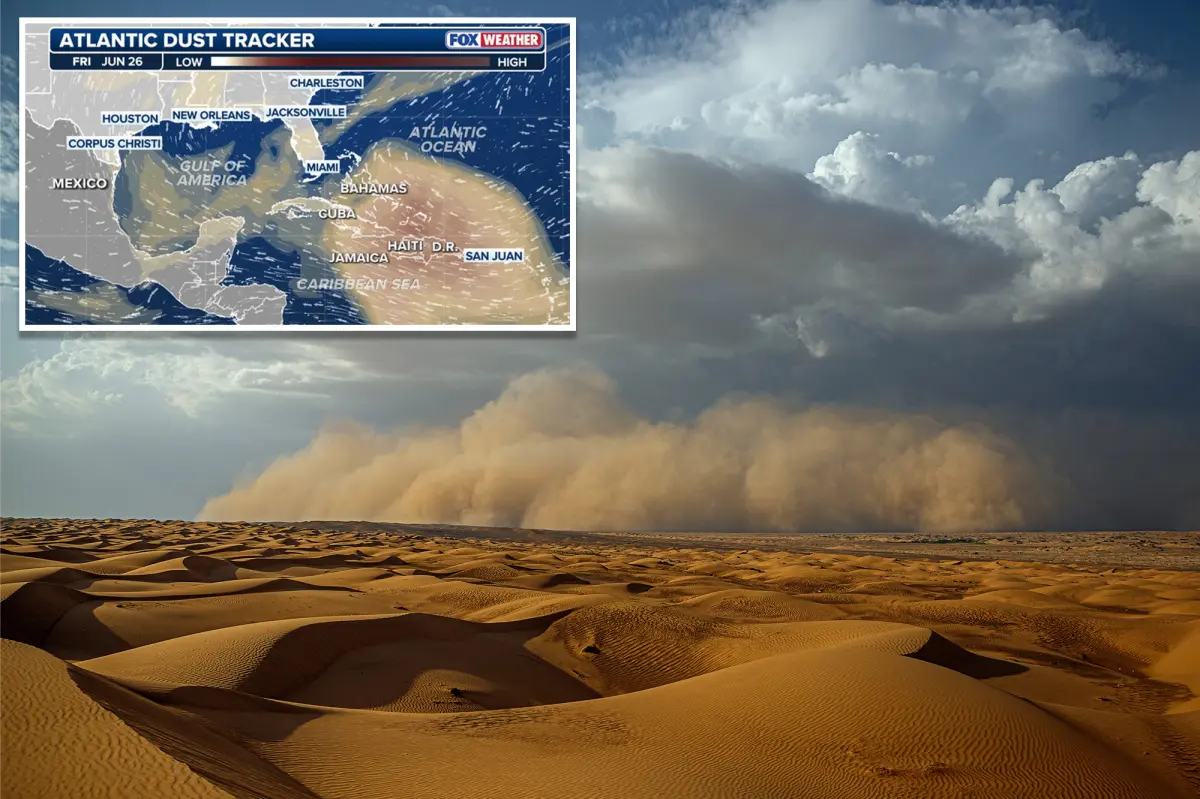

A vast plume of Saharan dust has traveled thousands of miles across the Atlantic Ocean, spreading over a crucial zone where tropical storms often take shape and making conditions far less favorable for hurricane development.
The broad African airmass, which shows few signs of clearing out soon, is feeding dry and stable air into the region. That pattern is becoming an important factor in the Atlantic hurricane season as summer moves into full swing.
Saharan dust is made up of extremely dry, dust-laden air that forms over the Sahara Desert before strong winds lift it high into the atmosphere. Once airborne, it can act as a natural brake on storms that might otherwise try to organize.
In late spring and summer, these large dust outbreaks are often carried westward across the Atlantic Ocean. Along the way, their dry air and stronger winds can interfere with the moisture and structure tropical systems need to develop.
With hurricane season gaining momentum, this expansive Saharan dust cloud may serve as a temporary shield across parts of the Atlantic, limiting the ability of storms to strengthen or become better organized.
Hurricanes typically need a specific set of conditions to flourish: warm ocean water, abundant tropical moisture and relatively light winds that allow thunderstorms to build and consolidate.
In simple terms, hurricane formation is a bit like a recipe. Warm seas, deep moisture and gentle winds are the key ingredients that help a storm come together.
Saharan dust is the ingredient that disrupts the mix, drying out the atmosphere and helping smother developing storms before they can fully take shape.
Sahara dust floods the atmosphere with dry air, suppresses thunderstorm development, and can increase wind shear that tears apart developing systems.
While Saharan dust can suppress storm development, it doesn’t guarantee that storms can’t develop in the Atlantic basin.

The result is fewer opportunities for tropical disturbances to organize and strengthen into hurricanes that could eventually threaten the US mainland.
With the Atlantic basin quiet and no immediate tropical development expected over the next several days, the arrival of Saharan Dust in the atlantic will prove a worthy adversary to any brewing development.