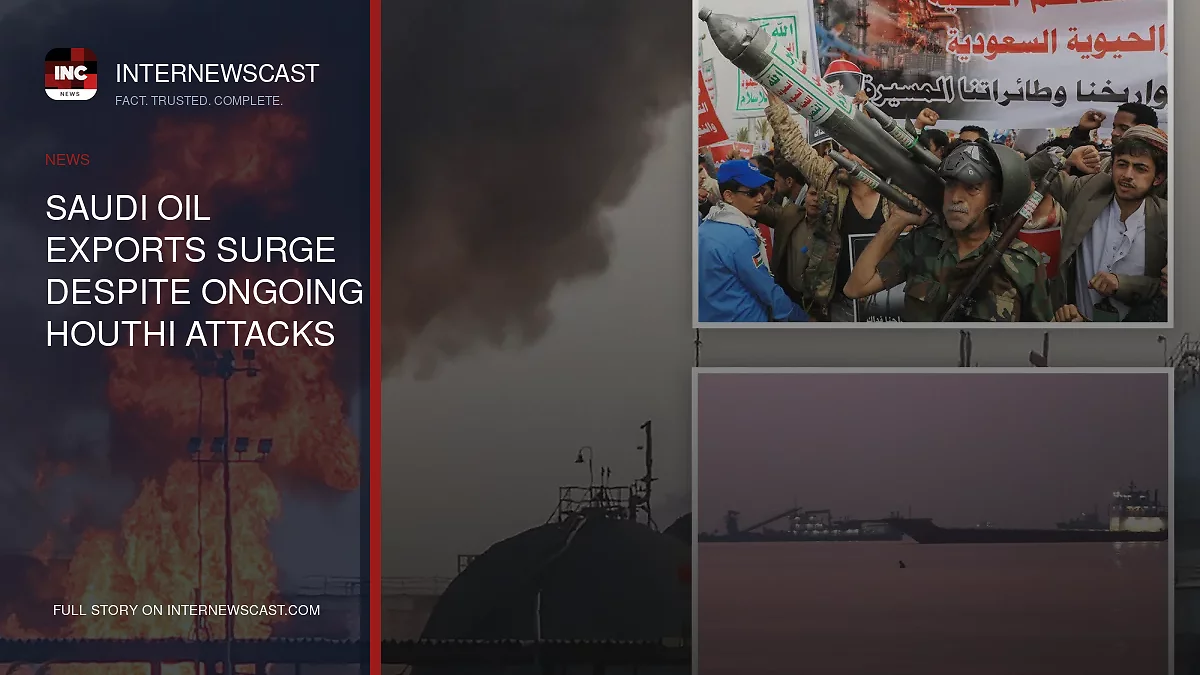

Saudi Arabia’s oil exports remain close to wartime highs despite a continuing barrage of missile and drone attacks by Iran-backed Houthi rebels, according to maritime-tracking companies.
Vortexa estimates that the world’s largest oil exporter shipped roughly 6.5 million barrels per day during October, broadly matching the volume recorded in September.
Data from Kpler and TankerTrackers.com supports that assessment, highlighting Riyadh’s ability to keep crude moving even as Houthi attacks target the kingdom’s energy infrastructure.
After a Houthi strike forced Saudi Arabia’s East-West pipeline to shut down last month, the kingdom began redirecting more shipments toward the Strait of Hormuz. Oil traffic through the waterway is now approaching prewar levels, aided by a US naval escort.
Saudi Aramco, one of the world’s biggest energy companies, also lifted exports through the Red Sea to 2.5 million barrels per day—an increase of 100,000 barrels per day from September, Bloomberg reported.
With the pipeline back in service, Saudi Arabia experienced a surge in October that helped compensate for any disruption caused by the Houthi attacks, according to estimates from the tracking firms.
The higher export volumes have also enabled Riyadh to benefit from elevated oil prices, helping offset revenue losses linked to Houthi strikes on Saudi airports.
DISCOVER MORE: Woman Removed From Florida County Meeting Over Call to Prayer Audio
Still, the Houthis have continued their attacks. The rebel group claimed Tuesday that it was responsible for a fire at the Ras Tanura oil refinery.
The facility is Saudi Arabia’s largest refinery and has the capacity to process 550,000 barrels of crude per day.
Houthi military spokesman Yahya Saree said the group launched a ballistic missile at the refinery, along with additional attacks targeting Najran Airport and an airbase in Khamis Mushait.
Saudi officials have not publicly commented on the reported strikes.
The continuing attacks have helped keep oil prices elevated, with Brent crude futures reaching $115 per barrel on Wednesday.
Meanwhile, traders and investors face an added challenge: Many tankers carrying oil from the Persian Gulf have switched off their transponders to conceal their locations, making their cargoes more difficult to track.


