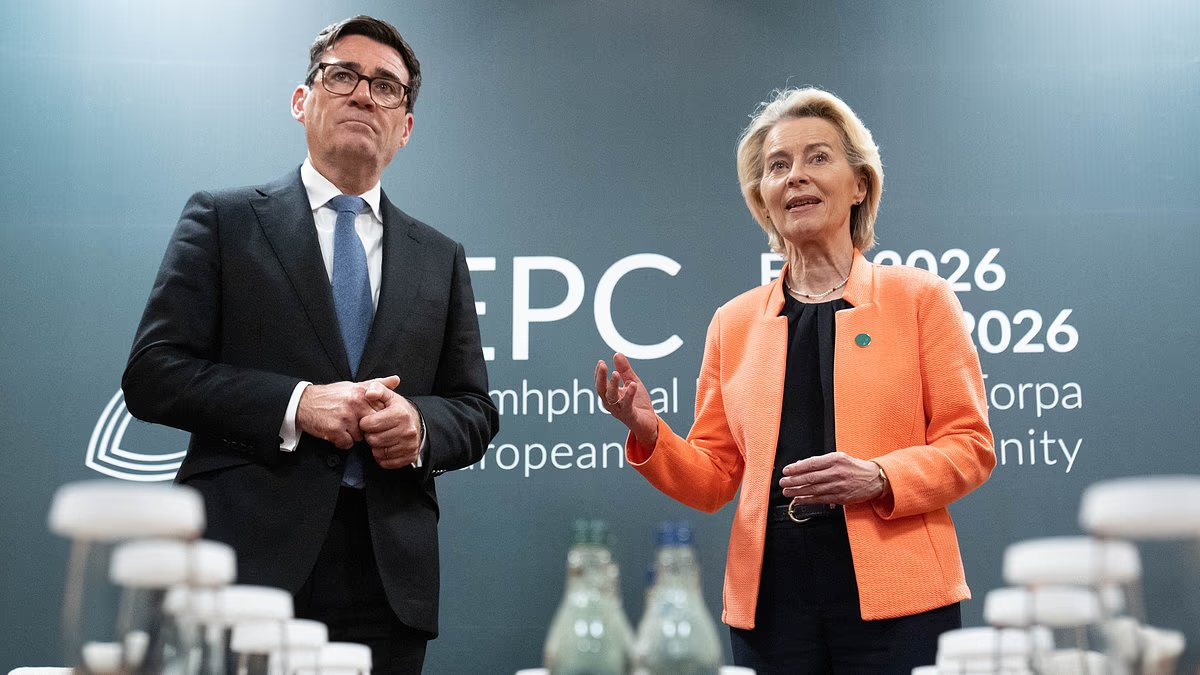

Andy Burnham’s proposed “reset” with the European Union could contain a compensation clause designed to deter a future government from abandoning the agreement.
The Prime Minister is expected to finalise revised terms with Brussels at a summit on Friday. The package is understood to involve concessions on financial contributions, regulatory alignment and border arrangements in an effort to make trade with the bloc easier.
A clause reportedly included in the food and agriculture agreement would oblige either side to pay compensation if it withdrew.
The payments could amount to many millions of pounds, covering the cost of putting the deal into operation and restoring checks on food moving between Britain and the EU.
Both the Conservatives and Reform have pledged to scrap the agreement if they return to power. Nigel Farage’s party has also said it would refuse to make any compensation payment.
Europe minister Hamish Falconer confirmed on Thursday that the EU had requested such a provision, but avoided saying whether the UK had accepted it.

Andy Burnham is expected to finalise revised terms with the EU at a Brussels summit on Friday, including changes on contributions, regulations and border controls to improve trade
British officials insisted that withdrawal provisions, including compensation arrangements, are common in international treaties and would apply equally to both parties.
The Government is understood to reject claims that the proposed clauses would be “undemocratic”.
Addressing the Lord Mayor of London’s Banquet last night, the Prime Minister said he wanted to move beyond what he described as “hard Brexit”.
“In the decade since Brexit, our standing in the world has diminished. We treated both allies and institutions with insufficient care, and the effects went beyond Europe,” he said.
Mr Burnham added: “I know it would be much easier to say nothing about the EU. That is probably the conventional Westminster view. But if we are serious about growth, we have to have this conversation.
“It is like the emperor’s new clothes, where no one is willing to state the obvious truth.
“I try to say things as I see them and, frankly, we have lost more than we have gained over the past 10 years. The hard Brexit we were given is not good enough for Britain.”
Ahead of the summit, Mr Burnham set out three conditions that the new arrangement with Brussels would have to meet.
He said: “First, it must be consistent with our manifesto and our red lines.
“Second, it must improve the Brexit agreement and bring it closer to what people believed they were voting for in 2016.
“Third, it must pass the Makerfield test by delivering visible improvements to everyday life in communities across the country that have felt overlooked for too long.”

Mr Burnham and European Commission president Ursula von der Leyen are set to lead Friday’s summit
The “Makerfield test” was developed by the Prime Minister after winning a by-election in the Greater Manchester constituency. The idea is that policies capable of improving life there should also benefit similar communities around the UK.
Mr Burnham said: “If the agreement delivers all of this, and I believe it can, it will comfortably pass the Makerfield test and I will support it.”
However, the Prime Minister appeared to suggest that any decision on whether Britain should eventually rejoin the EU would come much further down the line.
That approach has unsettled some Labour MPs and reportedly prompted concern in parts of the Cabinet.
Mr Burnham said the Government would “begin a discussion” about the UK’s long-term relationship with the EU, but ministers would only set out the available options and their assessment of them to help shape decisions in the next Parliament.
Before the speech, there had been an expectation that Mr Burnham would outline those options in a major address shortly after the summit.
His remarks have instead raised doubts over whether any proposals to deepen ties with the EU will feature in Labour’s next manifesto.
Sources close to No 10 suggested that the reference to “decisions” in the next Parliament could potentially include a referendum.
Mr Burnham said: “After the summit, we will begin discussions with our EU partners about options for our long-term relationship, recognising that Britain and the EU are both very different from how they were.
“This will take time. We will present those options, along with our assessment of them, to inform decisions in the next Parliament. At every stage, the British people will be in charge.”
Red Wall MP Jonathan Hinder urged Mr Burnham not to pursue a return to the EU, arguing that Labour must decide whether it represents “people in Putney or people in Pendle”.
Speaking to BBC Newsnight, he said “working-class people” had been abandoning Labour “in their millions”.
Mr Hinder said those voters believed the party was “not listening” to them.
“For us to turn around now and tell them they were wrong, that they were thick northern racists or something similar… that is the kind of message many of my constituents and people like them have heard over the past decade,” he said, while emphasising that he did not believe Mr Burnham intended to send that message.
Reform MP Lee Anderson said: “Red Wall MPs will be furious with Andy Burnham because this Labour MP is right: Burnham’s efforts to take Britain back into the EU would be a slap in the face for working-class communities like mine that voted to leave.”
A UK Government spokesman said of the reported compensation clause: “We do not comment on speculation or provide a running commentary on ongoing negotiations.
“We are building an ambitious and close relationship with the EU that will strengthen the economy, protect British industry and create more opportunities for young people across the UK.”
Brexit supporters have recently launched two separate campaign groups dedicated to keeping Britain outside the EU if Mr Burnham attempts to pursue membership again.
Former prime ministers Boris Johnson and Lord Cameron, who took opposing positions during the Brexit campaign, have both warned their successor against seeking to return the UK to the bloc.


