
Roy Morgan’s recent state polling data reveals trends that should raise concerns among Liberal party strategists. Despite the usual considerations regarding the reliability of minor party polling and statistical margins of error, these figures are hard to ignore.
Following national polls where One Nation has already edged ahead of the Coalition, the latest DemosAu survey shows Labor at 29%, One Nation close behind at 28%, and the Coalition trailing at 21%.
This shift is now mirrored at the state level, affecting not only conservative parties but others as well.
In New South Wales, One Nation currently leads with 30% of primary votes, surpassing Labor, which holds 25%, and leaving the Coalition with 19%.
Similarly, in Victoria, One Nation commands 26.5% of the vote, with Labor at 25.5% and the Coalition at 21.5%.
In South Australia, where the state election is scheduled for March 21, One Nation remains a formidable contender, while the Liberal party continues to face significant challenges.
A recent Newspoll puts Labor’s primary vote at 44 per cent, One Nation on 24 per cent, and the Liberals on just 14 per cent, barely ahead of the Greens (12 per cent). There are some suggestions the Liberals might not even win a single seat.
What does it say when a protest party can plausibly claim, in multiple states as well as federally, that it’s shaping up as the effective alternative to Labor?

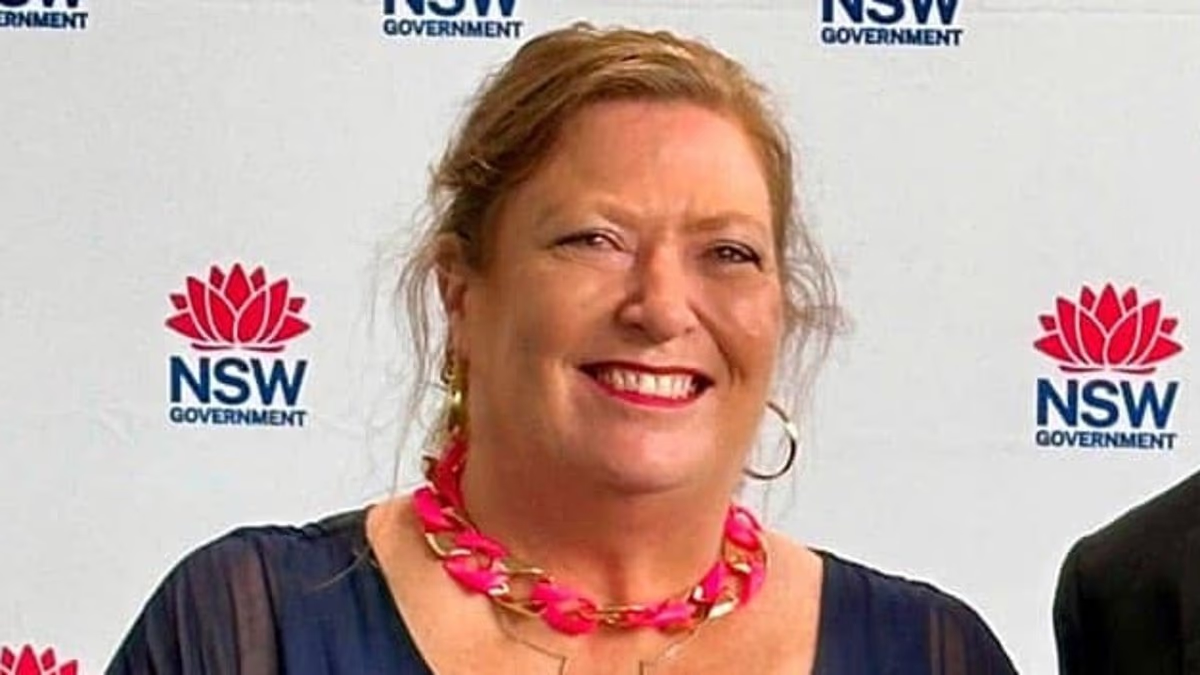
Secret weapon? Bianca Colecchia, One Nation’s state secretary for Victoria, is Pauline Hanson’s key ally in Victoria – where a Roy Morgan poll found ON ahead of Labor
Even if the polling numbers are soft, which history suggests they likely are, the trajectory and uniformity of the results exposes a structural problem the Liberal Party has been trying to deny.
The right of centre vote in Australia is splintering in two, and the Liberals are increasingly stuck in the middle.
For years, the Liberal Party has comforted itself with the idea that while it’s been losing votes on its left and right flanks, the sensible centre is where it needs to be, helped along by Australia’s preferential voting system.
However, the evidence now suggests something more harsh. The Coalition that once made the Liberals competitive is not simply drifting. It is separating into distinct electorates with different instincts, media diets and definitions of what a serious politician looks like.
One part of the traditional Liberal base (metropolitan, high income earners who are more socially liberal) has been drifting to the teals. That story is well told.
The other part, outer suburban and regional voters, are now flirting with One Nation. These voters have low levels of trust for politicians, and feel that economic conditions and the culture of the country are moving against them.
One Nation is an ideal vehicle for their anger and scepticism.
That is why the Roy Morgan numbers are so significant. If One Nation can poll 30 per cent in NSW while the Coalition sits in the teens, the Liberals are not merely losing to Labor. They are losing the argument about who speaks for the right in Australian politics.

Liberals are desperately hoping the One Nation polling surge burns hot and collapses under closer scrutiny. That may – or may not! – happen
Once a party stops being seen as a plausible alternative government and starts to be viewed as a legacy brand, it becomes harder to recruit good candidates, raise money, and hold the attention of the media and the electorate. The long term damage can be fatal.
There is a temptation for Liberals to treat this as a temporary Hanson spike, the kind of surge that burns hot and then collapses under closer scrutiny. Perhaps that will happen.
Minor parties often poll better than they perform on election day, particularly when campaigns shift from grievance to governance, and the professionalisation of the campaign gets underway.
But even if One Nation’s headline numbers halve come election day, the Liberals’ problems remain.
They are leaking support to a party that thrives on making them look compromised and timid. That creates a nightmare strategic conundrum.
To win back One Nation voters, Liberals are pushed towards sharper rhetoric and harder edges, moves that risk accelerating the teal drift and further alienating moderates in the cities.
To win back teals and professional voters, Liberals are pushed towards rhetoric and policies that convey to disaffected voters that nothing fundamental will change. Going after voters parking their support with One Nation makes it nigh impossible to win back teal held seats.
It’s a wicked problem: a political war on two fronts, and the party organisations fighting it in many states are already hollowed out

A divided right wing of politics will keep Labor in power, writes Peter van Onselen
Labor’s lesson from all this is both comforting and dangerous. Comforting because a divided right will keep Labor in power even with a soft primary vote. Dangerous because without a viable opposition governments rarely perform at their best.
And Australia’s modern political challenges require good governance. An ageing population, cost of living pressures, rising inflation and interest rates, record public debt and declining productivity are just some of the issues facing Australia.
Trust is draining out of the political system. When the electorate decides that the mainstream parties are performative and lack conviction, it goes looking for substitutes.
Sometimes that means sanctimonious teals, sometimes it means populists like One Nation.
The question now is not whether One Nation can govern, it’s whether the Liberal Party can plausibly claim it is still the natural party of government for its broad centre-right constituency.
If it can’t, the next few years might see Labor entrenching itself as the natural party of government while the right continues to fracture.