
Share this @internewscast.com
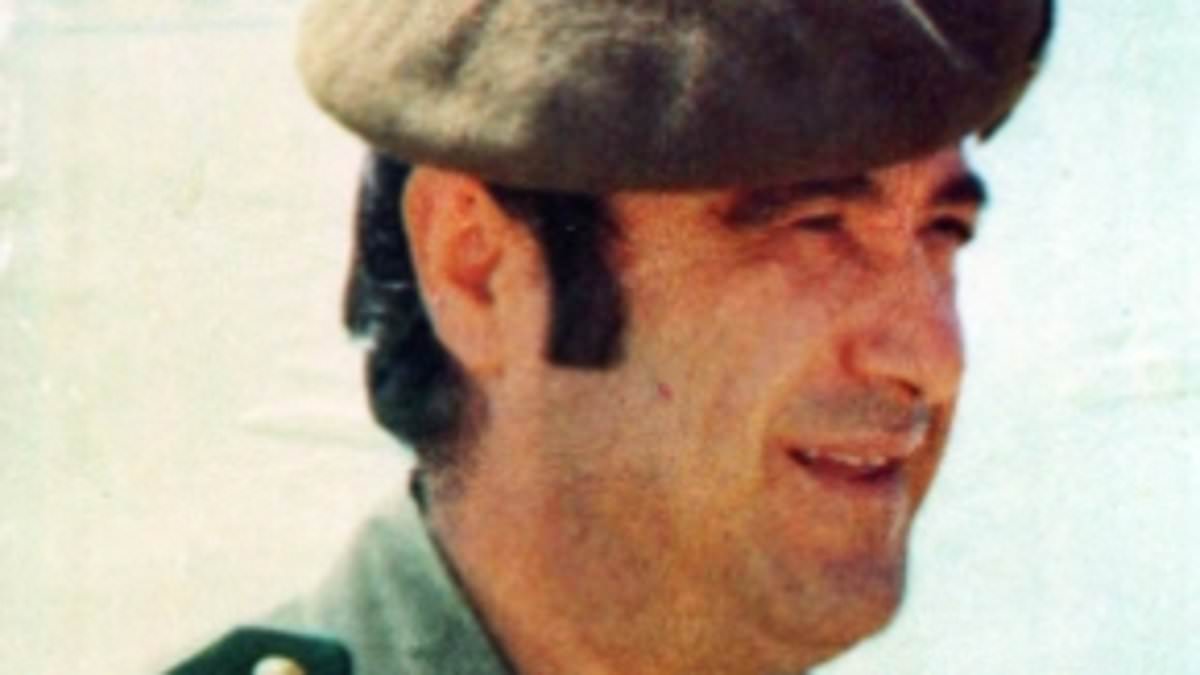
Rifaat al-Assad, the infamous uncle of deposed Syrian leader Bashar al-Assad, passed away at the age of 88. Known as a pivotal figure in one of the Middle East’s most brutal crackdowns, his death marks the end of an era. Sources confirmed that he died on Tuesday in the United Arab Emirates.
Once a high-ranking army officer, Rifaat earned the notorious moniker “the butcher of Hama” due to his involvement in quelling an Islamist uprising in 1982. His role in this bloody episode left a lasting mark on the history of Syria.
Rifaat was instrumental in shaping the Assad regime, working alongside his older brother, Hafez al-Assad, to orchestrate a coup in 1970. This takeover laid the foundation for decades of authoritarian rule in Syria.
Despite his significant contributions to the regime, Rifaat’s ambitions to lead Syria himself eventually led to his exile. During his years abroad, he amassed a considerable fortune across Europe while nurturing hopes of a political comeback.
When Hafez al-Assad passed away in 2000, Rifaat contested the succession, claiming he was the rightful heir rather than his nephew Bashar. However, his attempts to challenge the transfer of power proved ineffective.
In 2011, as Syria was engulfed in rebellion, Rifaat once again tried to influence events from afar. He urged Bashar to resign swiftly to prevent a full-scale civil war, while attributing the uprising to a series of missteps by the regime, thereby distancing himself from the blame.
More than a decade later, Bashar – still in power at the time – allowed his uncle to return to Syria in 2021, a move that helped Rifaat avoid imprisonment in France, where he had been found guilty of acquiring millions of euros’ worth of property using funds diverted from the Syrian state.
He fled once more in 2024 following the ouster of Bashar. Rifaat was a key architect of the Assad dynasty, helping his older brother, former Syrian president Hafez al-Assad, seize power in a 1970 coup that ushered in decades of iron-fisted rule

Rifaat was a key architect of the Assad dynasty, helping his older brother, former Syrian president Hafez al-Assad, seize power in a 1970 coup that ushered in decades of iron-fisted rule

The devastating three-week 1982 Hama massacre left the city in ruins and has long been cited as a blueprint for the brutal tactics later used by Bashar during the civil war

Reports have emerged of an attempted assassination of ex-Syrian president Bashar al-Assad in Moscow
According to one source with direct knowledge of the episode, Rifaat attempted to escape via a Russian airbase but was denied entry and eventually crossed into Lebanon, carried over a river on the back of a close associate.
Born in the village of Qardaha in Syria’s mountainous coastal region – the heartland of the minority Alawite community – Rifaat rose rapidly after the 1970 coup, commanding elite forces loyal to him personally.
Those forces were unleashed in 1982 to crush a Muslim Brotherhood uprising in the city of Hama, one of the gravest threats to Hafez al-Assad’s 30-year rule.
The devastating three-week assault left the city in ruins and has long been cited as a blueprint for the brutal tactics later used by Bashar during the civil war.
The true death toll remains disputed.
In 2022, the Syrian Network for Human Rights alleged that between 30,000 and 40,000 civilians were killed.
Swiss prosecutors later said that between 3,000 and 60,000 people, the majority civilians, died in the assault.
In March 2024, Switzerland’s Attorney General’s Office announced plans to put Rifaat on trial for war crimes and crimes against humanity over Hama.
His lawyers said in response that he had always denied any involvement in the alleged acts.
The Hama crackdown elevated Rifaat’s standing within the regime.
In his book Asad: The Struggle for the Middle East, journalist Patrick Seale wrote that victory over the Brotherhood was one of the factors that led senior figures to turn to Rifaat when Hafez fell seriously ill in 1983.
He was appointed vice-president the following year.
But the rivalry between the brothers soon exploded. While Hafez was still unwell, Rifaat pushed for sweeping changes, with posters of him in uniform appearing across Damascus.
When Hafez recovered, he was ‘extremely displeased’, Seale wrote.
The confrontation peaked in 1984 when Rifaat ordered his forces to seize key points in the capital, threatening all-out conflict.
Hafez ultimately talked his younger brother down, and Rifaat soon left Syria after the failed coup attempt.

Pictured: Rifaat Al-Assad (left) pictured with his older brother, and one-time Syria president, Hafez (right)

Born in the village of Qardaha in Syria’s mountainous coastal region – the heartland of the minority Alawite community – Rifaat rose rapidly after the 1970 coup, commanding elite forces loyal to him personally

Syrian fans cheer for their national team under portraits of Hafez al-Assad and Bashar al-Assad (R) during their Asian World Cup qualifying football match against Kuwait at the Abbassin Stadium in Damascus on June 2, 2008

Rifaat was a key architect of the Assad dynasty, helping his older brother, former Syrian president Hafez al-Assad (pictured), seize power in a 1970 coup
He went on to reinvent himself as a wealthy businessman in Europe, settling first in Geneva before moving to France and Spain.
In later years, he was a familiar sight in Marbella’s Puerto Banus, strolling with an entourage of bodyguards near his seaside property.
But his fortune increasingly attracted scrutiny.
In 2020, a French court convicted him of acquiring millions of euros’ worth of property with money siphoned from the Syrian state, sentencing him to four years in jail.
Assets worth an estimated £87million in France were seized, along with a £29million property in London. Rifaat repeatedly denied the accusations.
His 2021 return to Syria was not his first since exile – he briefly went back in 1992 to attend his mother’s funeral.
A pro-government newspaper later said he had returned ‘in order to prevent his imprisonment in France’ and would play no political or social role.
A photograph shared on social media in April 2023 showed the once-exiled strongman standing among a group that included a smiling Bashar al-Assad – a fleeting image of reconciliation at the end of a long and bloody chapter in Syria’s ruling family history.