For many diners, saying “I know a great Thai restaurant” is a mark of culinary confidence. But how fresh and authentic is the food being served? According to one leading chef, not every restaurant delivers the real thing.
Some venues may offer stylish, Instagram-friendly surroundings while their kitchen team has little understanding of how to cook properly with a wok, says Saiphin Moore, founder of Rosa’s Thai.
Speaking to Our News Outlet, she revealed that some restaurants use jarred green curry paste instead of making their own. Others rely on frozen vegetables, leftover rice and tinned fruit rather than fresh produce.
Shortcuts can also appear in satay chicken. Instead of marinating the meat overnight with spices and coconut milk, some chefs simply coat it in peanut butter.
However, diners need not guess. Saiphin has outlined the dishes to be wary of when they look or taste a certain way—and what to order instead.

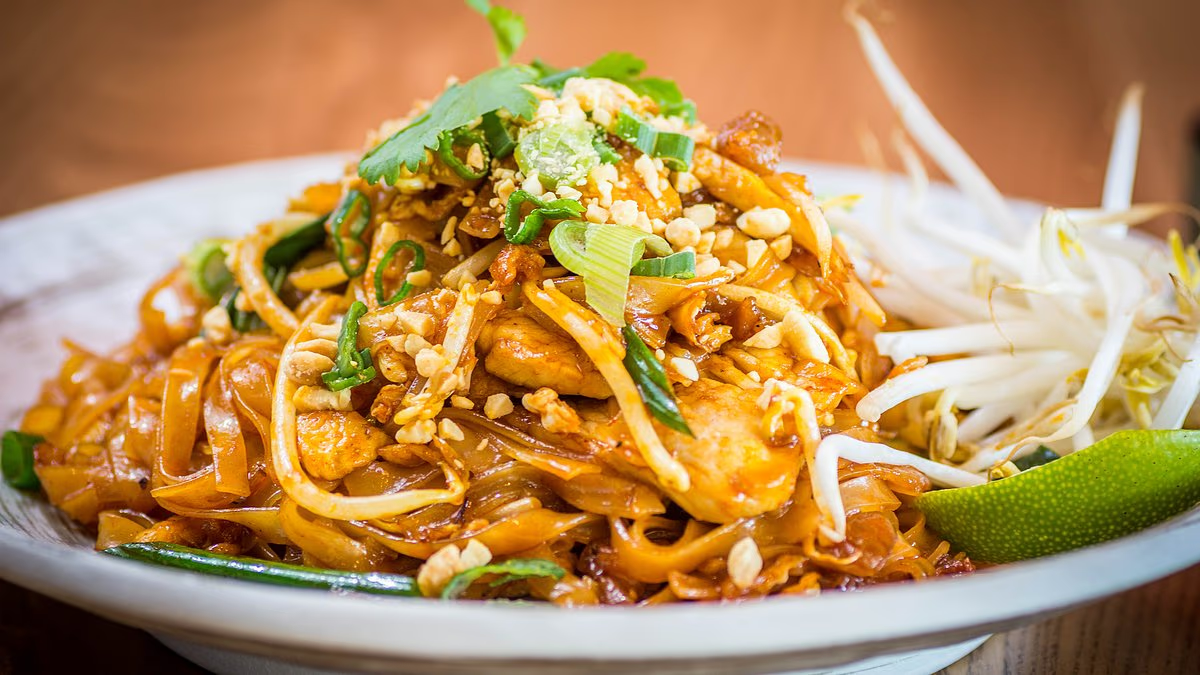
Saying “I know a great Thai restaurant” is often seen as a sign of style and good taste. But one leading chef says not every venue offers fresh, authentic food (stock photo)
Pad Thai
The experienced chef said: “If Pad Thai is neon orange, gloopy and tastes of ketchup and sugar, it is not Pad Thai.
“Authentic Pad Thai should be sour with tamarind first, followed by salt and then sweetness, with a smoky flavour from the wok. It should never be covered in sauce.”
ORDER INSTEAD: Pad See Ew
“Flat rice noodles, spring greens, egg and dark soy. You can tell after one bite whether the kitchen truly knows how to use a wok.”
Green curry
“Many green curries served in the UK are simply coconut milk mixed with jarred green paste, chicken and a little sugar,” Saiphin explained.
“There are no fresh herbs and no real bite. If the curry is an even, pale green colour and tastes flat, it is unlikely to be fresh.”
ORDER INSTEAD: Gaeng Keow Wan
“Proper Gaeng Keow Wan, or green curry, is prepared to order with fresh Thai basil and lime leaf,” the Thai chef insisted.
“Ask whether the restaurant makes its own paste. A good one should smell of fresh basil and lime leaf before you even taste it.”
Tom Yum soup
“If Tom Yum, the classic Thai soup, tastes of lemon juice, chilli powder and stock cube, avoid it,” warned the restaurant founder.
“Authentic Tom Yum should contain lemongrass, galangal, lime leaf and mushrooms, with a properly sour, herbal flavour. It should awaken your palate, not simply make it burn.”
ORDER INSTEAD: Tom Kha Gai
“Tom Kha Gai combines coconut, galangal, chicken and mushrooms. It is creamy while remaining fresh and sour, making it much harder to imitate with a powder.”
Massaman curry
“In the UK, Massaman curry often turns into a brown, sweet, peanut-butter-like dish without any real depth of spice,” Saiphin claimed.
“Authentic Massaman is slow-cooked and aromatic, with cinnamon, star anise, cardamom and tamarind. It should offer layers of complex spice, not simply sweetness.”
ORDER INSTEAD: Panang Curry
“Panang curry is thicker and richer, with peanuts, lime leaf and a well-balanced chilli heat. When prepared properly, it demonstrates that the chefs understand how to balance flavours.”
Thai red curry
“Watery red curry containing rubbery bamboo shoots, frozen peas and carrots is a warning sign of a bulk-prepared dish,” the chef said.
“Fresh Thai curry should be vibrant, with crisp vegetables, Thai aubergine and basil that remains bright green.”
ORDER INSTEAD: Gaeng Pa – Jungle Curry
“Try Gaeng Pa, or jungle curry, instead. It contains no coconut milk—just herbs, chilli, peppercorns and vegetables. This is more of a Lao-style curry, which reflects my heritage,” Saiphin explained.
Satay chicken
“Dry satay chicken skewers served with a thick, sweet peanut sauce that tastes like peanut butter are a classic shortcut,” the chef insisted.
“Authentic satay should be marinated overnight in turmeric, cumin and coconut milk, then grilled over charcoal and served with a light, tangy peanut sauce.”
ORDER INSTEAD: Moo Ping – Grilled Pork Skewers
“Moo Ping—grilled pork skewers—uses marinated pork neck with charred edges and a sweet-salty glaze, served with sticky rice.
“It is street food at its best, and the quality of the meat cannot be hidden behind a heavy sauce.”
Crispy duck with pancakes
Saiphin said crispy duck with pancakes “is a Chinese dish that somehow found its way onto almost every Thai menu in the UK.”
She added: “It tells you nothing about Thai cuisine, and the duck is usually pre-cooked and reheated.”
ORDER INSTEAD: Larb
“Larb is the Thai salad everyone should know. Made with minced pork, chicken or duck, it is combined with toasted rice powder, lime, chilli, mint and shallot.
“It is fresh, sour, spicy and crunchy. If a restaurant makes excellent larb, you can feel confident ordering other dishes too,” Saiphin said.
Sweet chilli chicken
“If a Thai menu is dominated by sweet chilli sauce, sweet-and-sour dishes and ‘Thai sweet chilli’, that is not Thai food—it is takeaway sauce. Authentic Thai cooking is never simply sweet,” the chef explained.
ORDER INSTEAD: Som Tam – Papaya Salad
“Som Tam is prepared fresh to order with green papaya, lime, fish sauce, palm sugar, dried shrimp, peanuts and chilli.
“It should be mixed in front of you and can taste slightly different each time. A great Som Tam is the ultimate test of freshness.”
Pineapple fried rice
Discussing pineapple fried rice, Saiphin said: “It looks appealing on Instagram, but nine times out of ten it consists of old rice, tinned pineapple, frozen peas and curry powder. The pineapple is used to disguise stale rice.”
ORDER INSTEAD: Khao Pad
She insisted: “Proper Thai fried rice should be dry and smoky, with egg, spring onion, tomato and lime served on the side. There should be no curry powder—the wok should provide the flavour.”


