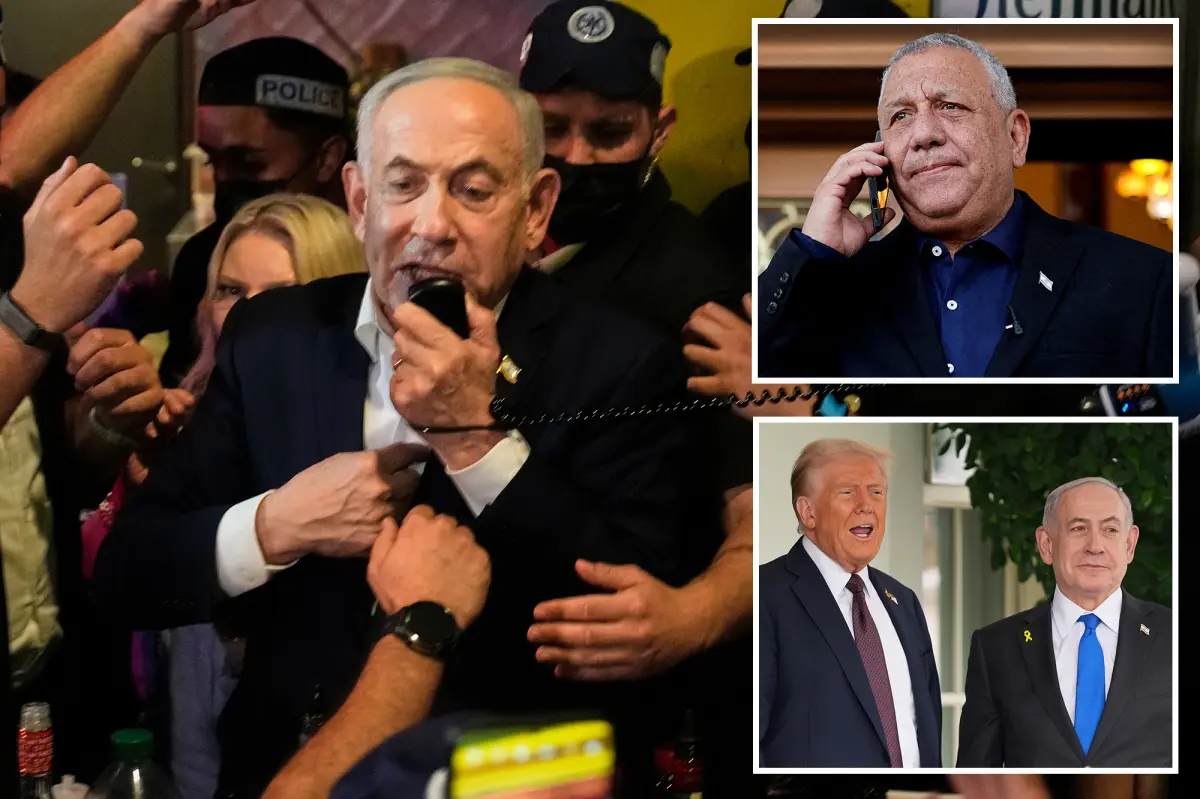

Advisers to President Trump reportedly believe that a defeat for Israeli Prime Minister Benjamin Netanyahu in Tuesday’s election could ultimately make it easier to advance the administration’s Middle East agenda.
If Netanyahu is voted out after serving as prime minister for about 19 years across three separate terms, his possible successors would have powerful reasons to preserve close relations with Washington, US officials told Axios.
The assessment comes as Israelis prepare to vote on Oct. 27. Recent polls indicate that Netanyahu’s coalition is struggling to win the parliamentary majority required to form a government.
A change in Israel’s political landscape could create new momentum for Trump’s Middle East priorities, despite the president’s decision last Sunday to endorse Netanyahu, the conservative Likud Party leader. Netanyahu is trailing former Israeli Defense Forces Chief of Staff Gadi Eisenkot in the polls.
Trump described Netanyahu as a “Great Warrior Prime Minister, and an even greater Partner for Peace in combatting the Islamic Republic of Iran,” citing the joint US-Israeli attacks on Iran as well as Israel’s battles against Hezbollah and other adversaries.
Several of Trump’s senior advisers have become “dissatisfied” with Netanyahu over major regional issues during the past six months, Axios reported.
Tom Barrack, the US envoy to Syria, has questioned Israel’s military operations there. Trump’s son-in-law Jared Kushner and envoy Steve Witkoff have also reportedly expressed frustration over what they view as Netanyahu’s unwillingness to move forward with Trump’s peace plan.
CONTINUE READING: NYC School Investigators Kept Secret Ammo Stash, Handed Out Bullets
“He’s the devil he knows,” one Trump adviser said of Netanyahu, who remained in office throughout Trump’s first term.
Following the election, Trump will face what one official described as a “defining choice” over whether to join Netanyahu in another military operation against Iran. US intelligence officials have warned that Iran is intensifying threats against Americans in the region, while US warships — including two aircraft carrier strike groups — are positioned for a possible escalation.
Trump’s decision to participate in a joint attack with Netanyahu against Iran in February triggered a surge in oil prices, creating additional political challenges for the president ahead of the Nov. 3 midterm elections. Trump has repeatedly argued, however, that the strikes delayed Iran’s efforts to obtain a nuclear weapon.
The endorsement also gives Trump an opportunity to claim credit if Netanyahu prevails. Eisenkot, speaking to The Post in an interview, has emphasized the longstanding US-Israel relationship and voiced support for Trump’s efforts in the region.
Vice President JD Vance notably declined to endorse Netanyahu during a Monday interview with journalist Mark Halperin. “The president has the most influential endorsement in American or international political history,” Vance said. “I endorse American candidates, and that’s where I’m focused on the midterms.”
Vance had traveled to Budapest to support Hungarian strongman Prime Minister Viktor Orbán shortly before Orbán suffered a defeat.
Trump later addressed his running mate’s decision not to endorse Netanyahu. “I don’t know that he did or didn’t, that’s up to him,” Trump said Friday. “I would leave that up to him.”
MORE STORY: The Downfall of Spanian’s Kebab: Franchise Insiders Reveal Warning Signs


