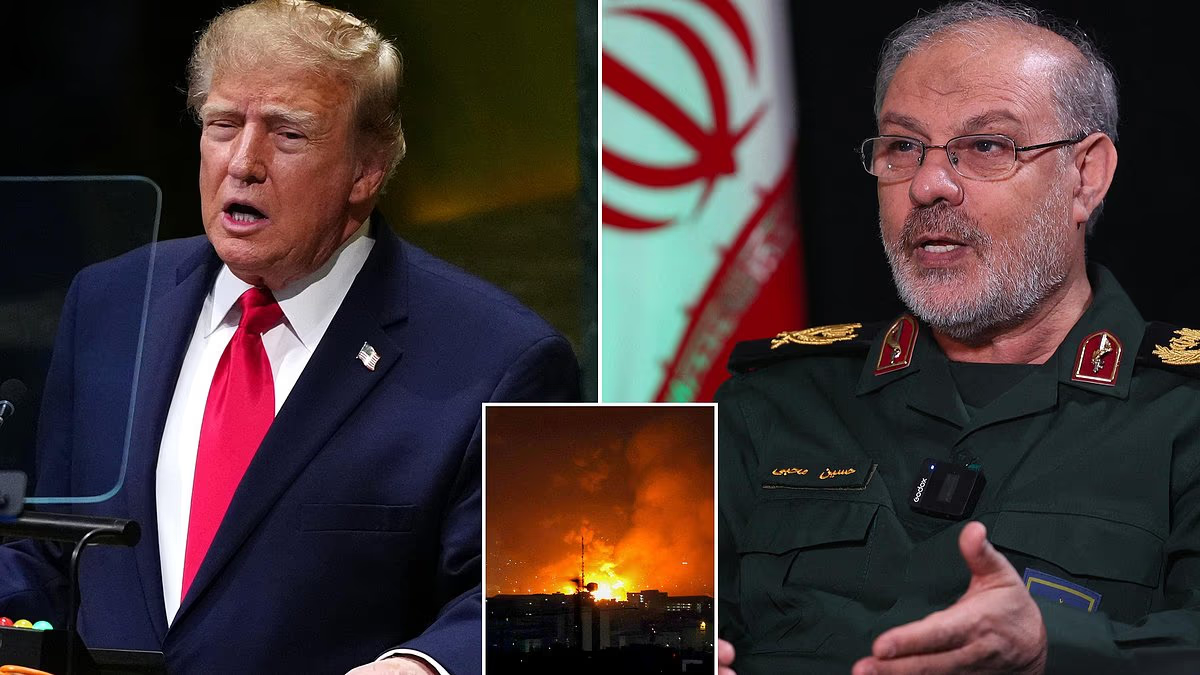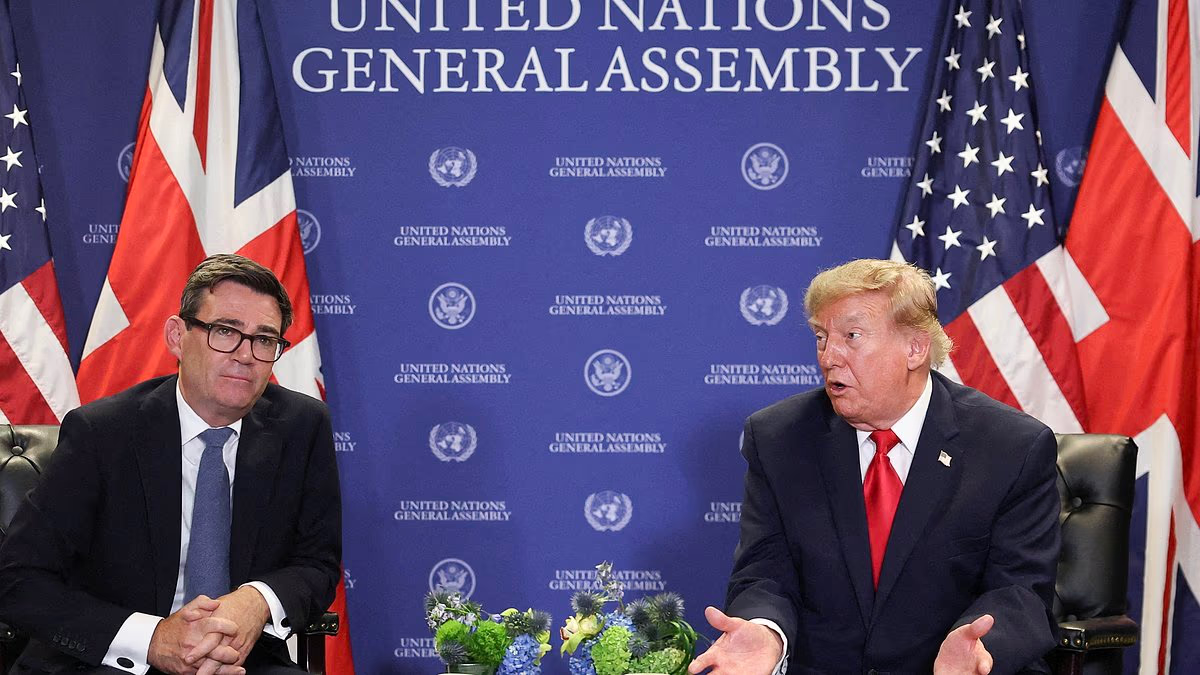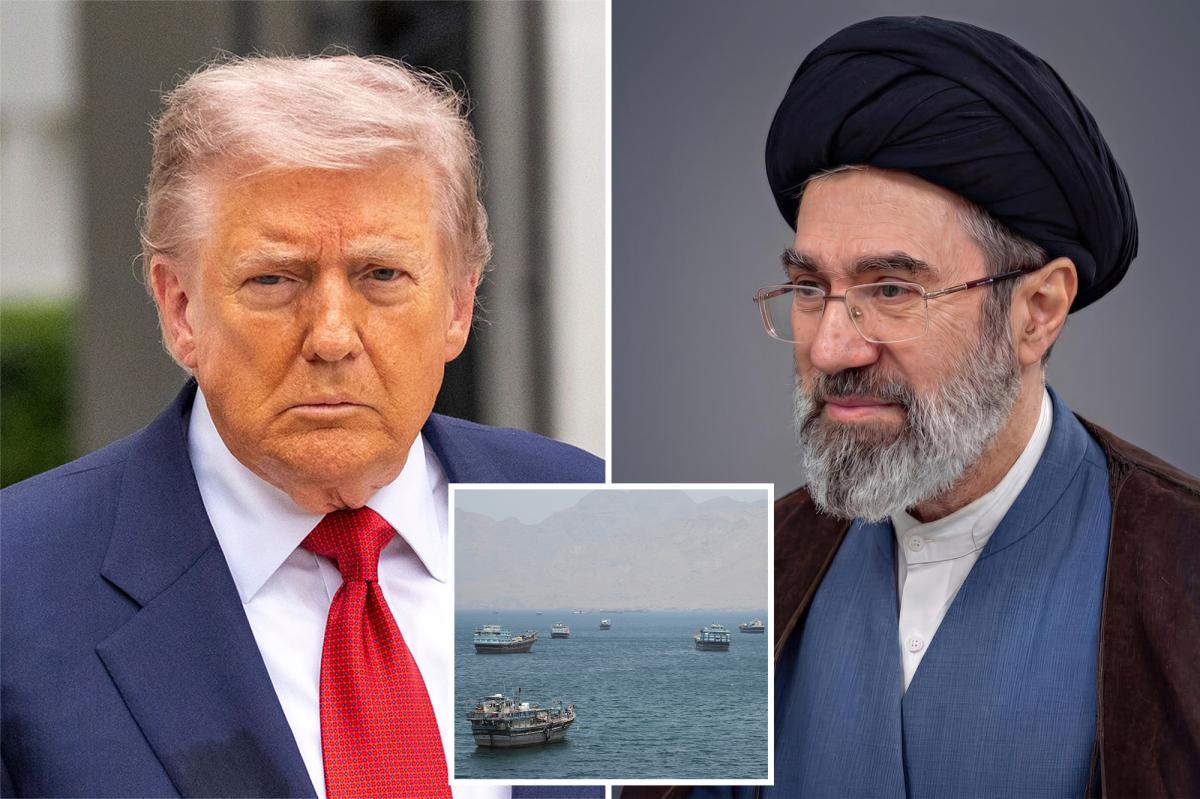


On Saturday, President Trump awaited Iran’s response to his recent peace proposal aimed at resolving ongoing hostilities, while also warning of potential military action should Tehran reject the offer.
Despite this tension, a general ceasefire between the United States and Iran seemed to hold steady, following U.S. military strikes on two Iranian locations. Additionally, the United Arab Emirates reported intercepting Iranian missiles and drones.
The Iranian government faces increasing pressure to advance peace discussions, especially as incidents in the Strait of Hormuz risk undermining diplomatic efforts.
Trump cautioned that he might reinstate Project Freedom, a mission involving U.S. destroyers escorting commercial vessels through the strategic waterway, should negotiations with Iran collapse.
“We might reintroduce Project Freedom if necessary, but it would be an enhanced version, incorporating additional measures,” Trump told the press.
As Iran delayed its reply to the U.S. proposal, the British Defense Ministry revealed plans to deploy the HMS Dragon to the Middle East. The warship, previously stationed in the eastern Mediterranean to protect British assets from potential Iranian threats, is now set to bolster regional security.
A UK military spokesperson called it “prudent planning” as part of a “multinational coalition jointly led by the UK and France, to secure the Strait of Hormuz, when conditions allow.”
It follows a move by Paris earlier this week to deploy its carrier strike group to the southern Red Sea — accompanied by Italian and Dutch warships.
French President Emanuel Macron said a joint mission with the UK “can help restore confidence among shipowners and insurers” and was “distinct from the parties to the conflict.”
After the outbreak of war on Feb. 28, Iran managed to effectively close the strait, which handles about 20% of the world’s oil shipping.
Trump countered by announcing a blockade on April 12, before sending US destroyers to search fo Iranian mines and be positioned to escort commercial ships through the waterway.
Macron called for all sides to end the blockades of the strait “immediately and without conditions.”
Trump indicated to reporters that the ball was in Tehran’s court.
“I’m getting a letter supposedly tonight. So we’ll see how that goes,” he said Friday en route to his Virginia golf club, where he is hosting the Saudi-backed LIV golf this weekend.
Secretary of State Marco Rubio hoped Iran’s response would be a “serious offer.”
Rubio met with White House envoy Steve Witkoff in Miami along with Qatari Prime Minister Mohammed bin Abdulrahman al-Thani to try to forge ahead on the deal, Axios reported Saturday.
Negotiators have been hammering out the details of a 14-point framework for peace talks between the US and Iran.
The emerging memorandum of understanding — described as a one-page agreement — would serve as the foundation for a broader treaty to be negotiated later, according to sources familiar with the talks.
Iran’s proposal, according to press reports, would give Tehran a guarantee against future attacks, have the US withdraw forces from the region, release its frozen assets, and lift US sanctions.
Tehran has also been seeking war reparations, an end to attacks on Hezbollah allies in Lebanon, and a new mechanism for the strait.
The US countered with its own proposal requiring Iran to agree not to stop nuclear enrichment activities for 12 years, hand over its highly enriched uranium, with a gradual lifting of sanctions and an end to the US blockade. The strait would reopen within 30 days.
But major sticking points remain — especially over Iran’s stockpile of enriched uranium and whether or when Tehran would be allowed to resume any enrichment activity in the future.
Meanwhile, US Central Command said it had disabled two Iranian tankers trying to make their way through the US-imposed blockade of the strait, posting video of the ships with their smokestacks smouldering in a post on X Friday.
It said Saturday that US forces have redirected 58 commercial vessels and disabled four since April 13 to keep them from entering or leaving Iranian ports.
Iran’s foreign minister, Seyed Abbas Araghchi, fumed on X that “Every time a diplomatic solution is on the table, the U.S. opts for a reckless military adventure. Is it a crude pressure tactic?”