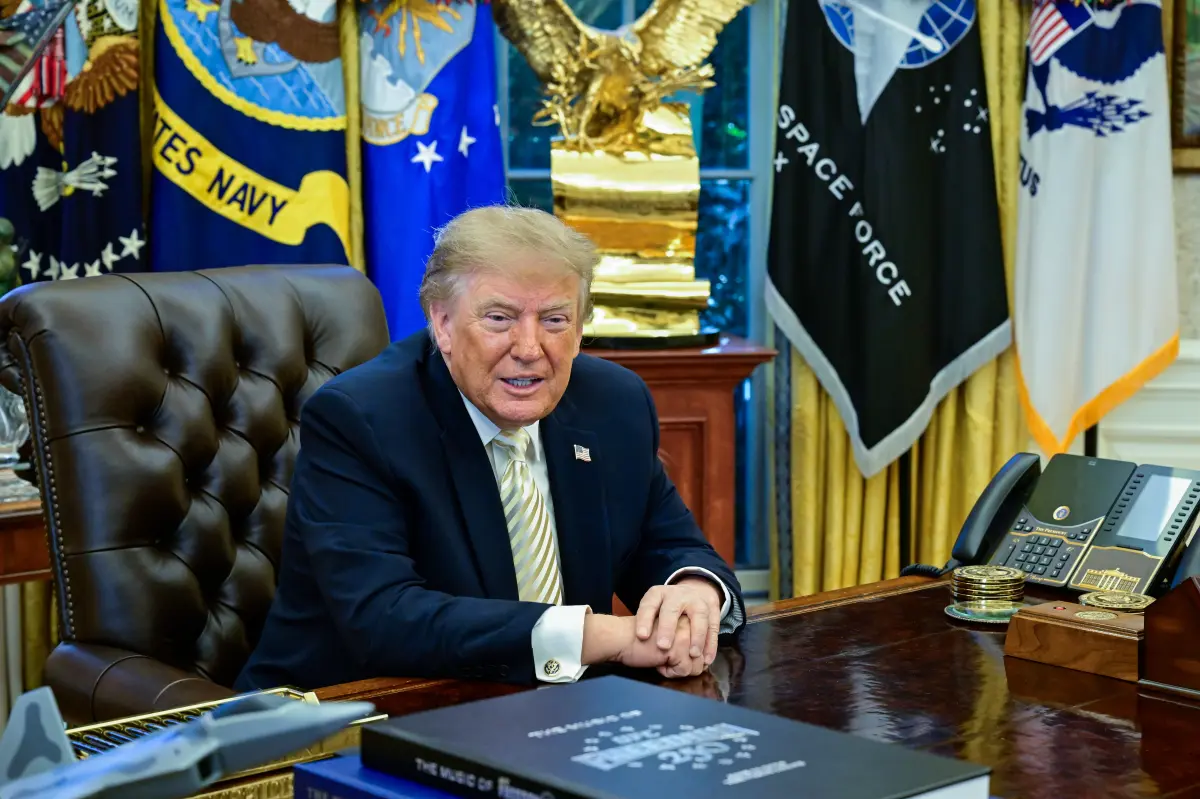
WASHINGTON — President Trump called New York City’s congestion-pricing program “a killer” and vowed to block similar plans in other metropolitan areas.
“It’s hurting New York very badly,” Trump told The Post in an Oval Office interview. “They only raise it; they don’t lower it.”
“It’s a killer for New York.”
Nearly two years after congestion pricing began in Midtown Manhattan, drivers say traffic remains just as severe. The Metropolitan Transportation Authority had argued that the program, which charges motorists at least $9, would reduce commuters’ travel times.
Trump has repeatedly criticized the initiative. Transportation Secretary Sean Duffy threatened to cut off federal funding to New York if the tolls continued, but a federal judge ruled in March that the administration’s effort to terminate the program was unlawful. The administration is appealing that decision.
“Congestion pricing has never worked anywhere in the world,” the president said Tuesday during an extended criticism of the program, which he called a “disaster.”
Trump argued that for some people who travel into Manhattan for work, the toll costs more than they earn in an hour.
Read The Post’s coverage from its exclusive sit-down with President Trump
“People who are selling shoes, and people who are waitresses and waiters, pay more for congestion pricing than they make,” he said.
READ MORE: Trump Cabinet Divided Over Reinstatement of Nvidia CEO Jensen Huang
Passenger vehicles with E-ZPass currently face a $9 peak daytime toll to enter the Congestion Relief Zone. The charge is scheduled to increase to $12 in 2028 and $15 in 2031. Large buses and trucks, meanwhile, can pay as much as $21.60 to enter the city.

Several other cities have considered congestion pricing, including Washington, DC.
“I’m not going to allow it,” Trump declared, noting that he has greater authority over the federal district than he does over his home state.
“Congestion pricing is a killer for every place that’s ever had it, and it shouldn’t be allowed,” he added.
An E-ZPass driver who enters the zone during rush hour five days a week pays $45 weekly, or roughly $2,250 annually.
A large truck making one trip into the zone each weekday pays $108 per week, or approximately $5,400 per year. If the truck makes two trips into the zone each day, that annual expense would double to $10,800.
Last month, several drivers told The Post how heavily the tolls were affecting them. One said the charges were “eating us alive,” while another joked that they might start commuting by horse.