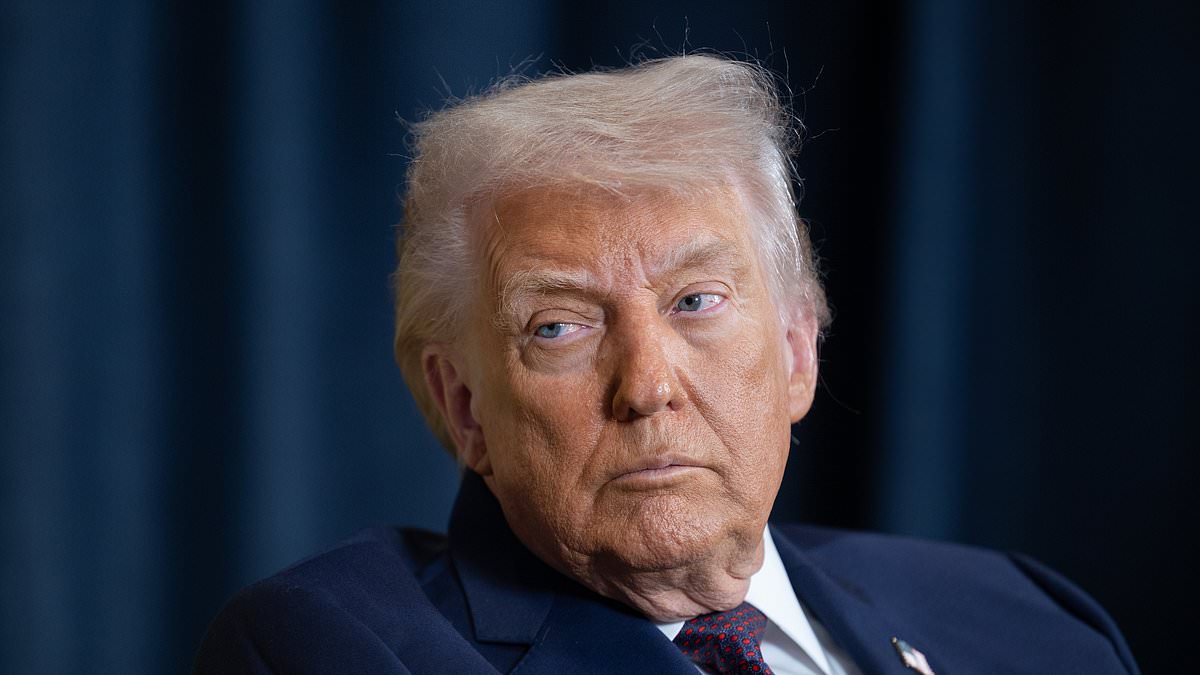

Iran has officially responded to the United States’ recent proposal for a ceasefire, a move that has been promptly rejected by President Donald Trump. This latest development adds another layer to the ongoing tensions between the two nations.
On Sunday afternoon, Trump took to Truth Social, expressing his disapproval in no uncertain terms. “I have just read the response from Iran’s so-called ‘Representatives.’ I don’t like it — Totally Unacceptable! Thank you for your attention to this matter,” he announced, making it clear that the proposal was off the table in its current form.
Despite this setback, the U.S. remains confident in its strategic position. Speaking with Shannon Bream on Fox News Sunday, U.S. Ambassador to the United Nations, Mike Walz, voiced optimism about international support. “We’re seeing the world align with us,” he stated, suggesting a robust backing for America’s stance.
Walz further emphasized that while Iran’s intentions have been laid bare, diplomacy is still being pursued, albeit with the backing of “our great U.S. military.” This dual approach underscores the administration’s strategy: a readiness for dialogue paired with a show of strength.
The current proposal from the Trump administration aimed to broker a deal that would not only halt the conflict but also ensure the reopening of the Strait of Hormuz and curb Iran’s nuclear ambitions. However, Iran has its own conditions. According to state television, Iran is pushing for an end to hostilities across multiple fronts, including the conflict in Lebanon where Israeli forces are engaged with Hezbollah, a group supported by Iran, and seeks assurances for the security of commercial shipping routes.
Iran seeks to end the war on all fronts, including in Lebanon, where Israel is fighting the Iranian-backed Hezbollah militant group, and to ensure the security of shipping, state TV said.
Iran’s new supreme leader, Mojtaba Khamenei, who has not been seen or heard publicly since the war began, ‘issued new and decisive directives for the continuation of operations and the powerful confrontation with the enemies’ while meeting with the head of the joint military command, the state broadcaster reported, with no details.
Trump has reiterated threats to resume full-scale bombing if Iran does not accept an agreement to reopen the strait and roll back its nuclear program. Iran has largely blocked the strategic waterway that’s key to the global flow of oil, natural gas and fertilizer since the war began, rattling world markets.
President Donald Trump in Davos, Switzerland, on January 22nd, 2026
A woman holds the Iranian flag as she stands infront of an anti-US billboard referring to President Donald Trump and the Strait of Hormuz, installed on a building at the Valiasr Square in Tehran on May 10, 2026

An explosion of what appears to be white phosphorus fired by the IDF on the Lebanese side of the Israel-Lebanon border as seen from the Israeli side of the border, May 10, 2026
The U.S. military in turn has blockaded Iranian ports since April 13, saying it has turned back 61 commercial vessels and disabled four. On Friday, it struck two Iranian oil tankers it said were trying to breach the blockade. Iran’s Revolutionary Guard navy says any attack on Iranian oil tankers or commercial vessels would be met with a ‘heavy assault’ on U.S. bases in the region and enemy ships.
Another sticking point in negotiations is Iran’s highly enriched uranium. The U.N. nuclear agency says Iran has more than 440 kilograms (970 pounds) enriched up to 60% purity, a short, technical step from weapons grade.
In an interview posted late Saturday, an Iranian military spokesperson said forces were on ‘full readiness’ to protect sites where uranium is stored.
‘We considered it possible that they might intend to steal it through infiltration operations or heli-borne operations,’ Brig. Gen. Akrami Nia told the IRNA news agency.
Israeli Prime Minister Benjamin Netanyahu in an excerpt of an interview with CBS airing Sunday said the war isn’t over because the enriched uranium needs to be taken out of Iran. ‘Trump has said to me, ‘I want to go in there,’ and I think it can be done physically,’ he said.
Russian President Vladimir Putin said Saturday that Moscow’s proposal to take enriched uranium from Iran to help negotiate a settlement remains on the table.
The majority of Iran’s highly enriched uranium is likely at its Isfahan nuclear complex, the International Atomic Energy Agency director-general told The Associated Press last month. The facility was hit by U.S.-Israeli airstrikes in the 12-day war last year and faced less intense attacks this year.


