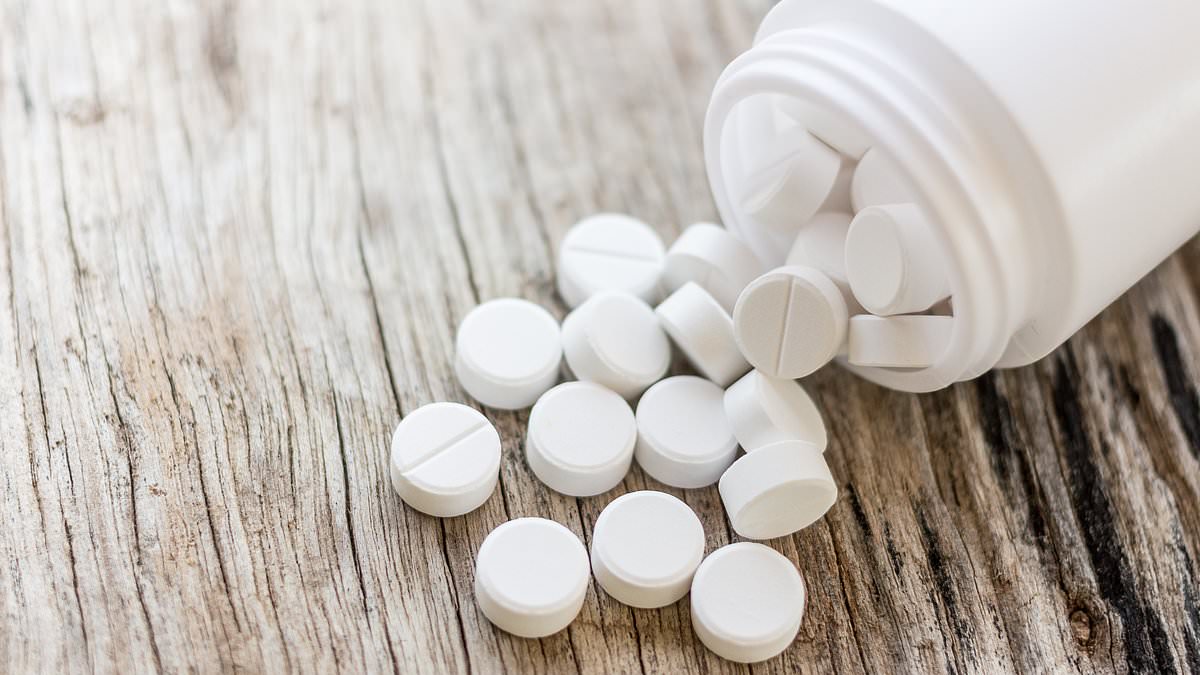

Over 30 million Americans regularly use aspirin, a widely available medication known for its affordability and effectiveness in alleviating pain while also reducing the risk of heart attack and stroke.
Though generally considered safe with minimal side effects, experts advise that aspirin should be used under a healthcare provider’s supervision to ensure the correct dosage.
Among those taking aspirin daily is former President Donald Trump. In a recent interview with The Wall Street Journal, Trump disclosed that he uses the medication for “cardiac prevention.”
However, medical professionals warn about the potential dangers of excessive aspirin consumption, such as uncontrollable bleeding, vomiting, and bruising.
Aspirin functions by reducing the stickiness of platelets, the cell fragments responsible for blood clotting. This is particularly beneficial for older individuals, as it lowers the risk of heart attacks and strokes.
At 79, Trump states he takes a daily dose of 325mg—over three times the usual amount. Despite his doctors’ recommendations to decrease his intake, he remains hesitant after 25 years of continuous use.
‘I’m a little superstitious,’ he said.
‘They say aspirin is good for thinning out the blood, and I don’t want thick blood pouring through my heart. I want nice, thin blood pouring through my heart.’

President Donald Trump, pictured above last year, revealed that he takes 325mg of aspirin daily for ‘cardiac prevention’
Daily aspirin is typically only recommended for older adults who have a prior history of heart attack or stroke or risk factors like high blood pressure or chronic venous insufficiency (CVI), which Trump was diagnosed with last year.
Doctors who have not evaluated the president spoke to the Daily Mail about aspirin in general. They told the Daily Mail they recommend against taking 325mg, especially for people who aren’t at a significant risk of suffering a heart attack or stroke.
They also warned taking high doses, especially without guidance from a physician, may lead to severe side effects like bleeding and bruising.
‘Where aspirin is most clearly beneficial is in secondary prevention, which refers to patients who already have cardiovascular disease such as a prior heart attack, stroke, vascular stent or bypass surgery,’ Dr Sam Setareh, director of clinical cardiology at Beverly Hills Cardiovascular & Longevity Center and senior clinical researcher at the National Heart Institute, told the Daily Mail.
Setareh, who has not evaluated President Trump, noted the typical recommended daily dose of aspirin for people at risk of a heart attack or stroke is between 75 and 100mg, and the most common daily dose is 81mg.
‘A 325mg tablet is substantially higher than what is currently recommended for routine cardiovascular prevention,’ he said.
‘Older clinical practices sometimes used doses up to 325mg daily, but modern evidence shows that higher doses do not prevent more heart attacks or strokes and can increase bleeding risk.’
Setareh pointed to the 2021 ADAPTABLE trial out of Duke University, which compared aspirin doses of 81 and 325mg among 15,000 participants at risk of cardiovascular disease.
The study found there was no difference in heart attacks, strokes or bleeding between the two groups, and nearly half of those assigned to the higher dose ended up going down to 81mg – ‘which shows that patients often cannot tolerate the higher dose long term,’ Setareh said.
He noted that patients generally are only advised to take 325mg for short periods of time immediately after a heart attack or stroke to help thin their blood. Setareh said that a daily dose of this amount ‘should only be taken when there is a specific clinical reason and in consultation with a clinician who understands the person’s full cardiovascular and bleeding risk profile.’
He added that, ‘Outside of those scenarios, current evidence shows no added protective benefit of 325mg compared to 81mg.’

Nearly 30 million US adults take aspirin every day to prevent heart attacks and stroke, but doctors warn high doses may lead to bleeding

Doctors note high doses of aspirin may increase the risk of bruising, which Trump has said could be the reason for the bruises that have appeared on the back of his hands (pictured)
Instead, it just primes the body for excess bleeding.
Because aspirin thins the blood to prevent clots, minor cuts could cause uncontrollable bleeding. Older individuals also tend to have thinner skin and weak blood vessels, which make them even more prone to blood loss.
That excess bleeding can also lead to bruising – Trump has said it could be the reason for the bruising that has started to appear on the back of his hands.
‘I take the larger [dose], but I’ve done it for years, and what it does do is it causes bruising,’ he told The Wall Street Journal.
The White House has previously said the president’s bruises are from shaking hands with so many people.
Both the American College of Cardiology and American Heart Association recommend against even a daily low dose of aspirin entirely for people over 70 because the risk of bleeding outweighs the benefit.
‘Certain groups should generally not take aspirin for primary prevention,’ Setareh told the Daily Mail. ‘These include adults older than 70, people with low cardiovascular risk scores, individuals with prior gastrointestinal bleeding or ulcers and those on medications that raise bleeding risk.’
He noted that people taking too high of a dose may experience black or tarry stools, unexplained bruising, stomach pain, vomiting blood or fatigue, which could be a sign of anemia.
‘More importantly, people should not attempt to self adjust aspirin doses,’ he said.
‘The bottom line is that aspirin can be lifesaving when used appropriately.’