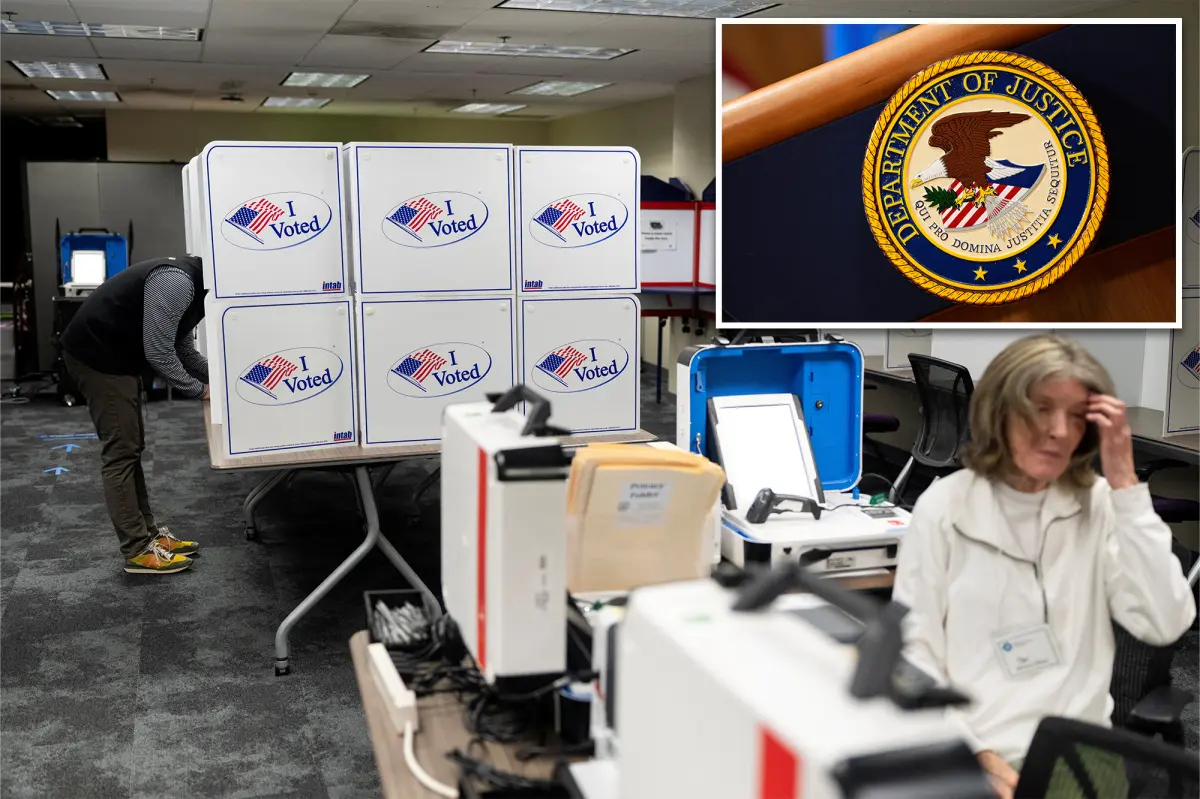

A US judge ruled Friday that the Justice Department acted unlawfully when it sought state voter rolls to compare them with a federal immigration database and pressure states to remove voters it considered ineligible.
US District Judge Sparkle Sooknanan’s ruling is the latest setback to President Donald Trump’s effort to increase federal control over election administration ahead of the November 3 midterms, as Republicans seek to retain majorities in both chambers of Congress.
In a 78-page opinion backing a challenge brought by watchdog group Common Cause, Sooknanan said the Justice Department had minimized the danger that its policy could wrongly disenfranchise eligible citizens. She noted that the federal immigration database, known as SAVE, could contain inaccurate information.
“The challenged policy represents the federal government’s attempt to decide who gets to vote. But Congress has left that authority where our Constitution has always placed it: with the states,” wrote Sooknanan, a Washington-based judge appointed by Democratic President Joe Biden.
Supreme Court Paused Previous Ruling
Ming Cheung, an American Civil Liberties Union lawyer who represented the plaintiffs, said the ruling showed that “the administration cannot use the federal government to disrupt elections.”
A Justice Department spokesperson said the agency was reviewing the decision.
NEXT UP: Stage 4 Cancer Patient Says They Fled Canada to Avoid Euthanasia
In a separate case, Sooknanan ruled in June that the Trump administration could not use an expanded version of SAVE to verify voter rolls. The US Supreme Court temporarily paused that ruling last month.
Federal law bars systematic voter-roll reviews during the 90 days before a federal election. That restriction could limit the effect of both Sooknanan’s ruling and the Supreme Court’s pause of her earlier order as the midterms approach.

Latest Defeat for Justice Department
Trump, who falsely alleges that voter fraud caused his defeat in the 2020 presidential election, ordered the Justice Department last year to intensify efforts against voting by ineligible people. Multiple state audits and independent studies have found that such fraud is rare.
The Justice Department subsequently ordered nearly all 50 states to submit complete, unredacted voter rolls, including sensitive details such as Social Security numbers and dates of birth.
Eighteen states, most of them led by Republicans, complied. The department then compared the voter data with SAVE and notified states about voters identified as non-citizens so they could consider removing them from the rolls.
Sooknanan said the administration’s expansion of SAVE meant the database now included citizenship information from the Social Security Administration. That information could be outdated, potentially causing immigrants who had since become US citizens to be incorrectly flagged as non-citizens.
The Justice Department sued 30 Democratic- and Republican-led states that refused to provide unredacted voter rolls, along with Washington, DC. It has lost 26 of those cases so far and has not won any.


