
A key US partner in the Middle East has moved to sever a crucial economic lifeline to Iran — a shift that analysts say could become one of the most serious pressures yet on Tehran’s leadership.
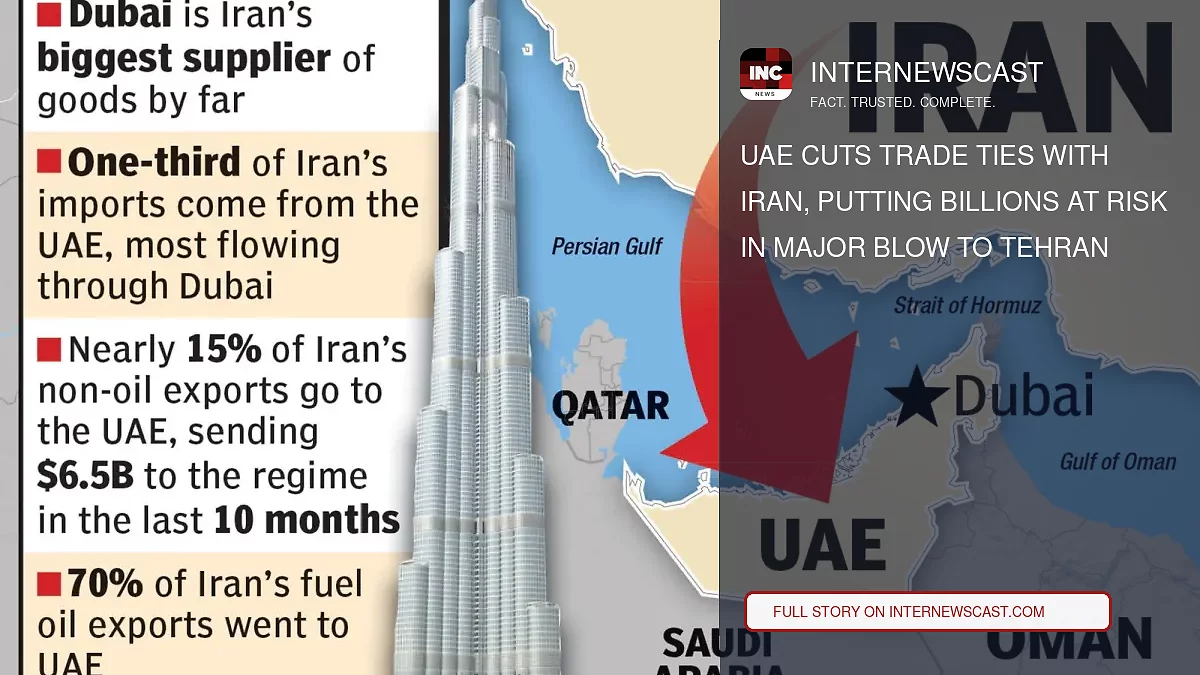
The United Arab Emirates, long Iran’s biggest source of imported goods, halted trade with Tehran over the weekend, cutting off an estimated $6 billion in export-related cash flowing to the regime and restricting access to essential supplies from abroad.
Dubai, the UAE’s powerhouse commercial hub, has for years served as Iran’s most important gateway for goods. But Emirati officials reportedly reached a breaking point after repeated Iranian missile attacks prompted wartime evacuations for the first time.
The decision puts the countries’ $21.3 billion trade relationship at risk and could also strip Iran of its main channel for obtaining US dollars, Mark Kimmitt, a retired US general and former assistant secretary of state, told The Post.
“If the Emirates cease trade and blocks dollar flows, it could have a crippling effect on the Iranian economy,” Kimmitt said.
For years, Dubai functioned as Iran’s economic window to the outside world as Western sanctions tightened. Traders there bought and re-exported everything from consumer products and food to industrial machinery bound for Iranian markets.
Economic ties between the two countries deepened in 2024, when the UAE overtook China to become Iran’s most important trading partner.
During the first 10 months of Iran’s 2025 fiscal year, the country imported roughly $14.8 billion in goods from the UAE — about 30% of all Iranian imports — according to trade figures from both nations.
Dubai’s ports are the primary way Iran gets goods like phones, computers, tobacco and nuts.
Meanwhile, Iran exported around $6.5 billion worth goods to the UAE during the same fiscal period, nearly 15% of its non-oil exports.
Most notably, Iran also depended on the UAE for 70% of its fuel oil exports, making the UAE its largest market for the product.
Refined oil also come back in the opposite direction from Dubai — with gasoline and diesel imports from the UAE helping to offset Iran’s supply deficit.
The blow leaves Iran with fewer means to make money and import goods as its economy continues to plummet under the strain of US sanctions.
“In many ways, the embargo being put on by the UAE is even more significant than the embargo being put on by the United States,” Kimmitt told Al Jazeera.
The strains come as US Treasury Secretary Scott Bessent announced the start of the “Operation Economic Outcast” on Monday, calling on all nations to follow the UAE’s lead and cut off all business with Iran.
“The president is making phone calls to world leaders with specific requests to cease their interactions with the regime. We are already seeing results,” Bessent told reporters.