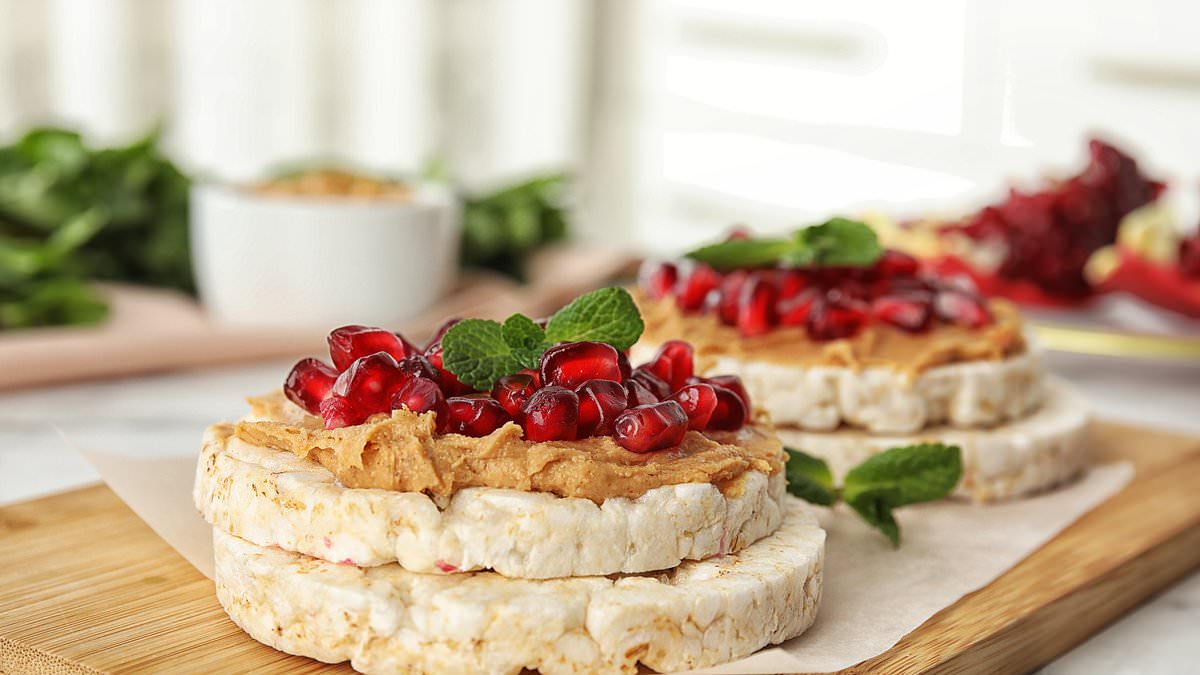

Rice cakes have often been dismissed as tasteless, low-calorie snacks reminiscent of Styrofoam, typically associated with restrictive diets. But does their minimal calorie count equate to being healthy?
According to a prominent nutritionist, the answer isn’t so straightforward.
“Rice cakes made from white refined rice aren’t particularly ‘nutrient-dense’ because the process removes the fibrous, mineral-rich husk of the grain,” notes Lily Soutter.
For those who enjoy flavored or chocolate-coated rice cakes, the news is even less promising. These varieties often contain additional additives, salt, and sugar, making them less healthy than their plain counterparts.
The best option, similar to choosing wholegrain versions of rice, bread, and pasta, is to opt for brown or wholegrain rice cakes. These retain the fiber and nutrients present in the outer bran and germ of the grain.
“Brown rice cakes can be a source of fiber and may offer some micronutrients, including B vitamins and minerals like manganese,” adds Ms. Soutter.
And that’s not the only nuance – what you eat alongside rice cakes can also affect their nutrition.
With this in mind, we explore the best way to add rice cakes to your diet – and the healthiest toppings.
White rice cakes don’t deliver much nutrition – it’s the toppings that count
Good for weight loss – within reason
Rice cakes are made from puffed grains of rice, which are then pressed into circular crackers.
On their own, they have minimal flavour, making them the perfect vessel for other ingredients and toppings – Gwyneth Paltrow likes hers with a smear of almond butter.
A single rice cake weighs just 9g and contains around 35 calories. There’s no fat in a rice cake, but you can expect to find about 7g of carbohydrates – and not much else.
Rice cakes are generally considered quite easy to digest and are naturally gluten-free, so unlikely to cause bloating.
Ms Soutter says: ‘They naturally have a low protein content, and some white refined varieties are also low in fibre, meaning they lack key components that can help you feel full.
‘Their neutral flavour means they can be a versatile way to enjoy nourishing toppings.
‘Adding low-calorie yet high-protein and fibre foods such as cottage cheese and tomato can make a balanced, filling snack that can be enjoyed as part of a weight-loss diet.’
But just because rice cakes are low on calories doesn’t mean you can eat them with abandon – especially if you’ve laden them down with calorie-dense nut butters and slices of creamy avocado, or in Meghan Trainor’s case, used them as a makeshift pizza base.
‘Unflavoured rice cakes alone are relatively low in calories, so are unlikely to lead to weight gain,’ Ms Soutter adds.
‘Choosing chocolate or caramel-coated varieties that are high in calories, sugar and fat, or adding a high-calorie topping to plain rice cakes, however, may increase overall daily calorie intake.
‘Two rice cakes could be considered a snack, and three or four rice cakes with a substantial topping could be considered more of a meal.
The healthiest are wholegrain… or not just rice
Because they don’t contain refined white rice, wholegrain rice cakes are considered a source of fibre and are likely to contain more vitamins and minerals when compared to their more processed counterparts.
Hi, I’m Emma Bardwell, a nutritionist with more than 15 years’ experience helping people improve their health and lose weight.

I’ve been there. I was overweight, unhappy with my skin and stuck in a rut. Then I changed the way I eat. You can now do the same with my tried-and-tested healthy eating plan. And for DailyMail+ subscribers, it’s completely free.
Click here to sign up and start your journey
But Ms Soutter says that some of the best rice cakes – which can cost as little as 85 pence per packet – include additional grains.
‘Some rice cakes combine other carbohydrate options, such as quinoa, which can give them a protein and fibre boost,’ she says.
‘You can also find “rice cake” alternatives, which emulate rice cakes but are made out of different nutrient-dense ingredients, such as lentils.’
Can eating rice cakes make you hungrier?
Rice cakes alone are not particularly filling as they tend to be low in protein and relatively fast-digesting – and can cause a blood sugar spike which triggers feelings of hunger.
‘They are considered fast-release carbohydrates which mean they raise blood sugar more quickly than slow-release carbohydrate snacks,’ says Ms Soutter.
‘However when combining rice cakes with fibre rich toppings such as a small amount of healthy fats, such as some hummus, it can help to reduce the blood sugar spike that may have resulted from consuming rice cakes alone.
‘Rice cakes won’t make you hungrier, but alone, they may not be as satiating as a snack with a higher protein and fibre content.’
What are the best toppings for rice cakes?
Adding protein and fibre-rich toppings to rice cakes can result in a balanced, nutrient-dense snack that keeps you full for longer
Ms Soutter recommends combining cottage cheese with cucumber; hummus and slices of fresh tomato; avocado and tuna with chilli and fresh lime juice; or whipping up some earthy beetroot hummus.
You don’t need to stay savoury, either. They can be great paired with nut butter and fruit or Greek yoghurt and berries.