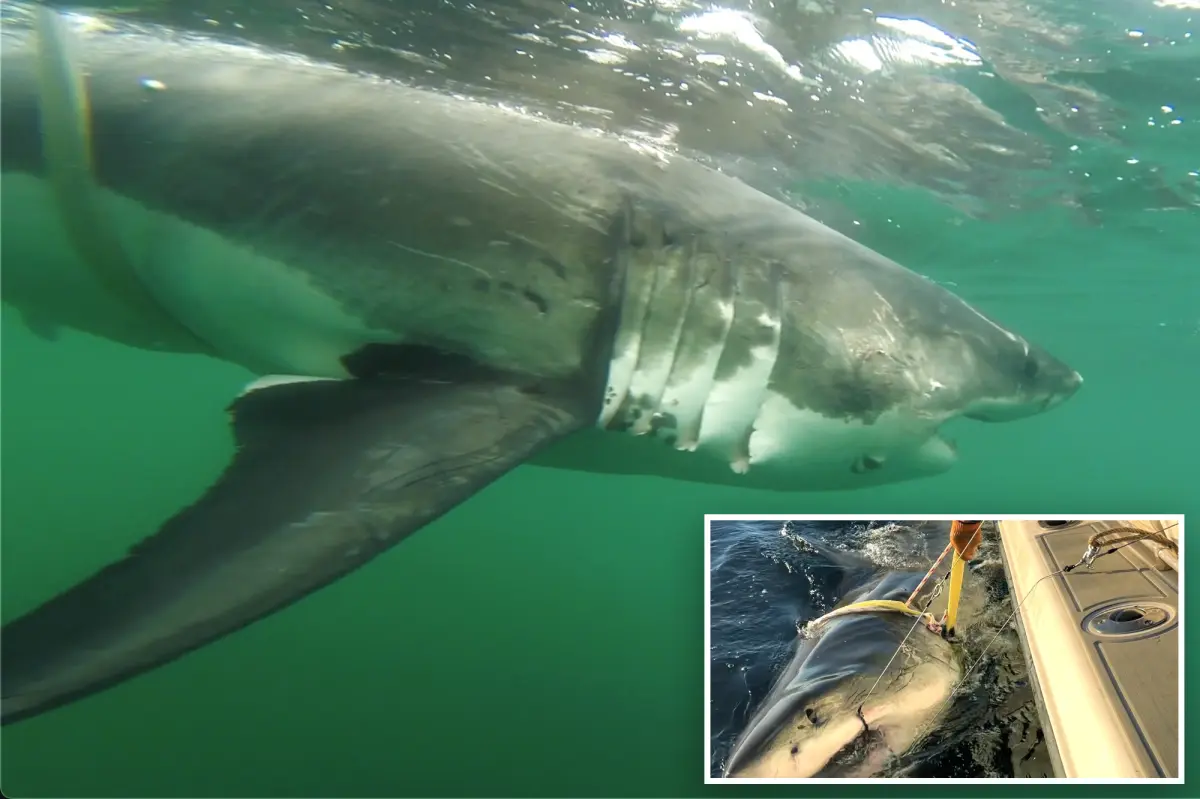

A massive great white shark measuring 12 feet long and weighing roughly 1,000 pounds was tracked off Long Island’s East End in late June — and researchers say an even larger predator, the biggest great white ever identified in the Atlantic Ocean, may be following a similar path.
The enormous female shark, named “Ernst,” first pinged on June 20 off the coast of Montauk as she traveled toward Cape Cod, then continued farther north. Tracking data from OCEARCH suggests a much larger great white, a 14-foot, 1,700-pound shark known as “Contender,” is now moving in that direction as well.
Both great white sharks appear to be following comparable migration routes from Florida up the East Coast. If they continue that pattern, they are likely to pass near Long Island this summer, according to OCEARCH shark tracker data reviewed by The Post.
“White sharks in the western North Atlantic typically migrate north and spend the summer and early fall foraging in the waters of Cape Cod or Atlantic Canada,” an OCEARCH spokesperson told The Sun, describing the sharks’ seasonal migration habits.
Contender is currently near North Carolina’s Pamlico Sound, while Ernst has already traveled to the Gulf of St. Lawrence in Canada, the shark tracker shows.
MORE STORY: Judge Rejects Plea Deal for Nurse Accused of Infant Neglect
The tracking updates come amid growing concern from experts over a rise in shark sightings and bites this year.
In recent weeks, officials have temporarily red-flagged or fully closed beaches from Long Island to the Rockaways following reports of an alleged “swarm” of suspected bull sharks, a species more commonly associated with warmer waters. Off Jones Beach, a swimmer’s foot was bitten by a suspected shark, leaving bone exposed.
Across Long Island, authorities have responded by increasing shark patrols, deploying boats on the water and using advanced drones overhead to keep watch along the shoreline for the powerful predators.
But despite the precautions, experts warned it’s hard to know what the fish will do.
“It’s unpredictable what’s going to happen this season,” Frank Quevedo, an environmental scientist and executive director of the South Fork Natural History Museum, previously told The Post.