
She survived the Holocaust as a child, alone and constantly on the run, never knowing whether she would live to reach her teenage years.
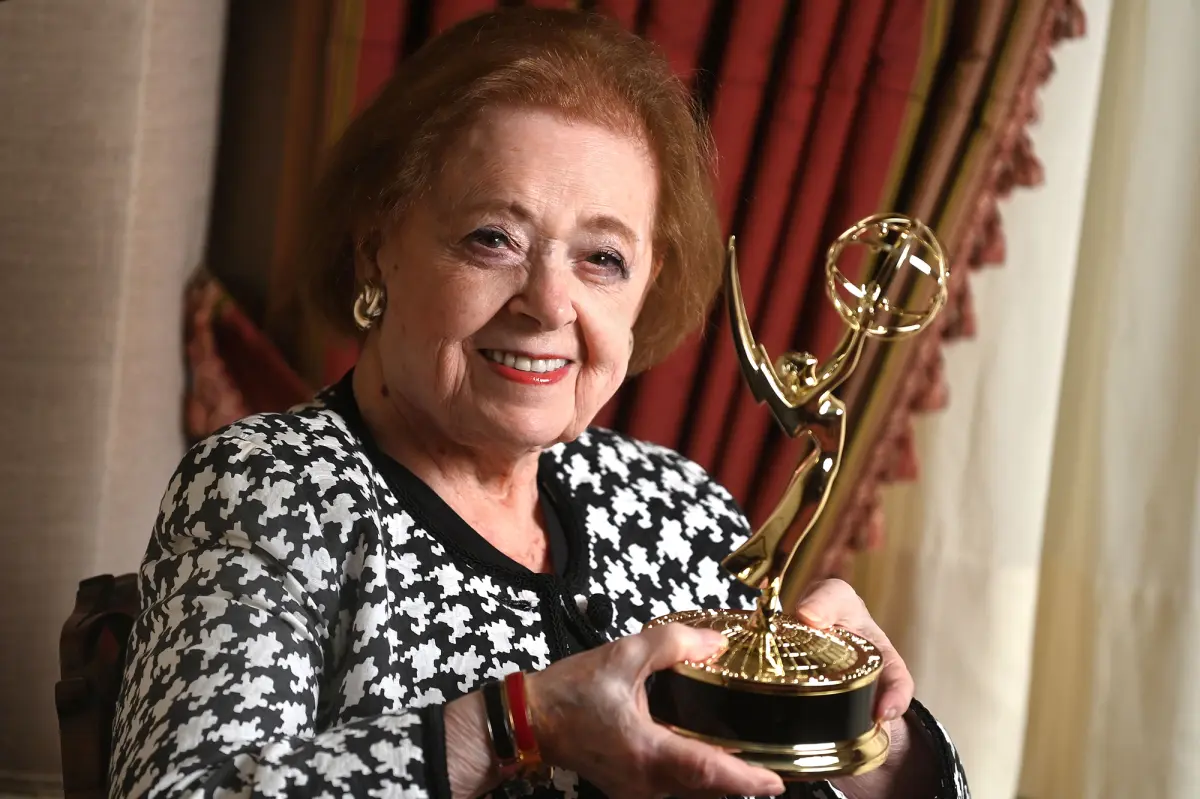
Now 95, she has won an Emmy for sharing her story — and delivering a defiant message to Adolf Hitler: “This is my FU.”
Lusia Rosenzweig Milch was 10 years old in July 1941 when German troops invaded her small town of Skalat, Poland — now part of Ukraine — “like wild beasts.” The attack shattered her idyllic childhood with her loving parents and younger sister.
“Gone was my carefree childhood and freedom as a Jew,” she recalled.
Her remarkable story of survival — including posing as a Ukrainian peasant girl to evade the Nazis — became “My Mother’s Eyes,” a 12-minute animated short that won an Emmy for best teen long or short form content at the New York Emmy Awards on Oct. 10.
“This is our victory. For Hitler and his gang, this is my revenge,” Milch told The Post.
“I never imagined I would be here now,” said Milch, a grandmother of three and great-grandmother of two who lives on the Upper West Side. Her historic win is believed to make her the oldest woman and the only female Holocaust survivor to receive an Emmy.
“OMG, it feels great,” she said of holding the award — a victory that has only strengthened the former schoolteacher’s mission to fight hatred. “My purpose is to fight what’s happening today.”
Milch narrated the harrowing film, which follows young Lusia from a happy, thriving life surrounded by friends, extended family and rich Jewish traditions to a desperate struggle for survival.
After spending years in Skalat’s disease-ridden ghetto and witnessing torture and barbarism, her family’s hoped-for refuge in the home of a local peasant collapsed when he threatened to kill them.
As Nazi mobs raged outside, Lusia’s mother, Necha, looked into her daughter’s eyes and urged her to run because “hell was ruling on the street.”
Necha gave her daughter an unmistakable look, Milch recalled, and “I understood what she was telling me.”
“Now is the time to run and save yourself.”
DISCOVER MORE: Are Gummy Vitamins as Healthy as Pills? Experts Reveal the Truth
That decision saved her life. Her mother and 4-year-old sister were murdered that same day.
“From that day on, I was on my own,” Milch said, recalling that her father was burned alive and that the town’s population of roughly 10,000 Jews was almost entirely wiped out.
“I thought, ‘I’m the only Jew left in the world.’”
For nearly two more years, Milch survived by posing as a Ukrainian peasant girl in a tiny village. She navigated woods and fields while maintaining a false identity to stay alive, eventually reaching liberation with the arrival of the Soviet army.
Through sheer grit and determination, she crossed borders in snowstorms and eventually made her way to America, where she married fellow survivor Bernard Milch and “began my life again as a Jew.”
She rebuilt a comfortable life on Long Island, raising two sons and working as a public school literature and Russian teacher. But the memories have never left her.
“I still have nightmares,” she admitted. “The pain is with you every day.”
Today, Milch worries that the world has failed to learn the lessons of the Holocaust as antisemitism and hate continue to spread.
“Even at my old age, I want to stand in the middle of Times Square and scream, ‘Wake up!’”
But she is no longer the helpless girl who fled Skalat with no way to defend herself.
“It scares the hell out of me to see what’s happening now, but I would never be still again,” the nonagenarian said. “I would be the very first one to buy a gun and learn how to shoot it” if conditions deteriorate.
Winning the prestigious award alongside producers including her son, Dr. David Milch, The Ledi Center and The Lappin Foundation, particularly in such a hostile climate, “speaks volumes,” Milch said.
Her mission now is to educate the next generation and “make sure it will never happen again.”