Unenthusiastic about either of their likely choices for president, many Americans say they want more, seeding the ground for a possible bumper crop of third-party and independent presidential candidates next year.
While their chances of actually winning the White House may be tiny, the likelihood of several extra candidates on the ballot could tip a close election and will further complicate an already muddied picture of the divided American electorate.
That uncertainty is already troubling both parties, but especially Democrats, who worry third-party candidates could spoil the election for them as they say Green Party candidates did in 2016 and 2000, though insiders acknowledge it may be impossible to predict what happens in a five- or six-way race.
“Voters may be surprised at how many choices they actually have,” said Kyle Kondik, a political analyst at the University of Virginia. “It’s going to make polls even harder to figure out. It’s an added haze over the whole battlefield.”
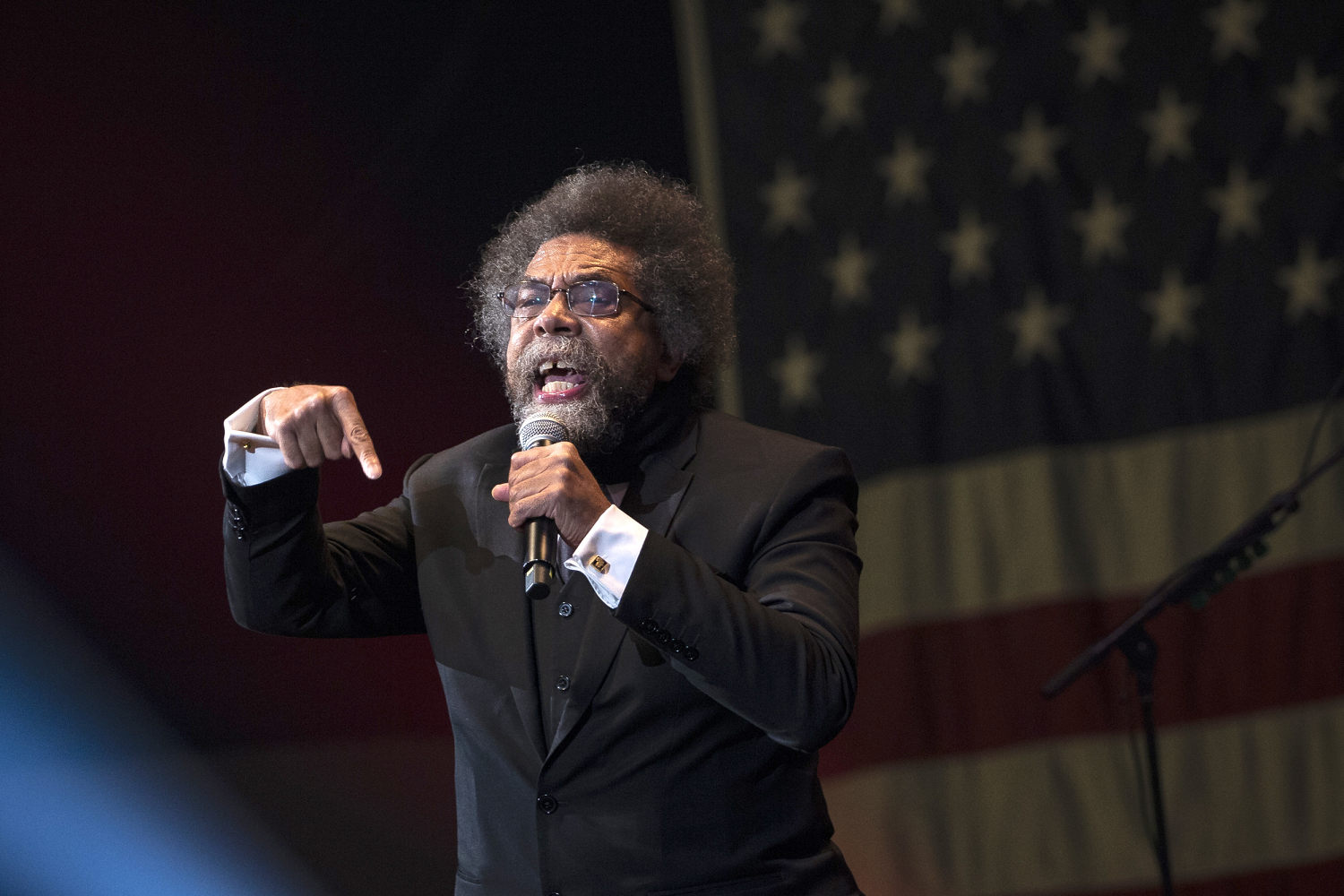
While minor-party candidates are nothing new, the ballot may be extra long next year, with well-known independents like Robert F. Kennedy Jr. and Cornel West, along with possible centrist candidacies from West Virginia Democratic Sen. Joe Manchin and an effort backed by No Labels, on top of the familiar presence of the Green and Libertarian parties.
“This is a pretty unique historical moment when more than 60% of the population says they’re open to voting for a third-party or independent candidate,” said Tony Lyons, Kennedy’s book publisher and the co-founder of a super PAC that has already raised millions to support the ex-Democrat.
Several recent polls show Kennedy’s support above 19%, the modern record for a non-major-party candidate set by billionaire Ross Perot during his 1992 independent campaign, despite mostly negative coverage in the mainstream media, Lyons said.
“There’s so much distrust with public officials and the media.”
President Joe Biden and former President Donald Trump are both deeply unpopular, as are both major parties, with just a quarter of Americans saying they are enthusiastic about their likely rematch and almost three-quarters of independent voters saying they would like to see more candidates running.
“For most voters, 2020 is an election they’d rather not have to relive,” said Patrick Murray, who runs the nonpartisan Monmouth University Polling Institute. “The question is whether this discontent creates an opening for someone else.”
Of course, Americans haven’t elected an independent president since George Washington — Perot did not receive a single Electoral College vote — and polls typically overstate support for minor-party candidates. Historically, around half of voters who tell pollsters they’ll support an alternative candidate wind up pulling the lever for a major-party candidate in the end out of fear of wasting their vote.
“Voters don’t back third parties on election night,” said Jim Messina, who managed Barack Obama’s successful 2012 re-election campaign. “No third-party candidate has gotten even one electoral vote in more than 50 years. What they will do, instead, is siphon off just enough votes in swing states to put Trump back in the White House. That’s a catastrophe.”
Both parties have made efforts to keep their voters in the fold, with Republicans boosting Kennedy during his Democratic primary run against Biden, then reversing course when he declared as an independent and polls showed Republicans liked his conspiratorial brand of populism.
Donald Trump Jr. has called Kennedy “a Democrat plant,” the Republican National Committee has repeatedly blasted him as “a Democrat in Independent’s clothing,” and right-wing media personalities have warned their followers not to fall for a candidate they had praised months earlier.
But Democrats are particularly concerned, with Trump campaign manager Chris LaCivita saying, “All of the elements of the third-party run are coming out of [Biden’s] coalition, not ours.”
As operatives in both parties see it, Biden has a higher ceiling of potential support than Trump. But getting there depends on essentially forcing anti-Trump “soft” Biden supporters to pull the lever for him instead of staying home or voting for another candidate. Trump, meanwhile, has a lower ceiling but a higher floor of hardcore supporters than Biden, which could be an ideal arrangement in a multicandidate field.
“Candidates not named Trump or Biden will likely outperform previous third-party campaign benchmarks in an unprecedented way,” said Kurt Bardella, a former Republican operative who left the party over Trump. “While I understand the frustration with the two-party system, the reality is when it comes to the 2024 election, a vote for anyone else but the Democratic nominee is a vote for Donald Trump.”
The more recent high-water mark for minor-party candidates came in 2016, when they earned a combined 6% of the vote. Green Party nominee Jill Stein won just 1%, but that included enough votes in enough swing states that some Democrats blame her for electing Trump, since they assume many of those votes for Stein, who represents liberal policy viewpoints, would have otherwise gone to Hillary Clinton.
That view is widely held by Democrats, who have been particularly concerned about the centrist group No Labels, which is backed by large undisclosed donors and has the resources and wherewithal to accomplish the monumental task of getting on the ballot across the country.
While the Biden campaign is focused on running against Trump, a loose coalition of pro-Biden groups has formed to counter No Labels and other third-party efforts, though the coordination of their efforts is still mostly informal, without regular meetings or a dedicated “war room.”
“I think folks just aren’t fully dialed in yet to how serious this risk is,” said one Democratic strategist involved in the effort who requested anonymity to speak candidly. “It’s a big deal. If you look at the risk that this poses, there will be no choice but to forcefully and strongly push back on it.”
I think folks just aren’t fully dialed in yet to how serious this risk is. It’s a big deal. If you look at the risk that this poses, there will be no choice but to forcefully and strongly push back on it.
A Democratic strategist
With the centrist Democratic think tank Third Way acting as the hub, other groups in the coalition have focused on their expertise: MoveOn.org is working to keep progressive voters in the fold; “never Trump” groups like the Lincoln Project are trying to do the same for moderates; a new bipartisan group founded by former House Democratic leader Richard Gephardt has been engaging Washington graybeards to write op-eds and talk to donors; Reproductive Freedom for All produced an ad claiming No Labels wants a national abortion ban; End Citizens United has been playing up potential campaign finance issues; and the opposition research super PAC American Bridge has retained Democratic lawyer Marc Elias to look for opportunities to bring legal challenges to third-party candidates.
Some legal battles have already begun, such as when the Arizona Democratic Party filed a complaint to keep No Labels off the ballot in the key swing state. But more legal fights are certain in the coming year, when the byzantine ballot access process begins in earnest, as is the potential for bigger advertising campaigns.
Meanwhile, some worry the presence of candidates with anti-establishment views and little to lose could create opportunities for foreign actors interested in undermining Americans’ confidence in the U.S. political system.
Andrew Weiss, a Russia expert at the Carnegie Endowment for International Peace, noted that Kennedy, West and Stein, who is running again on the Green Party ticket, are fierce opponents of U.S. support for Ukraine.
A Senate report on the 2016 election found that one of Moscow’s tactics included social media campaigns to boost Stein, leading Hillary Clinton to later call her a “Russian asset” — a charge Stein vehemently denied as an “unhinged conspiracy theory.”
“You can see how that would provide proof of concept to the Kremlin that third-party candidates are a useful vehicle for making American politics more divisive and dysfunctional in a close election,” Weiss said.
Still, it’s unclear how many candidates will make it onto the ballot in most states and stay in the race until next November. What is clear, though, is that the extra candidates add a major wild-card factor to the race.
Seventy-five years ago, pollsters and pundits were nearly unanimous in predicting that the unpopular Democratic president would lose re-election, thanks in large part to the presence of well-known third-party candidates.
“Biden is maybe going to have to do what Harry Truman did in 1948,” said veteran Democratic strategist Bob Shrum. “He was written off, with a Dem splinter party to the left of him under [Henry] Wallace, and a Dem splinter party on his right, under [Dixiecrat] Strom Thurmond.”
Neither were seen as serious contenders for the presidency, but they were expected to pull enough votes from Truman to hand the White House to Republican Thomas Dewey.
But many know from that famous photograph of Truman holding up the incorrect newspaper headline, Shrum said, “Dewey did not defeat Truman. Truman won.”


