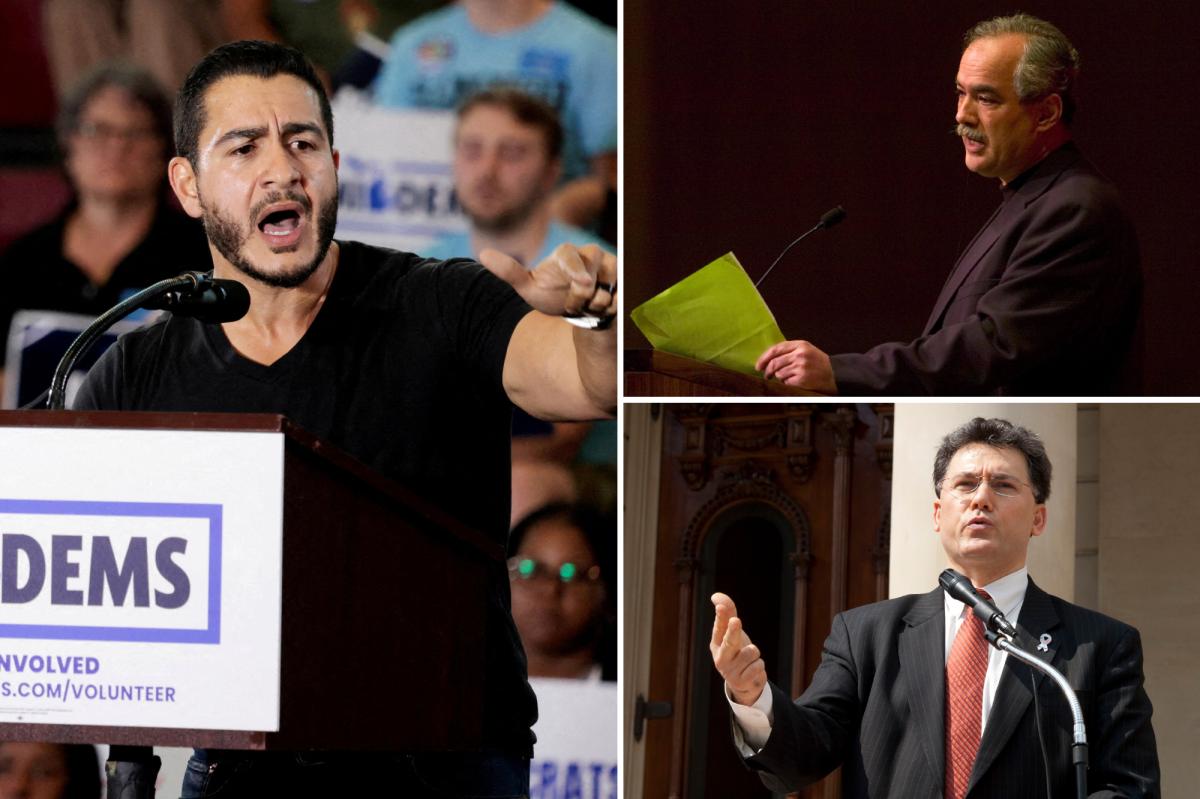

Abdul El-Sayed, Michigan’s progressive Democratic Senate nominee, once helped lead a protest against an event featuring three self-described “ex-terrorists” who said they had converted to Christianity. The episode resurfaced as questions continue about his leadership role in an organization alleged to have ties to a terrorist group.
El-Sayed, who is challenging Republican nominee and former Rep. Mike Rogers in Michigan’s closely watched Senate race, helped organize the 2007 protest at the University of Michigan, according to a previously unearthed report.
The Michigan Daily reported that the demonstration targeted Walid Shoebat, Zachariah Annani and Kamal Saleem. During the mid-2000s, the three traveled to universities to describe their past involvement with the Palestine Liberation Organization and the Muslim Brotherhood before saying they had converted to Christianity.
Students who attended the presentation staged a walkout, a protest El-Sayed praised afterward.
“We’ve done something good today, and we need to keep that going in the future,” El-Sayed said.
El-Sayed campaign spokesperson Cole Wozniak told Fox News Digital that the candidate has “unequivocally denounced terrorism.”
“Two decades ago, he protested against speakers who have been widely condemned by experts, including in national security, for spreading misinformation and fabricating their backstories,” Wozniak said. “Mike Rogers and his allies are pushing lies because they don’t want to talk about the record-high prices Michiganders are paying for gas and groceries because of Trump’s illegal war in Iran.”
The backgrounds of Shoebat, Annani and Saleem have also drawn scrutiny. The New York Times reported in 2008 that, before the trio spoke at the Air Force Academy, critics objected to their appearance, while several Arab-American civil rights organizations questioned why they had not been arrested or deported in light of their apparent connections to terrorist groups.
Organizers told the Michigan Daily that the University of Michigan event was intended to educate attendees about the dangers of Muslim extremism rather than encourage intolerance. Protesters wearing yellow countered that the event unfairly “generalizing an entire group of people.”
At the time, El-Sayed was vice president of the Muslim Students Association, which has been alleged to have ties to the Muslim Brotherhood. Last year, the White House asked the State and Treasury departments to determine whether certain Muslim Brotherhood chapters should be designated foreign terrorist organizations and specially designated global terrorists.
The Muslim Brotherhood had established a presence in the United States by the early 1960s, with members operating largely through student organizations on college campuses, particularly the Muslim Students Association.
Lara Burns, a senior research fellow with George Washington University’s Program on Extremism, made the same point in written testimony to the Senate Judiciary Committee last month. She said that by the 1960s, the Muslim Brotherhood had developed a U.S. presence “where its members functioned primarily through student unions on college campuses, most particularly through the Muslim Students Association (MSA).”
The Muslim Students Association did not immediately respond to a request for comment.
The administration of President Donald Trump has pursued designations for several Muslim Brotherhood chapters as foreign terrorist organizations and specially designated global terrorists.
Trump directed officials to consider those designations for the Lebanese, Jordanian and Egyptian Muslim Brotherhood chapters because of their alleged connections to Hamas and the Oct. 7, 2023, attack on Israel.


