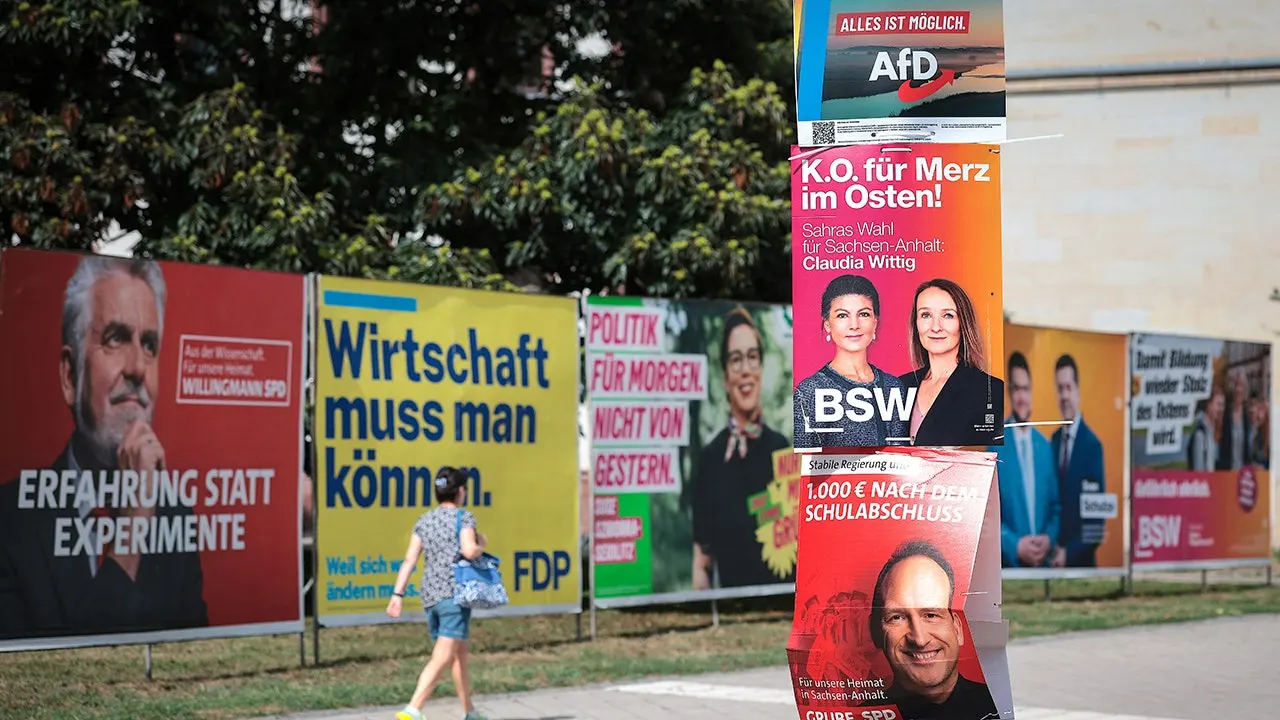

Germany’s eastern states are heading into a high-stakes political test, with working-class voters and younger Germans poised to hand the far-right Alternative for Germany (AfD) a potentially historic victory in Sunday’s Saxony-Anhalt state election.
The AfD, which drew a high-profile endorsement from Elon Musk during last year’s national election campaign, has faced fierce criticism over its pro-Russia stance and was labeled a “right-wing extremist endeavor” by Germany’s domestic intelligence agency. Now, the party has a chance to become the first force outside Germany’s traditional center-left Social Democratic Party (SPD) or the center-right Christian Democratic Union and its Bavarian sister party, the Christian Social Union (CDU/CSU), to secure an outright majority in a state parliament, or Landtag, since World War II.
“The reason Saxony-Anhalt matters,” foreign policy expert and author Daniel Schatz, who holds a doctorate in political science from Berlin’s Humboldt University, told News Outlet, “is that the AfD is no longer just knocking on the door of power. It may be close to kicking it open.”
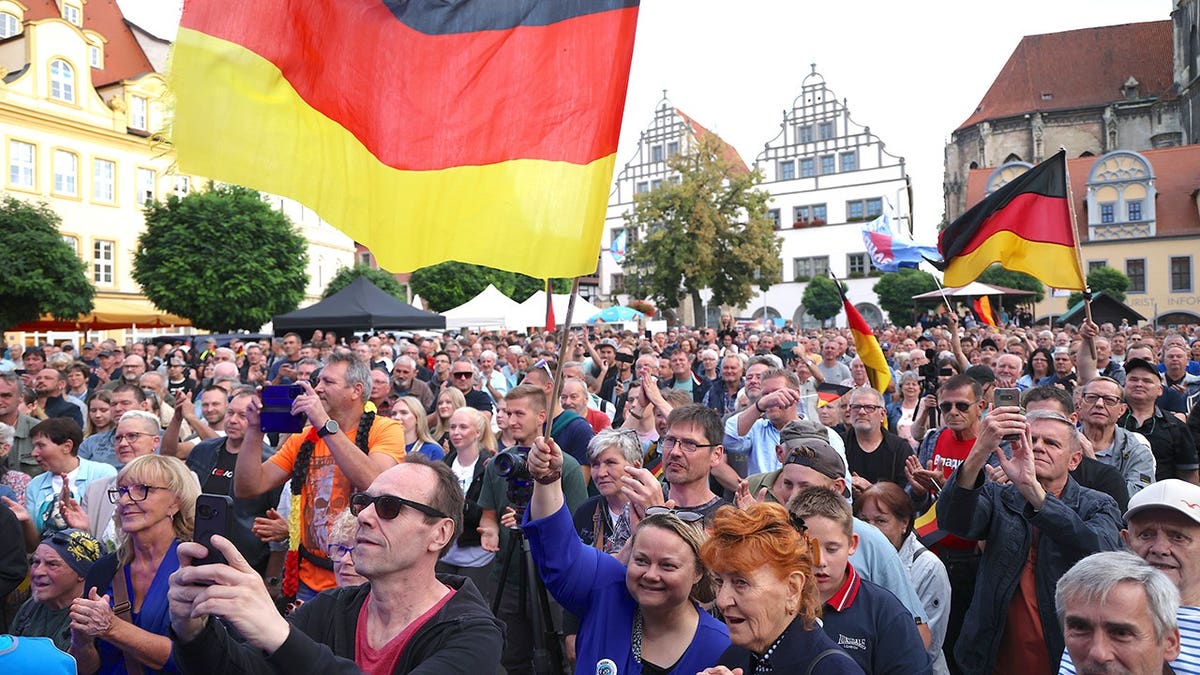
Ulrich Siegmund, a charismatic AfD candidate with strong appeal across Saxony-Anhalt, has helped drive the party to 43% in state polling, placing it well ahead of its rivals. If those numbers hold, the AfD could win a majority in the state parliament and form a state government for the first time. Saxony-Anhalt is scheduled to vote on Sept. 6. (2026 Getty Images)
Smaller parties have previously led coalition governments in German states, but since the Federal Republic was re-established in 1949, no party outside the SPD, CDU or CSU has ever governed a German state alone with a single-party majority.
Janek Treiber, a political science researcher at Dresden University of Technology, told News Outlet that an outright AfD victory in Saxony-Anhalt would not necessarily translate into sweeping policy power because of Germany’s federal structure. Still, he cautioned, “you must not underestimate the political symbol this would give. That a single party, and a right-wing party, could rule a German state… The symbol that these parties, that have been ruling Germany since 1949 or the East since 1990, they now lose control. They now lose power. I think this is a much more important symbol than just saying, OK, (the) AfD will change this or that in its local school system or university system.”
Schatz described the AfD as “a nationalist, anti-immigration party on the far right that has become a powerful vehicle for voter anger at Germany’s political establishment — especially in the former East Germany. It campaigns for much tighter immigration, a stronger emphasis on German national identity, rejection of much of the green agenda and a softer line toward Russia.”
A clear AfD win, even in Germany’s sixth-smallest state, would pierce the political establishment’s so-called “Brandmauer,” or “firewall” — the long-standing refusal by mainstream parties to cooperate with the far right. The AfD is already the second-largest party in the Bundestag and serves as the official opposition after capturing 20.8% of the vote in the February 2025 federal election.
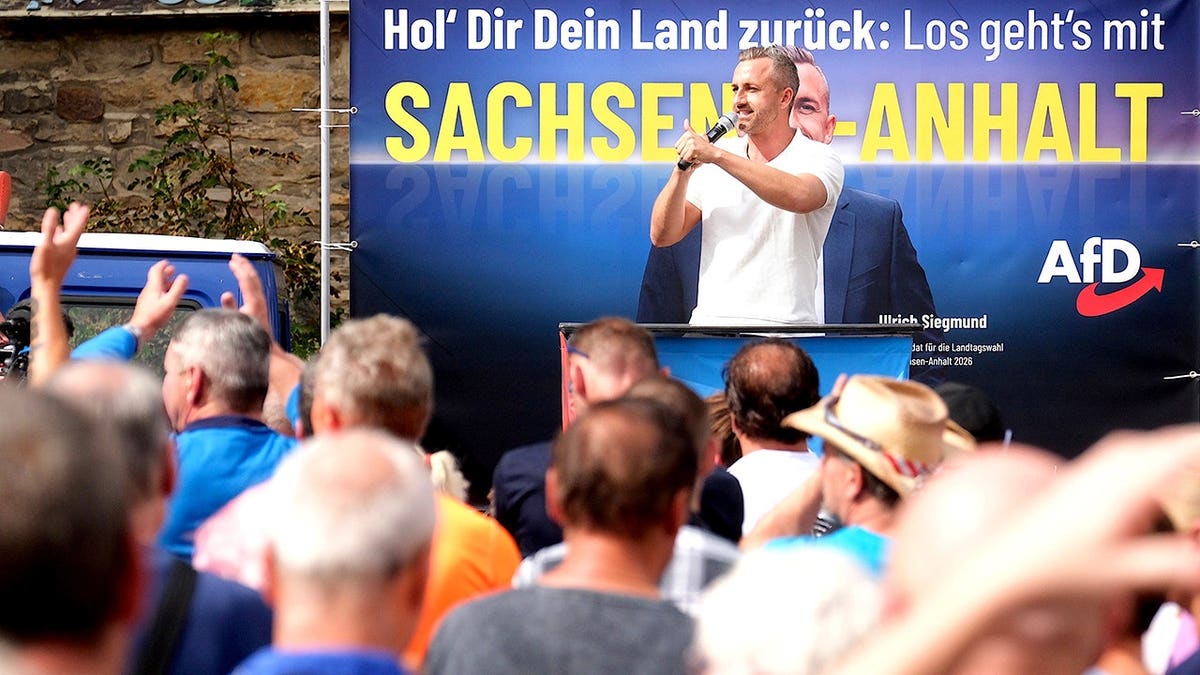
The AfD’s lead candidate, Ulrich Siegmund, for the 2026 state election in Saxony-Anhalt (Sebastian Willnow/picture alliance via Getty Images)
In an interview on German broadcaster ZDF, the AfD’s national co-chair, Alice Weidel, advocated for closing Germany’s borders and exiting Europe’s Schengen treaty, saying, “Illegal migration, unchecked open borders, anyone can get in. Our internal security is suffering. People are honestly fed up with this situation.”
Weidel added, “All Syrian refugees must have their protected status revoked because the reason for their flight no longer exists. These people must return to their homeland. If they don’t leave voluntarily, then they must be deported by force.” Adding that many of the 1.3 million Syrians in Germany are being naturalized, “we must stop naturalizing these people who should actually be leaving our country. We have Islamization.”
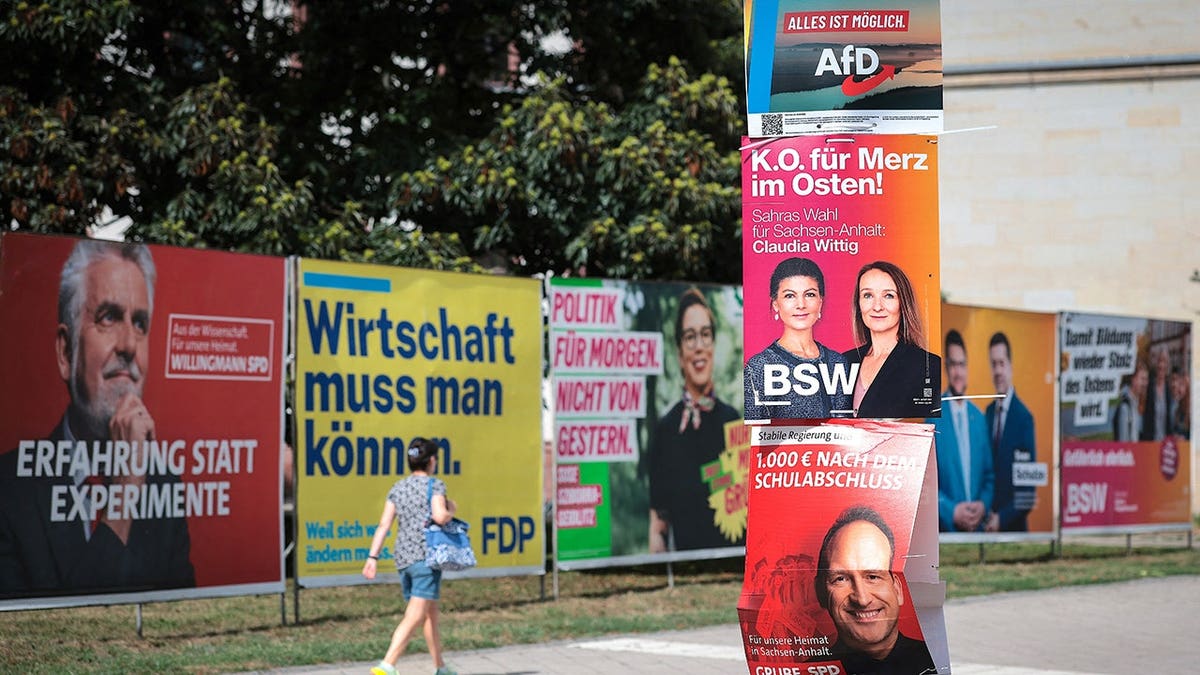
Regional elections in the eastern federal state of Saxony-Anhalt will take place on September 6, 2026, and two weeks later, the state of Mecklenburg-Western Pomerania and the capital Berlin itself will also elect their state assemblies on Sept.20, 2026. (Ronny Hartmann/AFP via Getty Images)
In May 2025, Germany’s Federal Office for the Protection of the Constitution (BfV) classified the AfD as a “confirmed right-wing extremist” group, citing “anti-migrant positions and an ancestry-based definition of German identity.” This past February, according to Deutsche Welle, that classification was put on hold by a German court after “Judges found that while there was evidence of potentially unconstitutional statements and policies within the AfD… it said that there was not sufficient evidence to characterize the party as a whole as extremist.”
German Chancellor Friedrich Merz recently told state broadcaster ARD, “I cannot imagine international investors attending a ground-breaking ceremony with an AfD Minister-President to set up new plants and establish new businesses in Saxony-Anhalt… However, that is a decision for the voters in Saxony-Anhalt to make. The state will suffer considerable damage if things turn out as we now fear they might.”
This has done little to damage the popularity of the AfD’s lead candidate in Saxony-Anhalt, Ulrich Siegmund. In a state of just over 2 million people, he has a TikTok following of over 700,000.
A Center for Strategic & International Studies (CSIS) report said Siegmund’s “polished appearance and professional tone lend respectability, and radical demands blend with footage of a community-oriented politician responding to audience questions… The AfD’s physical presence in the streets and omnipresence in the media helps to push the common populist ‘us versus them’ narrative: The AfD is here for you, the other parties are not.”
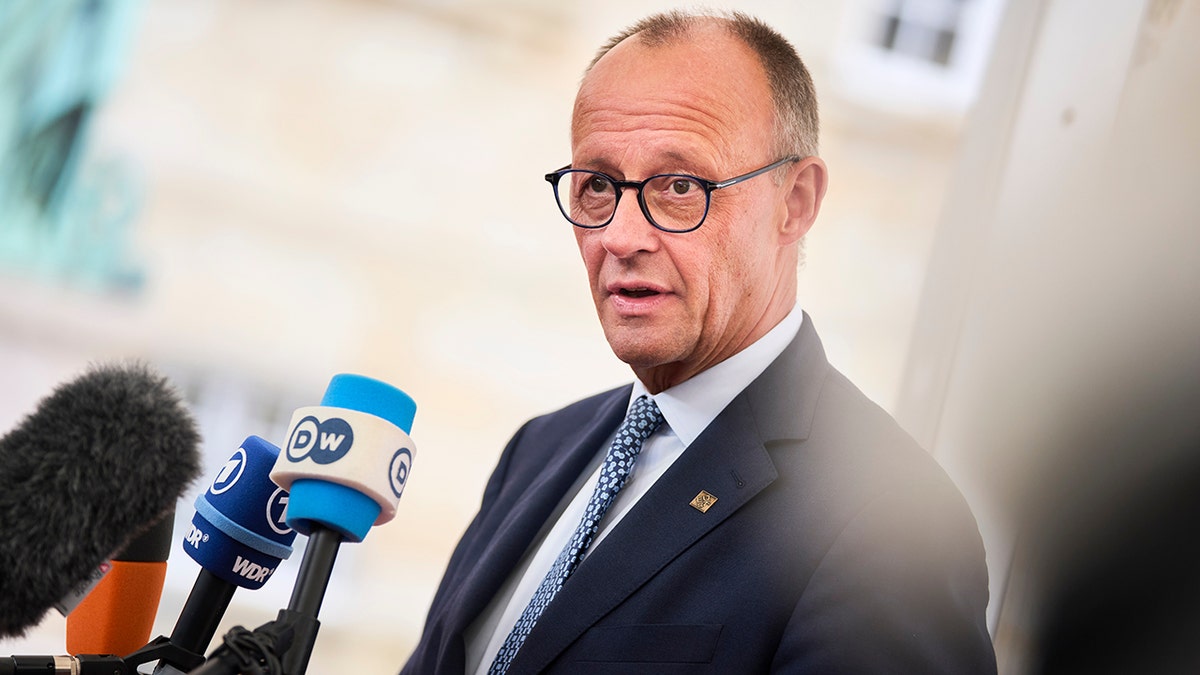
German Chancellor Friedrich Merz sparked backlash while remarking about the country’s migration policies. (Thomas Traasdahl/Ritzau Scanpix via AP)
According to the independent, non-partisan German website Wahlrecht.de, which tracks federal and state election polling, ahead of Sunday’s vote in Saxony-Anhalt, the AfD holds a 41%-23% lead over the CDU, followed by three leftist parties. A party or a coalition needs at least half of the seats to control parliament and name a state Minister-President, essentially a governor. So how can a party with only 43% win an election outright? That comes down to Germany’s unique election system.
“German voters cast two ballots,” Schatz says, “One for a local candidate — like voting for your congressman – and one for a party. That second vote, the party vote, is the one that counts. It decides how many seats each party gets in parliament.” But there is a caveat: “Any party that falls below 5% gets nothing — zero seats — and those votes are effectively thrown out. Right now, several smaller parties are hovering right at that line. If they miss it, 42% or 43% of the vote can translate into more than half the seats. So Saxony-Anhalt could wake up to an AfD majority government even though a clear majority of voters chose someone else. That would be a first in postwar Germany.”
The CSIS report said voters are drawn to the AfD “because, or despite of, its extremist ideology. 60.5% of AfD voters hold a right-wing extremist worldview… At the same time, more than two in five AfD voters think that the party does not sufficiently distance itself from right-wing extremist positions.” The report also found that AfD’s “strongest recent gains have been among voters 18–25 years old, where the party tripled its results compared to the 2021 national election.”
Treiber said economics is pushing younger voters to the AfD, due to rising expenses and unemployment. He also said that younger voters are “kind of polarized because the other part of the youth in Germany is voting for the left party (Die Linke).”
Saxony-Anhalt may just be the beginning for the anti-establishment parties. Voters in neighboring Mecklenburg-Western Pomerania, where former Chancellor Angela Merkel grew up and began her political career, go to the polls in two weeks. Polling data from Wahlrecht.de shows the AfD leading the ruling SPD 35%-32% there.
Conversely, in Berlin, where voters in the capital also go to the polls in two weeks, the average of recent polling has the far-left Die Linke in a dead heat with the CDU at 20%, followed by the AfD at 18%, with the Greens and the SPD each around 15%. While the majority of the AfD’s support does come from the former East Germany, the party is represented in 14 of Germany’s 16 state legislatures and holds 15 of Germany’s 96 seats in the European Parliament.


