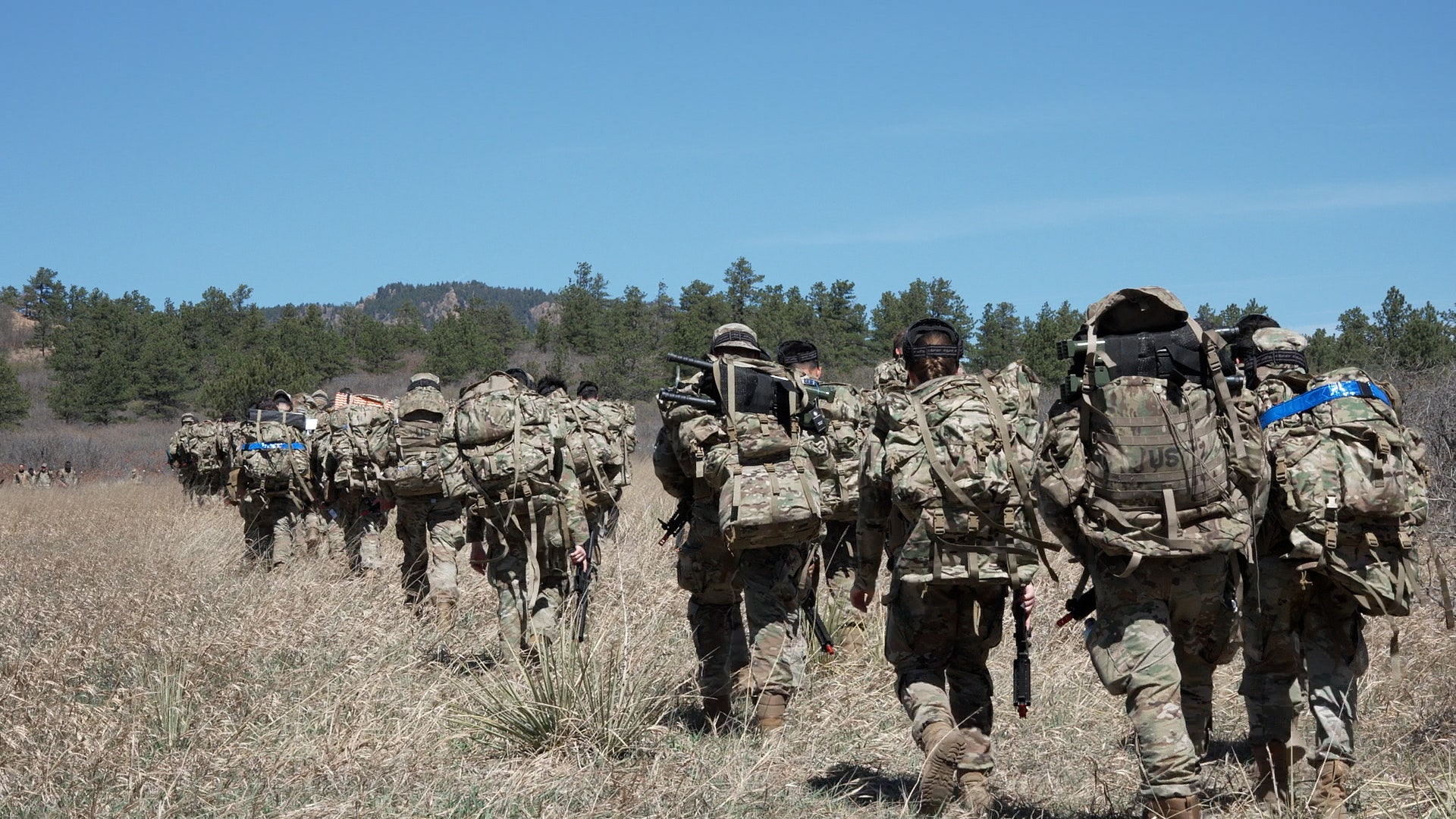

COLORADO SPRINGS, Colorado – The U.S. Air Force Academy (USAFA) transformed into a high-stakes battleground on Thursday as it staged its annual “CULEX,” or culminating training exercise. This immersive drill offers cadets a hands-on glimpse into combat scenarios, honing their skills and readiness.
Taking place over two intense days, from April 15 to 16, this 24-hour exercise engages nearly 4,000 cadets, positioning upperclassmen as mission leaders while younger cadets follow their directives in a simulated wartime environment.
Sprawled over 18,500 acres at the edge of the Rocky Mountains, the Air Force Academy temporarily became the Japanese island of Hokkaido. The scenario depicted the island under siege by enemy forces, challenging the cadets to respond strategically.
“We’ve essentially commandeered the entire USAFA to provide ample space for all 4,000 cadets to maneuver and execute the exercise,” remarked Col. Jennifer Hall, the director of CULEX.
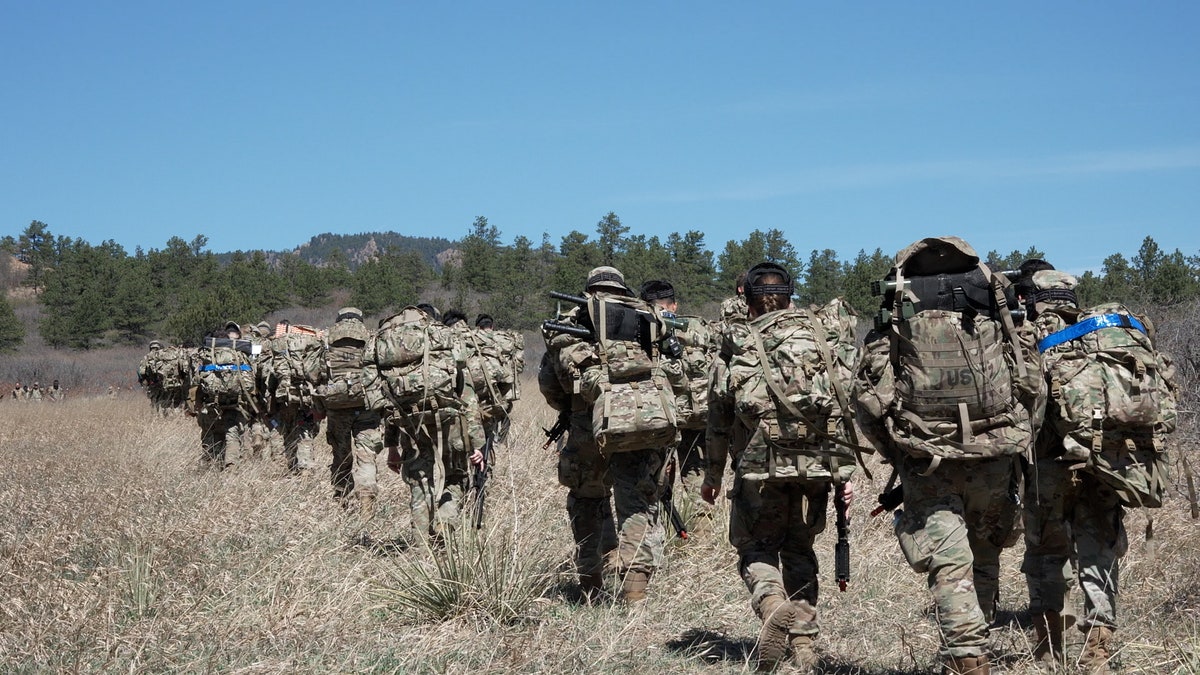
In this simulated conflict, Japan seeks U.S. assistance to bolster its defenses, presenting a realistic setting for cadets to navigate through the complexities of military operations.
In the war scenario, Japan has asked the U.S. to come in as a defensive force.
“In this scenario, we have four established airfields,” Hall said. “And so that’s what’s established, the four joint operating areas that we have them in.”
Each joint operation area, or JOA, has around 800 cadets, defending an airfield, two high-value assets and a downed airman. Cadets also face real-world issues such as injured officers and invasions by enemy targets deemed the “Red Force.”
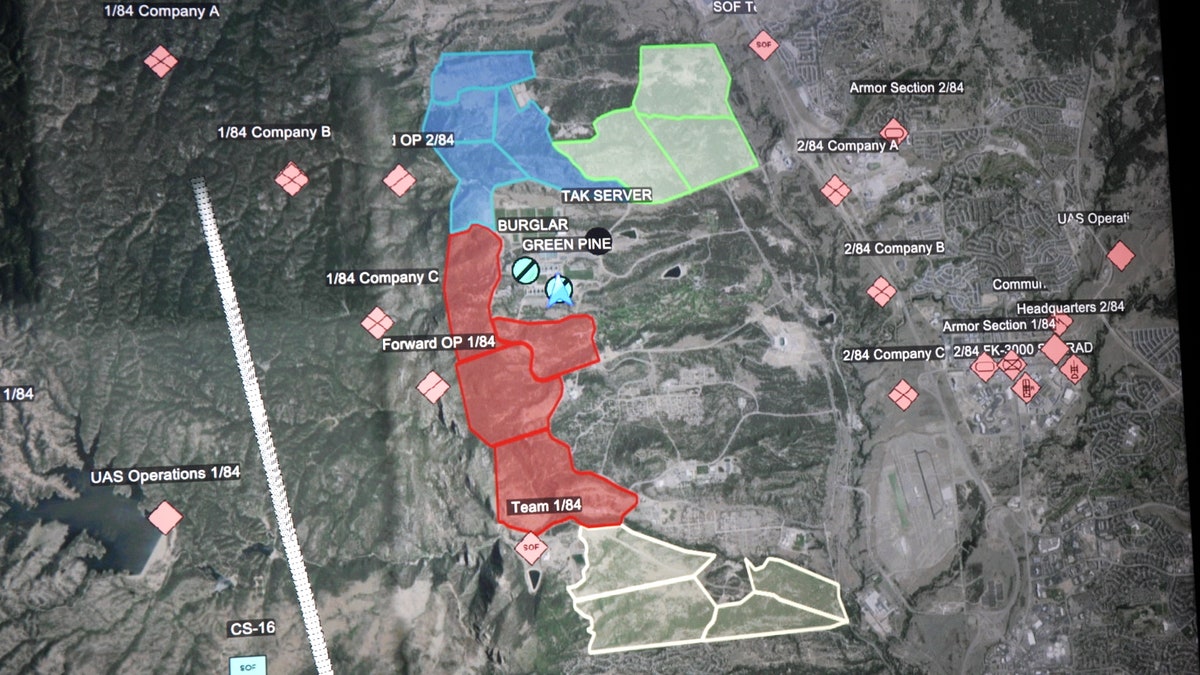
Map displaying the four joint operating areas during the CULEX. (Amy Galo)
“We pulled out one squadron to play Red Force,” said Hall. “So our cadets are actually playing Red Force, and they’re out there in the field right now harassing our cadets. They’re doing an amazing job. They’re super excited.”
Hall explained, “What we’re trying to do is have the cadets prioritize through decision-making. And you’ll see all across that Red Force is trying to complicate that to the best of their ability.”
While the situation may not be real, it definitely looks and feels like it.
“You’ll see about 15 tents laid down as an austere, expeditionary environment, two of which are tactical operations centers and a medical tent and warming tent,” Hall explained. “And then we have sleeping tents for the cadets, because we will be remaining overnight for the first time.”
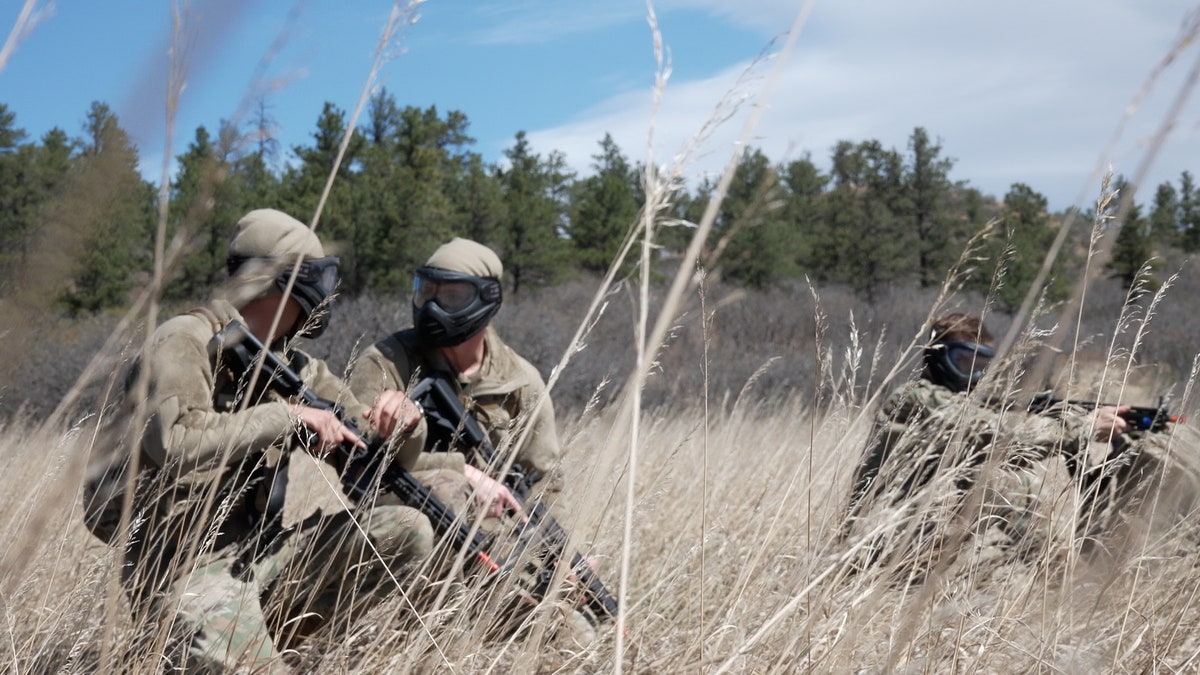
U.S. Air Force cadets on the lookout for enemy targets during the culminating exercise. (Amy Galo)
Some cadets fly airplanes while others deploy parachutes in the sky. On the ground, hundreds of cadets equipped with air soft guns defend their camps, taking radio traffic from troops under attack. Meanwhile, students in mission control use drones and mapping technology to solve real-world problems.
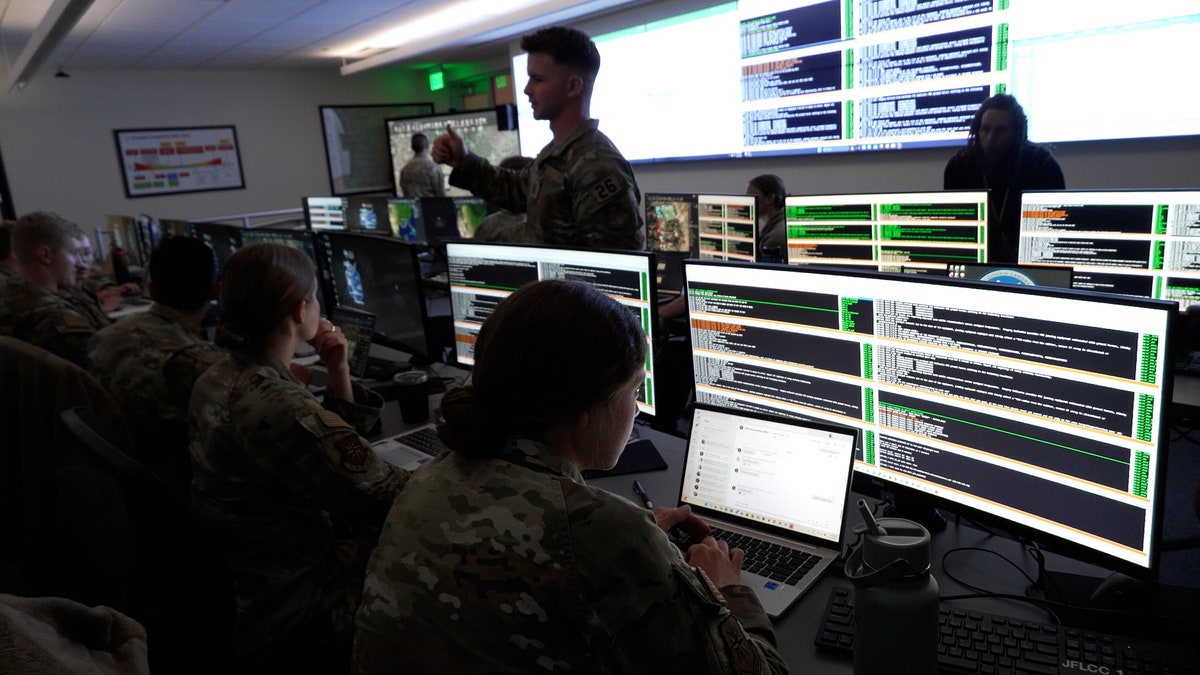
Air Force cadets participate in CULEX training. (Amy Galo)
“The only way to prepare for the fight that we’re in, or the future fight, is to develop the training necessary where they can experience it real time, in the woods, in the field,” said Hall.
Now in its second year, the CULEX focuses on building confidence, teamwork and leadership skills rather than testing cadets with a pass-or-fail system. It’s a multi-domain tactical exercise designed to replicate the environments future Space Force and Air Force officers may encounter.
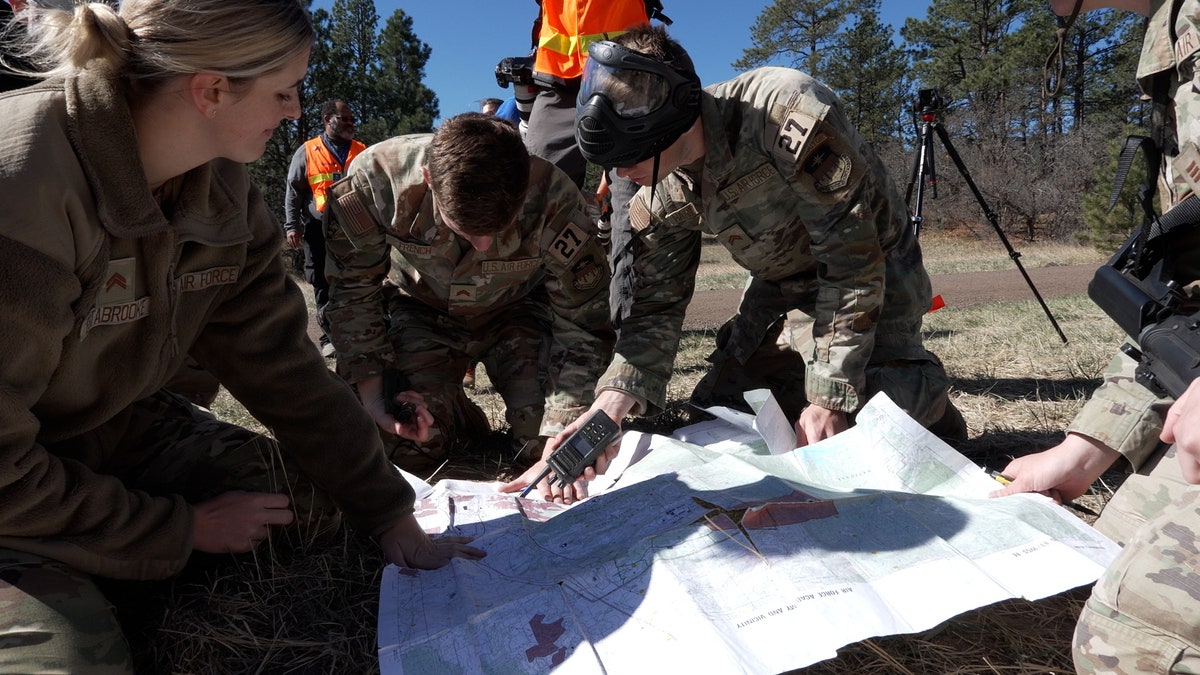
USAFA students study a map during their culminating exercise. (Amy Galo)
“For our seniors, in 44 days, they’re going to graduate, and they’re going to go off, and they’re going to be officers in our Space Force and Air Force— how much more equipped they’re going to be to lead, to face complicated problems, to know that they can do what’s difficult,” said Hall.