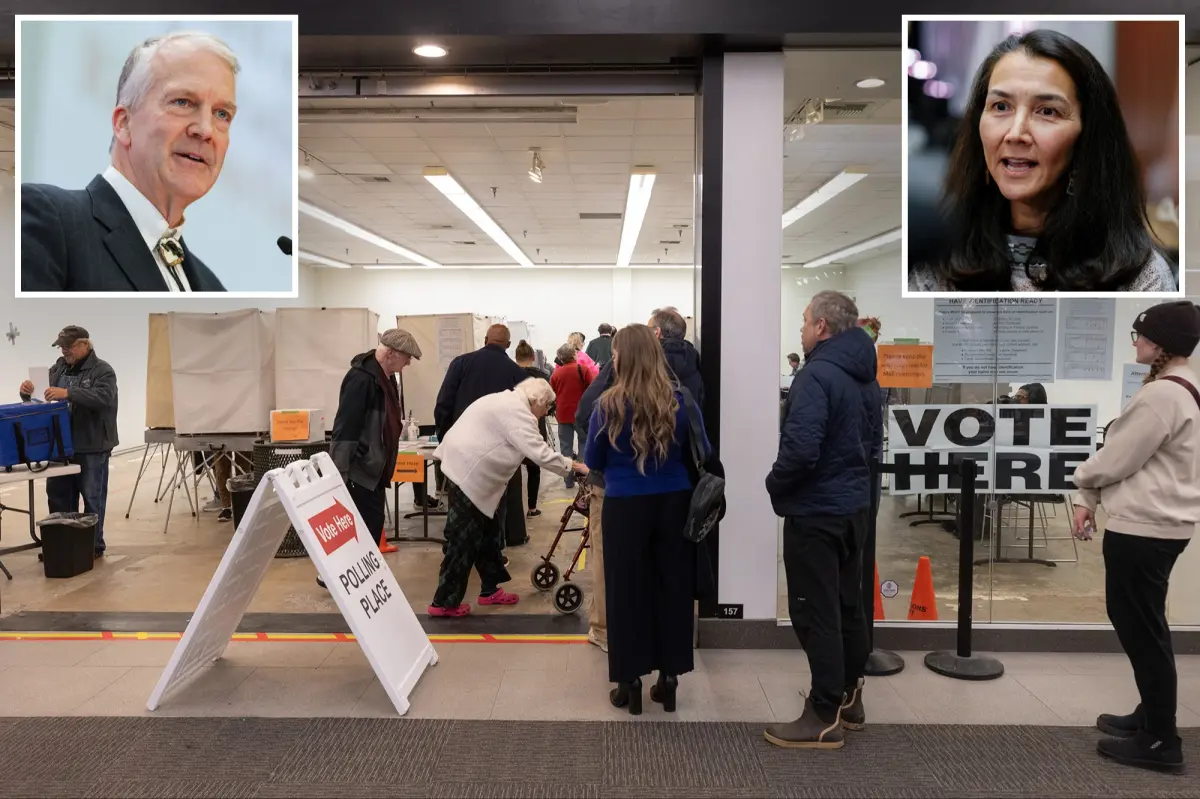

Control of the US Senate could remain unsettled for weeks, with the balance of power potentially hinging on a painstaking vote count unfolding across Alaska’s remote, frozen landscape.
Roughly 600,000 voters are spread across the state’s 586,000 square miles. Alaska’s distinctive election procedures, combined with a legal dispute surrounding the Senate contest, could postpone a definitive result for days or even weeks.
The closely watched race between Republican incumbent Dan Sullivan and Democrat Mary Peltola may ultimately determine which party controls the chamber.
“We will [not] know who is going to win Alaska [until] two weeks after Election Day,” pollster Sean Trende, a RealClearPolitics analyst and American Enterprise Institute fellow, predicted during an Election Watch briefing on Oct. 20.
“It will be a toss-up until the last ballots come in from the Alaskan bush by twin-engine plane, and then they put it through perhaps five rounds of ranked-choice voting.”
The potential delay reflects both Alaska’s remote geography and an election season in which several traditionally Republican states are hosting competitive races.
In one striking example of the lengths some Alaskans must go to vote, the Bondy family traveled by dogsled for eight hours across 225 miles to cast their ballots, a journey featured in the 2016 documentary OneVote.
CONTINUE READING: What Life Behind Bars Looks Like for the Alexander Brothers
In rural Alaska, ballots often arrive by air. The state has 16 times more aircraft than any other state, and ballots postmarked by Election Day can be counted if they arrive within 10 days. Overseas ballots are given an additional five days.
Former Alaska state Rep. Jonathan Kreiss-Tomkins, now a candidate for governor in another toss-up race, experienced the process firsthand. After winning his first election by a razor-thin margin in 2012, he had to wait for overseas ballots from places including Bahrain and Cambodia before his victory was confirmed.
“There are a lot of rural communities. There are a lot of military voters and military families here,” said Glenn Wright, a political scientist at the University of Alaska Southeast. “That’s how things come and go. A lot of supplies arrive during the summer by boat, barge or ferry. They fly ballots in and out, too.”
Alaska’s ranked-choice voting system could add another layer of delay. Election officials must revisit the ballots and redistribute votes whenever a candidate’s first-choice support is not enough to advance.
Yet the state’s logistical hurdles are only one factor complicating this year’s contest.
The Justice Department filed a lawsuit this month seeking to invalidate the outcome if Sullivan loses. The complaint points to the presence of a second candidate, retired elementary school teacher Daniel J. Sullivan Jr., on the ballot, alleging that his name was intended to draw votes away from the Republican incumbent.
President Trump has called on Peltola to withdraw from the race after reports claimed her campaign helped arrange the alleged strategy.