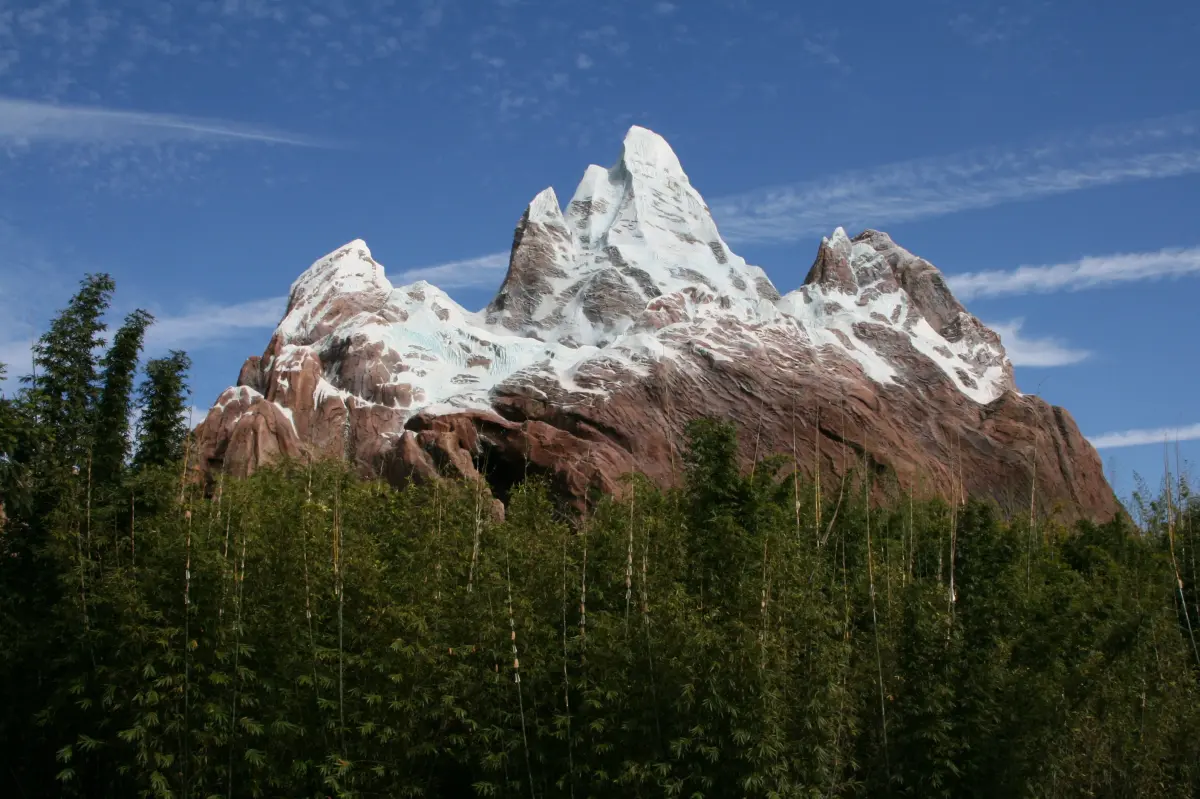

Ancient marine fossils embedded in the rocks at the top of Mount Everest have resurfaced in an online debate, with some social media users claiming the discovery supports the biblical account of Noah’s Ark and the Great Flood.
The summit of Mount Everest, the highest point on Earth, is made of rock that contains fossilized remains of long-extinct sea creatures — evidence that the material now towering above the Himalayas once lay beneath an ancient ocean, according to findings cited by the International Union of Geological Sciences in 2005.
Scientists say the explanation lies in plate tectonics. Geologists believe Everest’s limestone formed on a prehistoric seafloor before being forced upward when two enormous tectonic plates crashed together roughly 55 million years ago, eventually creating the Himalayan mountain range.
But the decades-old geological evidence has gained fresh attention after a viral post framed the fossils as possible proof of the flood narrative described in the Book of Genesis.
“Mount Everest contains marine rocks, proving that the highest point on Earth was once at the bottom of the ocean — doesn’t the Bible mention something about that?” David J. Harris, a right-wing Newsmax host, wrote on X. The post has since drawn more than 500,000 views.
READ MORE: Carrie Underwood’s Hidden 400-Acre Sanctuary Revealed in Stunning New Photos
Harris’ comment triggered a wave of discussion, with hundreds of users arguing over whether Everest’s marine fossils have any connection to scripture — and whether they can be interpreted as evidence that a global flood truly occurred.

The biblical passage being referenced appears in Genesis, which says “the waters prevailed so mightily on the earth that all the high mountains under the whole heaven were covered.”
In the Great Flood story, God sends rain for 40 days and 40 nights to cleanse the world of human wickedness, saving only Noah, his family and pairs of every animal species aboard an ark built according to divine instruction.
Last May, American researchers claimed to have used radar technology and found the possible remains of Noah’s Ark buried in the mountains of eastern Turkey — roughly 18 miles south of Mount Ararat, which the Bible describes as the boat’s final resting place.