NEW YORK — The scene: A crowded shopping center in the weeks before Christmas. Or a warehouse store. Or maybe a packed airport terminal or a commuter train station or another place where large groups gather.
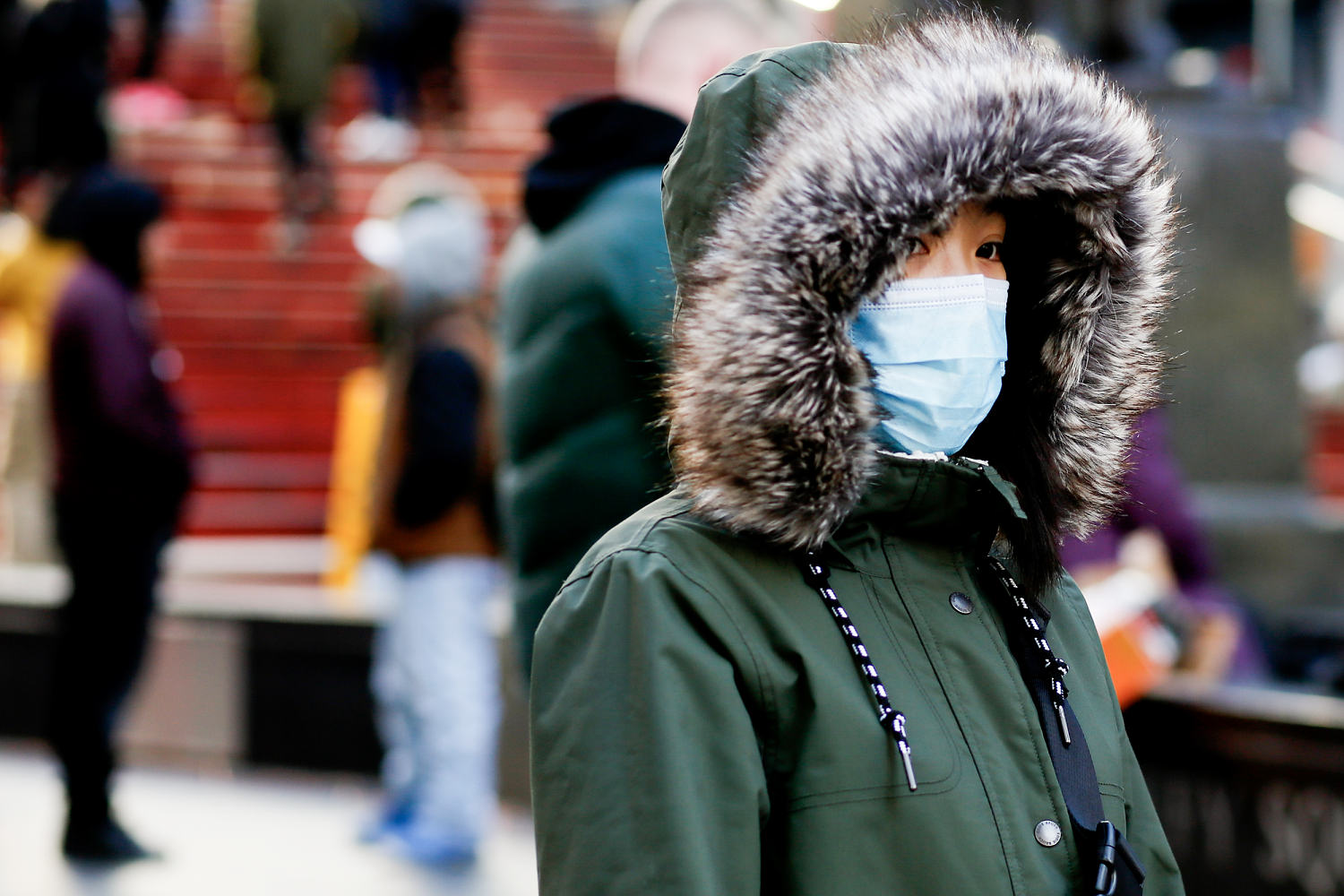
There are people — lots of people. But look around, and it’s clear one thing is largely absent these days: face masks.
Yes, there’s the odd one here and there, but nothing like it was three years ago at the dawn of the COVID pandemic’s first winter holidays — an American moment of contentiousness, accusation and scorn on both sides of the mask debate.
As 2023 draws to an end, with promises of holiday parties and crowds and lots of inadvertent exchanges of shared air, mask-wearing is much more off than on around the country even as COVID’s long tail lingers. The days of anything approaching a widespread mask mandate would be like the Ghost of Christmas Past, a glimpse into what was.
Look at it a different way, though: These days, mask-wearing has become just another thing that simply happens in America. In a country where the mention of a mask prior to the pandemic usually meant Halloween or a costume party, it’s a new way of being that hasn’t gone away even if most people aren’t doing it regularly.
“That’s an interesting part of the pandemic,” says Brooke Tully, a strategist who works on how to change people’s behaviors.
“Home delivery of food and all of those kind of services, they existed before COVID and actually were gaining some momentum,” she says. “But something like mask-wearing in the U.S. didn’t really have an existing baseline. It was something entirely new in COVID. So it’s one of those new introductions of behaviors and norms.”
THE SITUATION NOW IS … SITUATIONAL
It tends to be situational, like the recent decision from the University of Pittsburgh Medical Center hospital system to reinstate a mask mandate at its facilities starting Dec. 20 because it’s seeing an increase in respiratory viruses. And for people like Sally Kiser, 60, of Mooresville, North Carolina, who manages a home health care agency.
“I always carry one with me,” she says, “’cause I never know.”
She doesn’t always wear it, depending on the environment she’s in, but she will if she thinks it’s prudent. “It’s kind of like a new paradigm for the world we live in,” she says.
It wasn’t that long ago that fear over catching COVID-19 sent demand for masks into overdrive, with terms like “N95” coming into our vocabularies alongside concepts like mask mandates — and the subsequent, and vehement, backlash from those who felt it was government overreach.
Once the mandates started dropping, the masks started coming off and the demand fell. It fell so much so that Project N95, a nonprofit launched during the pandemic to help people find quality masks, announced earlier this month that it would stop sales Monday because there wasn’t enough interest.
Anne Miller, the organization’s executive director, acknowledges she thought widespread mask usage would become the rule, not the exception.
“I thought the new normal would be like we see in other cultures and other parts of the world — where people just wear a mask out of an abundance of caution for other people,” she says.
Read Related Also: Terrorist Attack Near the Eiffel Tower, 'Allahu Akbar' Screamed During Rampage
But that’s not how norms work, public safety or otherwise, says Markus Kemmelmeier, a professor of sociology at the University of Nevada, Reno.
In 2020, Kemmelmeier authored a study about mask-wearing around the country that showed mask usage and mandate resistance varied by region based on conditions including pre-existing cultural divisions and political orientation.
He points to the outcry after the introduction of seatbelts and seatbelt laws more than four decades ago as an example of how practices, particularly those required in certain parts of society, do or don’t take hold.
“When they first were instituted with all the sense that they make and all the effectiveness, there was a lot of resistance,” Kemmelmeier says. “The argument was basically lots of complaints about individual freedoms being curtailed and so forth, and you can’t tell me what to do and so forth.”
FIGURING OUT THE BALANCE
In New York City’s Brooklyn borough, members of the Park Slope Co-op recently decided there was a need at the longstanding, membership-required grocery. Last month, the co-op instituted mask-required Wednesdays and Thursdays; the other five days continue to have no requirement.
The people who proposed it weren’t focused on COVID rates. They were thinking about immune-compromised people, a population that has always existed but came to mainstream awareness during the pandemic, says co-op general manager Joe Holtz.
Proponents of the mask push at the co-op emphasized that immunocompromised people are more at risk from other people’s respiratory ailments like colds and flu. Implementing a window of required mask usage allows them to be more protected, Holtz says.
It was up to the store’s administrators to pick the days, and they went with two of the slowest instead of the busy weekend days on purpose, Holtz says, a nod to the reality that mask requirements get different responses from people.
“From management’s point of view,” he says, “if we were going to try and if there’s going to be a negative financial impact from this decision that was made, we want to minimize it.”
Those shopping there on a recent Thursday didn’t seem fazed.
Aron Halberstam, 77, says he doesn’t usually mask much these days but wasn’t put off by the requirement. He wears a mask on the days it’s required, even if he doesn’t otherwise — a middle ground reflecting what is happening in so many parts of the country more than three years after the mask became a part of daily conversation and daily life.
“Any place which asks you to do it, I just do it,” Halberstam says. “I have no resistance to it.”
Whatever the level of resistance, says Kemmelmeier, the culture has shifted. People are still wearing masks in places like crowded stores or while traveling. They do so because they choose to for their own reasons and not because the government is requiring it. And new reasons can come up as well, like when wildfires over the summer made air quality poor and people used masks to deal with the haze and smoke.
“It always will find a niche to fit in with,” he says. “And as long as there are needs somewhere, it will survive.”